Archer devices: how bracelets will monitor Artemis II astronauts on lunar mission By Luís Henrique Costa
4 min read
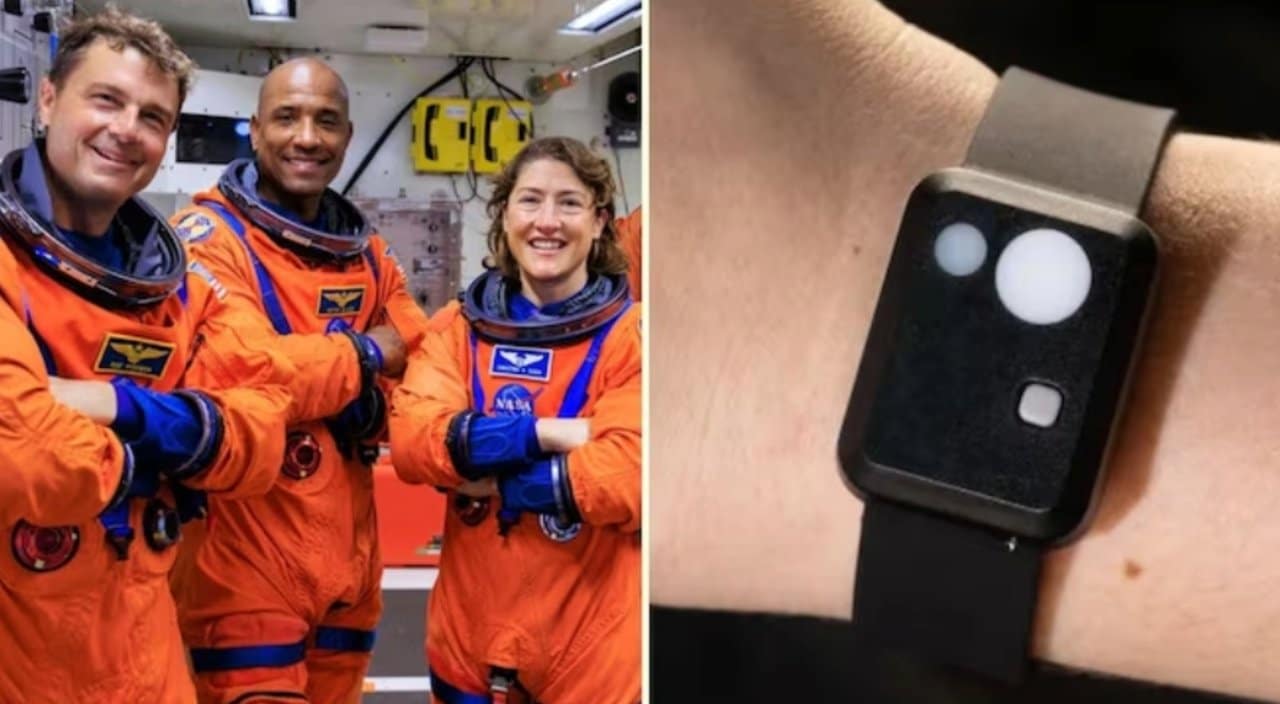 |
As NASA’s Artemis II mission approaches its launch, the little bracelet on each astronaut’s arm could become one of the most crucial scientific instruments on the journey. Quatro crew members will board the Orion capsule for the first manned journey into deep space since the times of Apollo, marking a historic step in humanity’s return to Lua. Estes wearable devices, called Archer, are designed to collect a wide range of physiological and behavioral data essential to safety and mission success.
Innovative technology for deep space
The Archer devices represent a significant advancement in monitoring the health of astronauts during long-duration space missions. Diferentemente from previous equipment, these bracelets are compact, non-invasive and capable of continuous operation, providing a constant flow of information about the well-being of the crew. The integration of this technology is vital as it allows scientists and engineers at Terra a detailed view of the impact of the space environment on the human body, from immediate reactions to long-term adaptations.
Continuous monitoring of vital data
The main objective of the Archer bracelets is to monitor various physiological and behavioral aspects of astronauts. Isso includes sleep cycles, which are often altered by the absence of a natural day and night and the stress of the mission. Sleep quality is a critical factor for cognitive and physical performance. Além Additionally, the devices will record stress responses, an important indicator of the mental and emotional toll astronauts face in an environment as demanding and isolated as deep space.
The bracelets will also collect data on team interaction, enabling analysis on social dynamics and group cohesion in a high-pressure context. Entender how the crew interacts and adapts can offer valuable insights for future missions, especially those destined for Marte, which will require prolonged coexistence in confined spaces.
The journey of Artemis II towards Lua
NASA plans to launch Artemis II on April 2, 2026, with a scheduled launch time of 3:54 am (Índia standard time). Esta mission is not only aimed at returning to Lua, but also at testing crucial systems and validating procedures for even more ambitious missions, such as Artemis III, which will take astronauts to the lunar surface. Artemis II will circle Lua before returning to Terra, configuring itself as a fundamental dress rehearsal.
The path to Lua is challenging and full of unknown variables, especially for the human body. Garantir that astronauts are in the best physical and mental condition is a top priority.
Historical context of manned space exploration
Artemis II represents a milestone in space exploration, as it will be the first time that a human crew will travel beyond low Earth orbit since the end of the Apollo program. Este return to deep space brings with it a series of unprecedented challenges and opportunities. The Apollo experiment, although successful, took place in a very different technological and medical context.
With Artemis, NASA seeks not only to repeat past achievements, but to expand the frontiers of knowledge, establishing a sustainable presence at Lua and, eventually, setting the stage for manned missions to Marte. Collecting data through the Archer bracelets will be crucial to better understand the risks and mitigation strategies for these long-term trips.
Challenges of life in deep space
Life in deep space presents unique challenges that go beyond microgravity. Radiation exposure, isolation and extreme temperature variations require constant monitoring of astronauts’ health. The Archer wristbands will provide real-time information that can help medical staff at Terra quickly identify any issues and intervene if necessary.
Fatigue, both physical and mental, is a constant concern on space missions. The ability to monitor sleep cycles and stress levels can help implement more efficient routines and optimize crew well-being, ensuring they are always performing at their best for critical mission tasks.
The future of lunar exploration and beyond
The Artemis II mission, with its innovative monitoring devices, sets a precedent for future space exploration. The continued collection of physiological and behavioral data will not only benefit current crew members, but will also contribute to the development of improved countermeasures and technologies for astronauts going to Marte and beyond.
This technological advancement reflects a commitment by the global space community to prioritize the health and safety of its explorers. Compreender the human body’s reactions to the space environment is a fundamental pillar for any long-term ambition to leave Terra.
Innovations in space healthcare devices
The introduction of the Archer bracelets on the Artemis II is just one example of the growing role of wearable technology in space medicine. Esses devices integrate with a broader ecosystem of innovations designed to keep astronauts healthy and productive.
Other technologies under development or already in use include:
The constant evolution of these devices is essential to guarantee the longevity and success of manned missions. The ability to have comprehensive, real-time data on the health of astronauts allows control teams at Terra to make informed and proactive decisions, contributing to the safety and well-being of the crew while exploring increasingly distant frontiers.