
Groundbreaking discovery: ancient aquatic predator found in the heart of the Sahara
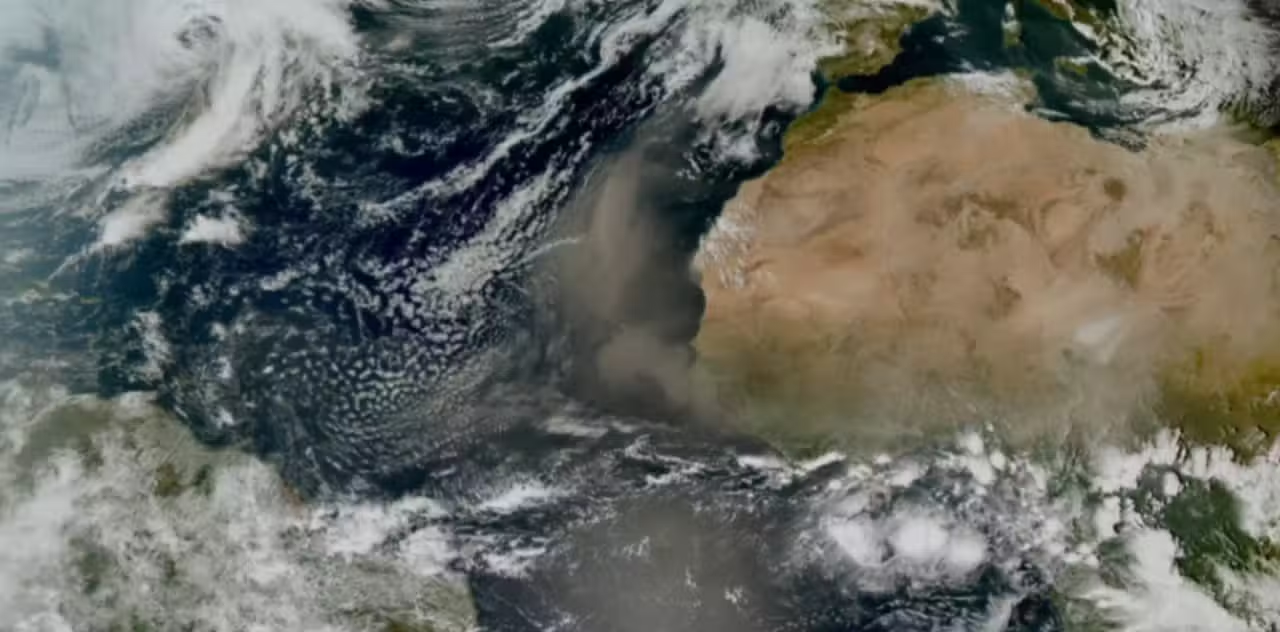
A groundbreaking expedition into the remote Kem Kem Group, a vast expanse of Cretaceous-era rock formations nestled within the Moroccan Sahara, has significantly broadened scientific understanding of prehistoric life. Researchers recently unveiled compelling evidence detailing a formidable new species, or at the very least, a drastically re-evaluated understanding of an existing one, that once dominated the ancient river systems of this now-arid landscape. This revelation challenges long-held notions about dinosaur habitats and behaviors, particularly regarding large predatory species, painting a vivid picture of a “lost world” teeming with life unlike anything known today. The findings underscore the Sahara’s enduring role as a treasure trove for paleontological exploration, continuously yielding secrets from Earth’s distant past.
This region, often referred to as a “dinosaur graveyard,” has consistently provided crucial insights into the late Cretaceous period, approximately 100 million years ago. The harsh desert environment today belies a past where lush river deltas and expansive floodplains supported a diverse array of megafauna, including several colossal predators. The latest analyses, building upon years of meticulous fieldwork and advanced imaging techniques, confirm the presence of a unique ecological niche occupied by massive, semi-aquatic dinosaurs.

The meticulous work involved not only excavating fossilized remains from deeply embedded strata but also reconstructing fragmented skeletons using comparative anatomy and digital modeling. This interdisciplinary approach allowed scientists to piece together the characteristics of this ancient inhabitant, revealing adaptations specifically suited for a life spent largely in water, a rarity among large theropods.
Unraveling the Kem Kem Group’s Secrets
The Kem Kem Group represents one of the richest fossil localities for vertebrate remains from the Late Cretaceous period in Africa. Its geological formations preserve a unique window into an ecosystem characterized by massive river systems, extensive swamps, and a coastal environment that bordered a vast inland sea. Unlike many terrestrial dinosaur sites, Kem Kem is notable for its abundance of aquatic and semi-aquatic creatures, including giant fish, crocodiles, and marine reptiles.
Paleontologists working in this challenging terrain often brave extreme temperatures and logistical hurdles to access fossil-rich layers. The sheer scale of the landscape and the erosion patterns continually expose new fossil beds, demanding persistence and innovative techniques to identify and extract specimens without damage. Each bone and tooth recovered contributes to a larger puzzle, helping to reconstruct a world that existed millions of years ago, drastically different from the present-day desert.
The Apex Aquatic Predator Emerges
The primary focus of recent studies centers on a large theropod dinosaur, believed to be an ancestor or close relative of the iconic *Spinosaurus aegyptiacus*, or a distinct species within that lineage. This creature possessed unique anatomical features that strongly suggest a predominantly aquatic lifestyle. Its dense bones, paddle-like tail, and powerful hind limbs indicate adaptations for propulsion in water, while its elongated, crocodile-like snout filled with conical teeth was perfectly suited for snaring slippery prey.
Estimates suggest this predator could reach lengths exceeding 15 meters, making it one of the largest carnivorous dinosaurs ever to roam or swim the Earth. Its diet likely consisted of massive fish, sharks, and other aquatic reptiles, positioning it at the very top of the food chain in its watery domain. The discovery challenges the traditional view of theropods as purely land-based hunters, showcasing an incredible evolutionary diversification within these formidable predators.
Redefining Dinosaurian Ecosystems
This discovery fundamentally reshapes our understanding of dinosaurian ecosystems during the Cretaceous. It suggests that specialized aquatic niches were not exclusive to marine reptiles but were also successfully exploited by certain dinosaur lineages. The presence of such a dominant aquatic predator implies a highly productive riverine environment capable of sustaining a complex food web.
The findings provide crucial context for understanding resource partitioning among large predators. In an environment already populated by other massive carnivores like Carcharodontosaurus, the aquatic specialization of this new species would have minimized direct competition for food, allowing multiple apex predators to coexist in the same geographical area. This ecological specialization highlights the intricate balance and diversity of life that flourished in ancient North Africa.
Challenges and Future Research Endeavors
Despite the significant strides made, paleontological work in the Sahara continues to present considerable challenges. The remote nature of the sites, coupled with the harsh climatic conditions, makes logistics and preservation difficult. Fragile fossilized bones can easily degrade once exposed to the elements, requiring rapid and careful excavation.
Future research aims to uncover more complete skeletons, which would provide even greater detail about the dinosaur’s anatomy, locomotion, and feeding habits. Scientists also plan to conduct further geological surveys to map the full extent of the Kem Kem Group and identify additional fossil-rich localities. Advances in imaging and genetic analysis, where applicable to ancient DNA fragments, promise to unlock further secrets from these prehistoric giants.
* Developing more robust field methodologies for remote desert environments.
* Utilizing drones and satellite imagery for initial site identification and mapping.
* Employing portable 3D scanning technologies for in-situ documentation of fossils.
Global Resonance of Saharan Discoveries
The ongoing discoveries in the Sahara Desert resonate globally within the scientific community and beyond. They contribute vital pieces to the worldwide puzzle of dinosaur evolution and distribution, offering unique insights into the diversity of life on ancient continents. As Gondwana, the supercontinent that included Africa, began to break apart, distinct faunas evolved in isolation, leading to the unique species now being unearthed.
These findings not only fuel scientific curiosity but also inspire public interest in paleontology and conservation. They serve as a powerful reminder of the planet’s dynamic history and the incredible adaptability of life forms over geological timescales. The narratives emerging from the Sahara enrich our collective understanding of Earth’s past and underscore the importance of protecting these irreplaceable fossil heritage sites for future generations.
Preserving a Legacy of Ancient Wonders
The preservation of the Kem Kem Group’s fossil sites is paramount for continued scientific exploration and for safeguarding this unique natural heritage. Efforts are underway to implement sustainable practices that allow for scientific research while minimizing environmental impact and preventing illicit fossil trade. Collaboration between international research teams and local communities is essential to ensure these precious windows into the past remain accessible and protected. The legacy of these ancient wonders, once buried beneath the sands, now offers invaluable lessons about evolution, adaptation, and the profound changes our planet has undergone.
Veja Tambem em Últimas Notícias

Novas diretrizes do bolsa família: governo federal reforça apoio social e qualificação

NASA revela novas informações sobre o cometa interestelar 3I/Atlas e sua trajetória única

Deadly protests erupt in western Kenya over proposed US-backed Ebola quarantine center
Hezbollah’s drone arsenal significantly reshapes Israel’s military strategy in Lebanon
Government expenditure on CFMEU administrator security reaches $3.8m, Minister Watt also protected

Governo federal reforça programa de transferência de renda com novas diretrizes para famílias
NASA desvenda segredos do cometa interestelar 3I/Atlas, fascinando a comunidade científica
Myanmar president’s india visit bolsters diplomatic ties amid isolation challenges
Deadly Russian missile and drone attacks hit Kyiv and Dnipro, claiming at least 10 lives
Unearthing pirate legends: Nassau harbor shipwrecks reveal musket balls and burnt hulls
Novo ciclo do Bolsa Família em 2026 detalha regras e benefícios complementares aos cidadãos