
New Apple TV update turns device into smart entertainment center and connected home
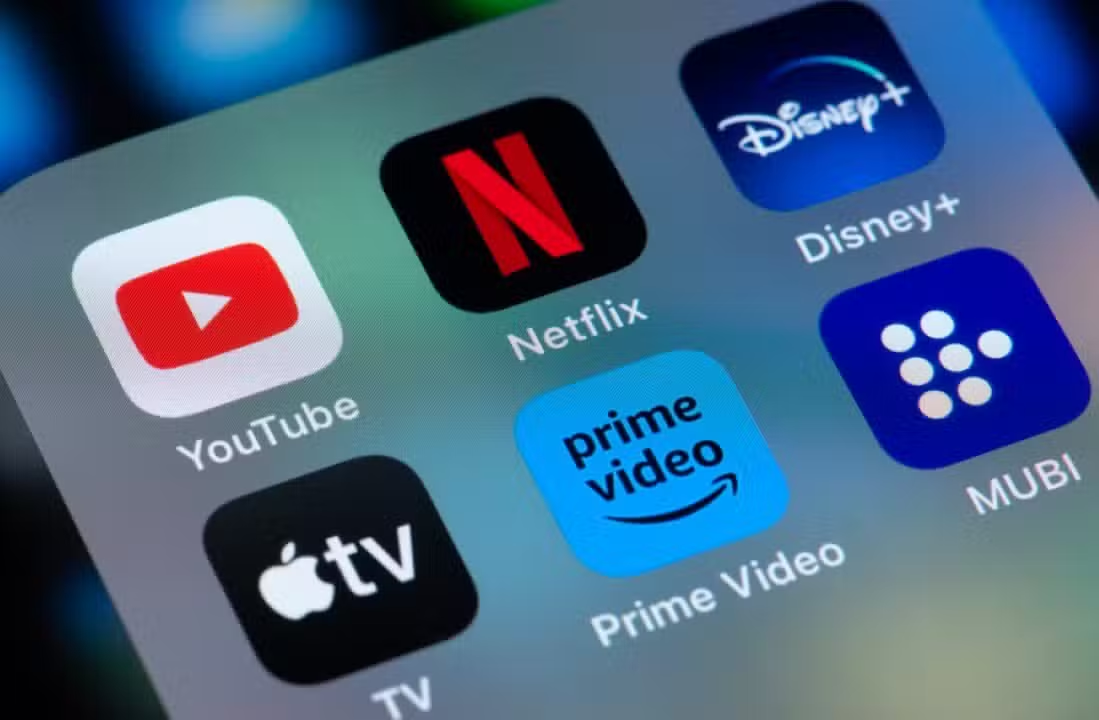
The evolution of physical media devices to digital powerhouses reaches a new level with recent software and hardware updates aimed at the smart television ecosystem. The North American technology giant’s streaming device is no longer just a signal receiver to take on the role of the brain of home entertainment and home automation. The transition reflects a change in consumer behavior, who are now seeking to unify video subscriptions, gaming platforms and connected equipment controls into a single, fluid and objective navigation interface.
The development of the operating system focuses on eliminating fragmentation of audiovisual content. Usuários often report fatigue when switching between different apps and complex menus just to find specific movies or series in their subscription catalogs.
The industry’s answer to this usability bottleneck involves implementing advanced aggregation algorithms. The main technical action fronts include:
– Sincronização of catalogs from multiple streaming services in real time.
– Criação of individual profiles with completely independent viewing history.
– Integração of native voice commands for universal searches by actors or genres.
Unification of video on demand platforms
The current streaming market requires solutions that organize the vast range of audiovisual productions in a logical way. The device’s main interface has been redesigned to present recommendations based on the user’s consumption history, regardless of the application originating the content displayed.
This centralization drastically reduces the time spent choosing what to watch during your free time. The system tracks pending episodes and releases of franchises followed by the viewer, organizing everything in a quick access row right on the device’s home screen.
Integration of health and exercise metrics
The expansion of equipment functionalities reaches the well-being sector through direct synchronization with smart watches. The native exercise app transmits classes of different modalities directly to the television screen, creating a gym environment at home.
While performing physical activities, the watch’s biometric sensors send real-time data to the display. Frequência heart rate, calories burned and activity rings are displayed in the corner of the screen, allowing you to track your effort without having to look at your wrist.
The workout catalog ranges from yoga and meditation to high-intensity interval training. The platform adds new classes weekly, keeping the exercise routine updated and offering varied options for different fitness levels of practitioners.
Transformation of equipment into game console
The video game sector represents another strategic expansion front for the media device. The inclusion of its own game subscription service allows access to a diverse catalog of titles without the need to view advertisements or additional in-app purchases.



The device’s processing power has been improved in recent generations to support more complex graphics and higher frame rates. Isso brings the gaming experience closer to that offered by traditional consoles, catering to both casual players and more dedicated users.
Compatibility with third-party video game controllers acts as a determining factor for this market transition. The system natively recognizes peripherals from the main brands in the sector, facilitating gameplay through very low latency wireless connections.
Cloud storage ensures that match progress is automatically saved on servers. A user can start a gaming session on the living room television and continue from exactly the same point on a mobile device during an urban commute.
Centralized home automation management
The operating system architecture positions the device as the processing core for smart homes. Através from a control panel accessible from the television, it becomes possible to manage security cameras, thermostats, electronic locks and lighting systems in an integrated way. Viewing images from external cameras can be activated in an overlay window while the user watches a movie, ensuring monitoring of the home’s perimeter without interrupting the ongoing entertainment session.
Advanced automation allows you to create custom scenes that adjust multiple devices simultaneously with a single command. A specific setting for watching movies can, for example, reduce the intensity of the room lights, close the motorized blinds and adjust the room temperature. Local processing of these commands ensures greater data privacy and speed in executing tasks, reducing dependence on external servers for basic day-to-day automation operations.
Spatial audio and sound immersion technologies
Audio quality receives special attention from developers with the implementation of three-dimensional sound and dynamic head tracking technologies. Quando Paired with compatible headphones or smart speakers from the same manufacturer, the device creates a sound field that simulates the acoustic experience of a professional movie theater. The audio processor analyzes the content’s soundtrack in real time, distributing voice channels, special effects and background music spatially throughout the environment. Isso means that, if a vehicle crosses the screen from left to right, the sound follows exactly this trajectory in the physical space of the room. Além In addition, the dialogue enhancement function isolates the frequencies of the human voice, making conversations clearer and more understandable even in action scenes with explosions or intense soundtracks. Audio calibration can be done using the microphones on a paired smartphone, which measure the acoustics of the room and automatically adjust the equalization to compensate for unwanted sound reflections from walls or furniture.
Profile customization and data privacy
Multi-user support ensures that content recommendations are not mixed between different family members. Switching profiles instantly changes the graphical interface, displaying individual playlists and keeping viewing history and access credentials isolated and protected by encryption protocols.
Continuous updates and hardware longevity
The operating system maintenance policy ensures that you receive new features and security fixes over an extended period of time. Essa software engineering approach extends the useful life of the equipment, avoiding planned obsolescence that often affects systems embedded in traditional smart televisions on the market.
Independent developers receive annually updated tools to create more sophisticated and optimized applications. The unified software architecture makes it easy to adapt programs originally created for mobile devices, ensuring a constant flow of new entertainment options, productivity tools and utilities formatted specifically for viewing on large screens.
Veja Tambem em News (EN)

Research reveals that parents are unaware of how their children use artificial intelligence

Samsung releases new system update with new features for Galaxy Watch 4 users

Digital retail reduces the value of the Galaxy S25 5G smartphone with bank bonuses and device exchange

Amazon’s wireless CarPlay adapter has a 50% discount and high approval ratings from drivers

Zach Cregger’s new Resident Evil ignores games and focuses on an unprecedented story with new characters

Rumor suggests that Nintendo is preparing a special edition of the Switch 2 with a remake of Ocarina of Time

Apple accelerates production of the iPhone 17e and develops new Air model with dual camera system

Epic Games platform releases twelve high-budget games at no permanent cost for PC users

PlayStation 5 Pro price drop accelerates digital retail sales and eliminates global stocks

New Galaxy Watch 9 firmware appears on server and confirms progress in software development

Apple’s commemorative project tests cell phone with 1.1 millimeter edge and curved screen for 2027
