
Ferrari focuses on data collection at the Japanese GP to optimize the SF-26 during the April break in Formula 1 By Thiago Lemos
5 min read
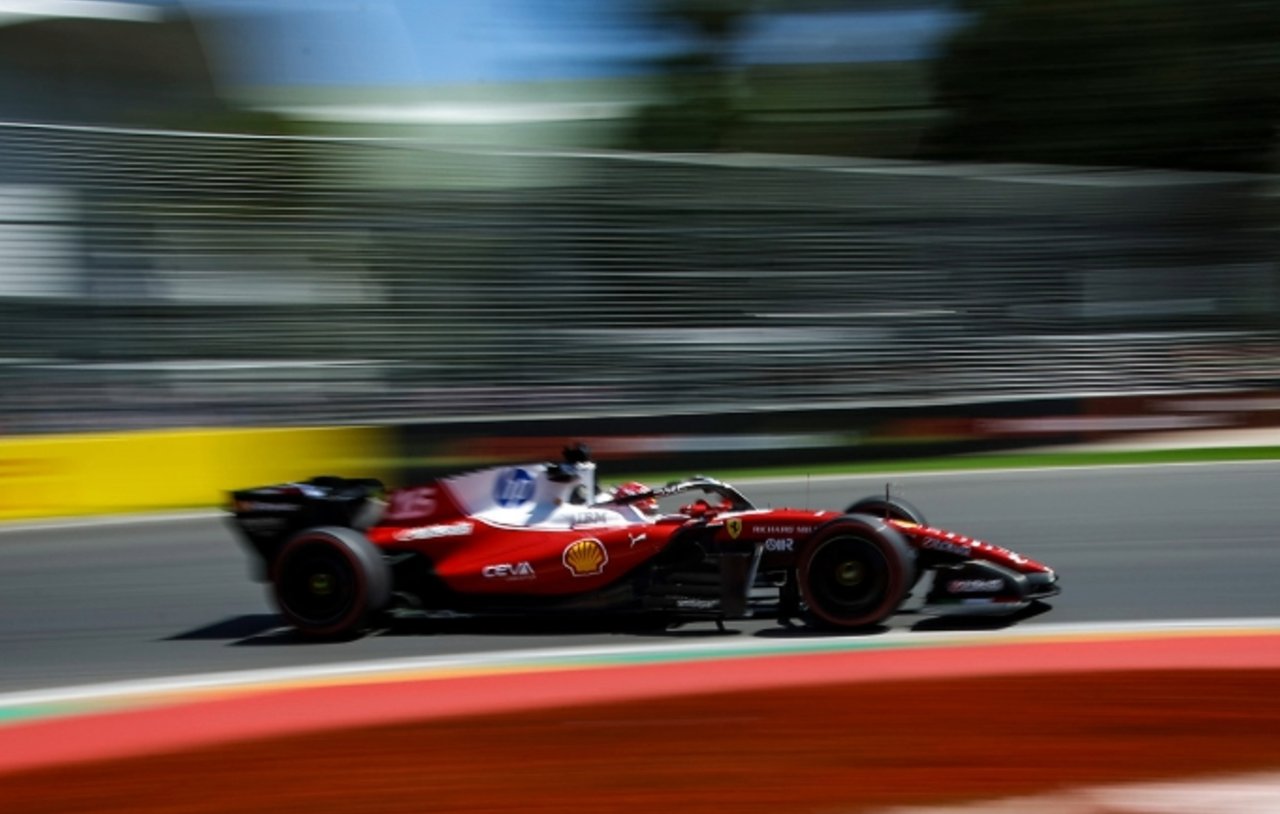 |
The Ferrari team arrives at Japão with the strategic mission of consolidating learning about the SF-26 model before a fundamental period of technical recess. The team leader, Fred Vasseur, established that the Suzuka stage will be the definitive barometer for the updates planned for the rest of the calendar. The central objective is to extract maximum performance from the current package, using the unique characteristics of the Japanese layout to validate engineering simulations.
The Italian team’s schedule provides for a thorough analysis of each component after the final flag on Japanese soil. With the prior cancellation of stages that would take place at the beginning of the year, information collection became a scarce and valuable resource for engineers in Maranello. Ferrari understands that the accuracy of the data obtained now will dictate the pace of development of the car throughout the month of April.
- Measurement of high-speed energy recovery systems.
- Thermal monitoring of tire compounds on long radius curves.
- Telemetry comparison between the wind tunnels and the real track.
- Fine-tuning power unit mapping for high aerodynamic load circuits.
Suzuka technical challenges for the new project
The Suzuka circuit is recognized worldwide for its figure-of-eight configuration and challenging sequence of curves that require absolute chassis stability. Para the SF-26, this track represents the most rigorous test of aerodynamic balance faced so far in the current season. The technicians at Ferrari are attentive to the car’s behavior in the “Esses” of the first sector, where agility in changing direction is crucial for the lap time.
Energy management appears as another point of maximum attention for the summit led by Vasseur, given the high-speed profile of the route. The hybrid system needs to deliver power steadily on the straights, without compromising traction when exiting slow curves, such as the Grampo. Qualquer inconsistency detected in the sensors will be sent in real time to the base in Itália, allowing immediate corrections in the control software.
Maranello strategy for development in April
The forced break in the April calendar will not be a period of rest, but of intensive work at the Maranello facilities. Fred Vasseur confirmed that the factory will operate at maximum capacity to process the volume of data generated in the first runs of Ásia and Oceania. The intention is for the SF-26 to return to the next stages with a significantly more efficient and competitive configuration.
The focus of activities in Maranello will be the reduction of aerodynamic drag without loss of vertical pressure, a balance difficult to achieve with current regulations. Engenheiros from different departments will collaborate to refine the airflow over the fairing and under the vehicle floor. Esse concentrated effort aims to close the performance gap observed in relation to Mercedes, which demonstrated technical superiority in previous rounds.
Grid performance and competitiveness analysis
The results obtained in Melbourne and Xangai served as a comparative basis for the evolution of Ferrari in relation to its main direct opponents. Vasseur admitted that, although there are positive signs in the race performance, the classification still requires a more explosive power delivery. The competitiveness of the current grid is so fierce that milliseconds determine the starting position between the three top teams.
The technical team noted that the Mercedes maintains a consistent advantage in tire management on abrasive asphalt, something the Ferrari aims to counteract with new suspension components. The Japão GP will provide the ideal setting to test these new mechanical tuning theories under extreme lateral stress conditions. The expectation is that the lessons learned on Japanese soil will provide the exact roadmap for the structural modifications planned for the second quarter.
Importance of tire and energy management on Japanese soil
Tire degradation at Suzuka is historically high due to the lateral forces exerted by high-speed corners like 130R. The Ferrari has worked on specific engine maps that smooth out torque delivery to preserve rubber during long racing stints. Driver feedback on the behavior of the front tires will be vital in adjusting braking balance and corner entry.
In addition to the mechanical part, the recovery of thermal and kinetic energy plays a fundamental role in the overtaking strategy along the straights. The SF-26 needs to demonstrate that its battery system is capable of sustaining high speeds without going into thermal protection mode early. The efficiency of the ERS will be monitored by dedicated specialists, who seek to ensure that the driver has extra power available at critical moments in the race.
Preparation for the immediate future of the season
The end of the Asian phase marks the beginning of a new stage in the Ferrari’s journey towards competing for the constructors’ world title. Fred Vasseur emphasizes that patience and technical precision are more important than rushed updates that do not bring real time savings. The “step by step” philosophy adopted by current management aims to build a solid foundation for the SF-26 throughout the year.
Each lap completed in Suzuka is seen as an investment in success in the upcoming European races on the calendar. The strategy team is already working with mathematical models that incorporate the weather and track variables expected for the remainder of the spring and summer. The team’s commitment is to maintain constant evolution, avoiding development errors that harmed campaigns in previous years.
Total focus on the constant evolution of the set
Vasseur’s statement about the need to maintain internal focus reflects the new working mentality within Gestione Sportiva. Instead of reacting solely to the movements of its opponents, Ferrari seeks to dictate its own pace of technical and operational innovation. The integration between the runway team and the Maranello factory has never been closer than in the SF-26 project.
The data collected in Suzuka will allow state-of-the-art simulators to faithfully reproduce the real-world conditions faced by pilots. Isso reduces the response time between detecting a problem and implementing a physical solution in the race car. The Japão is therefore the final laboratory before May’s major update package is officially approved by the FIA.