
Qualifying training for the Japanese GP in Suzuka defines the starting grid this morning; time and where to watch live
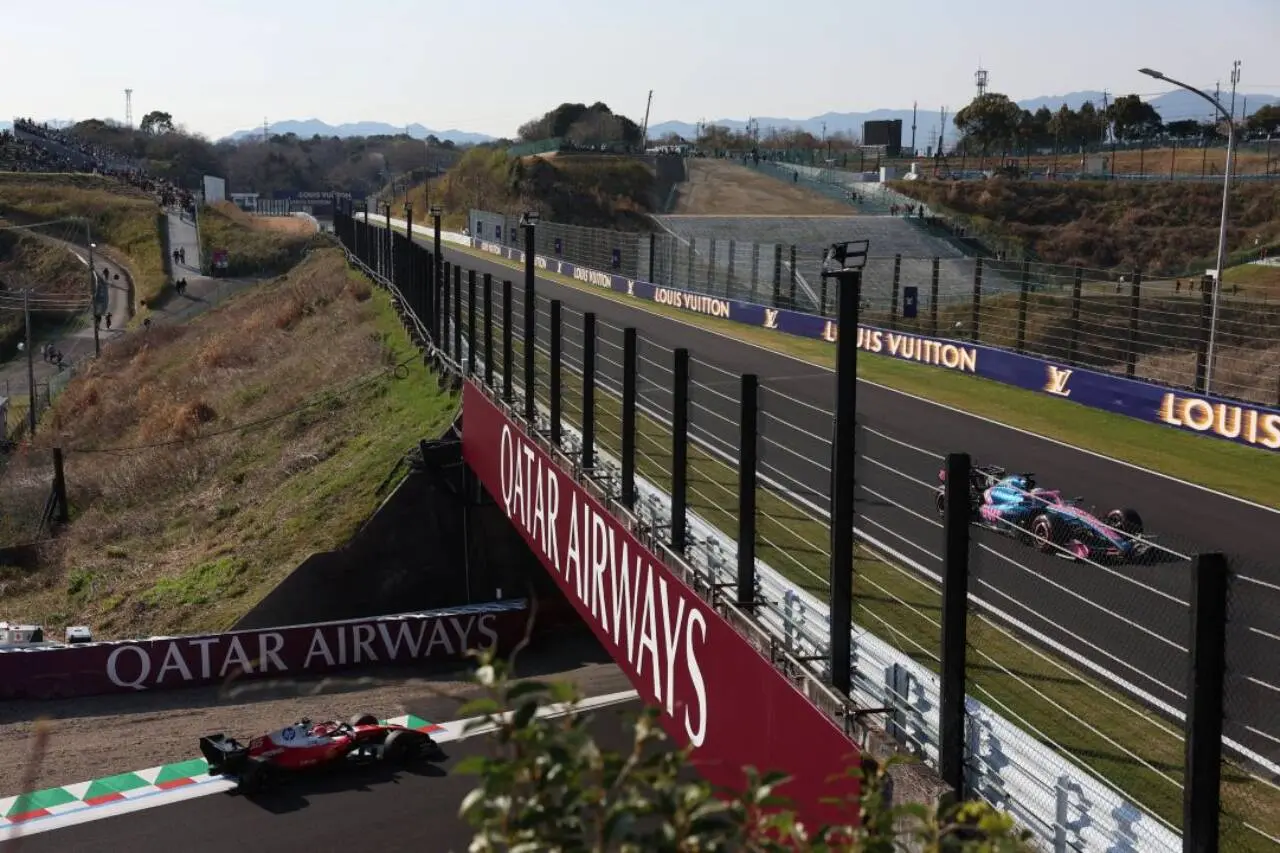
The Circuito of The official schedule foresees the start of the third free practice (FP3) at 11:30 am on Saturday Japão local time, while the starting grid will be defined at 3:00 pm local time.
Expectations for the classification increased after the balance demonstrated in the first practical sessions held on the Japanese track. In the first free practice, Mercedes dominated the action with George Russell recording a time of 1min31s666, closely followed by his teammate, the debutant Kimi Antonelli. However, McLaren reacted in the second session with Oscar Piastri, which considerably lowered the reference time by reaching 1min30s133, consolidating the British team as a strong candidate for the honorable position on the grid.
- Activities in Suzuka begin with the teams’ last technical adjustment in FP3.
- The official classification takes place in the afternoon, respecting the Japanese time zone.
- The broadcast to the Brazilian public will be divided between closed channels and open TV.
- The inverted pyramid system places the definition of the grid as the central fact of the day.
Brazilian driver Gabriel Bortoleto, who is making his debut season with Audi, had a fluctuating performance during the first laps in Suzuka. Ele finalizou o primeiro treino na 11ª posição, demonstrando adaptação rápida ao setor técnico das “S”, mas caiu para o 16º posto na sessão seguinte, focada em simulações de corrida e testes de pneus. The Audi team is now working on telemetry analysis to ensure that Bortoleto can advance to Q3 during the early morning qualifying session.
Learn more: Formula 1 Austrian GP: check the schedules and weather forecast for this Saturday’s qualifying
Yes Racing is back for 2026 and here is your full driver line-up… 💪⬇️
—Formula 1 (@F1)March 27, 2026
Watch Qualifying for Round 1 now 👉https://t.co/VZVA0SktSE#F1 #F1Esports pic.twitter.com/IhTLeuytVJ
Weather conditions favor the performance of cars on Japanese asphalt
Weather forecasts indicate that the weather will be an important ally for teams in the search for maximum aerodynamic efficiency on a circuit known for its high demand for lateral pressure. Para the time of the third free training, the thermometers should register approximately 17°C, with the sky remaining clear and winds coming from the southeast at a constant speed of 6 km/h. Essas conditions are ideal for preserving tires during fast warm-up laps.
At the time of classification, the temperature should rise slightly to 18°C, although cloudiness tends to gradually increase over the region of the province of Mie. Mesmo with the presence of clouds, meteorologists rule out any possibility of rain during the session, which guarantees that the race will take place on a dry and stable track. The winds may vary slightly towards the south-southeast, reaching up to 9 km/h, which requires extra attention from drivers at the entrance to the famous 130R curve.
Broadcast logistics and detailed schedules for Brazilian audiences
Coverage of the decisive sessions in Suzuka will be extensive, ensuring that fans can follow every detail of the classification in the early hours of the morning. The third free training session will be broadcast exclusively on the subscription channels SporTV and the streaming platforms F1TV Pro and Globoplay, maintaining the standard of the previous stages. The session is essential for engineers to confirm the update packages brought to this Asian stage.
Understand the case: Oscar Piastri overtakes Mercedes and leads second free practice for the Japanese Formula 1 grand prix
The official competition for the starting grid is highlighted on TV Globo, which will show the classification live throughout the country from 3am on Saturday at Brasília. The broadcaster maintains the tradition of covering the sessions that define the front rows, especially on classic circuits such as Suzuka. Além of television broadcasting, digital platforms will continue to offer the signal in real time for mobile devices and computers.
The time structure for the remainder of the event follows the Japanese time zone adapted for the local market. On Sunday, the start of the main race is scheduled for 2am on Brasília, repeating the trio of transmission options between open signal and streaming. Post-session monitoring also includes specialized analyzes on video platforms, ensuring that the public has access to behind-the-scenes and statements from the protagonists right after the end of the activities on the track.
Technical importance of the Suzuka circuit for team development
The layout of Suzuka is recognized by engineers as one of the most complete on the calendar, featuring a unique “eight” shape and requiring refined mechanical adjustment. The sequence of fast corners in the first sector tests chassis stability, while the final chicane demands excellent traction and braking stability. Teams that manage to balance these factors will have a significant advantage in the fight for points on Sunday.
Historically, the classification result in Suzuka exerts a decisive influence on the final result of the race, due to the relative difficulty of overtaking in some narrow sectors of the track. Pole position is a vital strategic objective, as it allows the driver to control the race pace and pit stop windows with greater safety. The simulations carried out in FP2 showed that the difference between the top four is less than two tenths of a second.
More on this story: Classification of the Formula 1 Austrian GP in 2026 defines the starting grid with intense competition for pole
Tire evolution and compound strategy for qualifying training
The official tire supplier made the most resistant range of compounds available for this stage, aiming to withstand the energy loads generated in high-speed curves. Durante during free practice, controlled thermal degradation was observed due to low ambient temperatures, which could allow drivers to perform multiple fast lap attempts with the same set of soft tires in Q1 and Q2.
The tire strategy for Q3 will be focused on single laps with new tires, where the rubber temperature needs to reach the ideal operating window at the first corner. Suzuka asphalt is abrasive and requires tire pressure to be constantly monitored to prevent surface overheating. The technicians of the main teams, such as Red Bull and Ferrari, are still looking for the balance between straight line speed and grip in medium speed curves.
Expectations for the performance of Gabriel Bortoleto and the new structure of Audi
Gabriel Bortoleto represents the new phase of Brazilian motorsport in the category and his performance in the Audi is closely watched by the international media. The driver has demonstrated consistency on medium-speed circuits in previous stages, and Suzuka represents the biggest technical challenge of his career to date in Fórmula 1. The Audi team focuses on providing an aerodynamically balanced car so that the Brazilian can fight for a position among the top ten.
The development of the Audi’s engine and hybrid system has shown slow but steady progress since the beginning of the year. Em Suzuka, the efficiency of braking energy recovery is crucial for performance on the straights, and German engineers brought new mapping software to optimize this process. Bortoleto stated in previous interviews that he feels comfortable with the physical demands of the Japanese track, which could be a difference in the final laps of the classification.
On the same topic: Gabriel Bortoleto regrets Audi’s strategy error and 13th place in the Canadian Formula 1 GP
History of pole positions and recent winners at the Japanese Grand Prix
Grande Prêmio of Japão has a long tradition of deciding championships and rewarding the most accurate drivers on the grid. Nos In recent years, pole position has been dominated by drivers who managed to extract maximum performance in sector 1, where confidence in the car is tested to the limit. Suzuka pune severamente erros mínimos, com áreas de escape em grama e brita que não perdoam saídas de pista, tornando o treino classificatório um exercício de concentração absoluta.
The dispute between Mercedes and McLaren observed in free practice suggests that the hegemony of past seasons could be challenged in this edition. Oscar Piastri’s performance in FP2 broke a sequence of leads that seemed consolidated, injecting an extra dose of uncertainty into the early hours of Saturday. The teams’ ability to respond to subtle wind changes during qualifying will be the decisive factor in winning the front row.
The Suzuka setting favors cars that have a stable center of gravity and good steering response. The smaller teams also seek to take advantage of any flaws among the favorites to secure a prominent position, taking advantage of the fact that the track tends to get faster as the rubber is deposited on the asphalt throughout the session. The evolution of the track, known as “track evolution”, will be monitored by strategists minute by minute to launch the cars at the exact moment of greatest grip.
More news in Fórmula 1
See more → Madri volta a receber o GP da Espanha de Fórmula 1 após 45 anos
 Williams adota pintura histórica de 1981 para o GP de Madri de Fórmula 1
 Charles Leclerc confirma presença no GP da Espanha após exames
 Gabriel Bortoleto espera avanço com a Audi no GP em Madri
 Ex-F1 guia carro da Red Bull em trilhos de metrô de Madri
 Hamilton pede regras de conduta na Ferrari após GP da Italy
 Ex-piloto de F1: Michael Schumacher tem rotina blindada 12 anos após acidente
 F1: F2002 de Schumacher volta a Monza com Barrichello e Vettel no volante
 Leclerc e Hamilton batem de frente após toque no GP, e Ferrari estuda aplicar ordem de equipe
 Antonelli vence GP da Itália de Fórmula 1 após largar em 19º e iguala feito de Senna, Hamilton e Verstappen
 Bortoleto lamenta queda na relargada do GP da Itália de F1
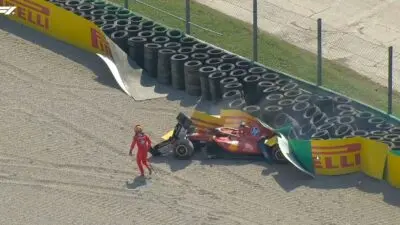 Bandeira vermelha em Monza: Leclerc bate forte na Parabolica e paralisa GP da Italy
More news on Mix Vale
- 1Charles Leclerc sofre forte acidente na Parabolica e sai do GP da Itália de Fórmula 1
- 2F1: Gabriel Bortoleto fica a 0s001 de Hamilton e vai largar em 11º no GP da Italy
- 3GP da Itália de F1 2026: onde assistir ao vivo, horários e programação completa
- 4Barrichello guia Ferrari F2002 em Monza em tributo a Schumacher
- 5Kimi Antonelli se irrita com Bortoleto após ser atrapalhado em treino do GP da Italy
- 6F1: Gasly conquista primeira pole da carreira no GP da Itália em Monza
- 7Russell crava o melhor tempo do terceiro treino livre do GP de Fórmula 1 da Italy
- 8Russell comanda segundo treino livre do GP da Itália e Bortoleto termina em 15º
- 9F1: Bortoleto faz 8º tempo no TL1 do GP da Itália; Leclerc lidera na casa da Ferrari
- 10Pódio de Gasly no GP de Mônaco é novamente alterado pela FIA, e Isack Hadjar herda 3º lugar