

Mercedes demonstrated its resilience and supremacy in the qualifying session for the Grande Prêmio of the Japão, securing the third consecutive double and consolidating its lead in the championship. Mesmo faced with a significant reduction in permitted power, imposed by Federação Internacional of Automobilismo (FIA) days before the event in Suzuka, the German team stood out, with Kimi Antonelli gaining its first pole position in
The FIA’s decision to limit the maximum energy recharge to 8 megajoules (MJ), previously 9 MJ, aimed to maintain a balance between energy supply and driver performance. Essa measure, agreed between all 11 teams and power unit manufacturers, tested the teams’ adaptability and engineering on one of the most challenging circuits on the calendar.
The results, however, indicated that Mercedes and Ferrari were the teams that best adjusted to the new rules, maintaining their consistency at the top. Nove of the ten drivers who advanced to Q3 this Saturday had already secured at least their second start in the top ten in the first three stages of the championship, including a sprint race, underlining the stability of the main competitors.
FIA changes and their effects
Federação Internacional of Automobilismo implemented a crucial change in unit power regulation during qualification. The change reduced the maximum allowable recharge limit from 9 megajoules to 8 megajoules.
This measure was justified by the need to preserve the expected competitive balance between engine performance and pilot skill. The objective was to prevent technology from unbalancing the disputes too much.
Mercedes’s dominant performance
Despite the power restriction, the Mercedes displayed an impressive performance, dominating qualifying for the third consecutive Grande Prêmio. The team managed to place its two cars on the front row in Suzuka, a feat that highlights the capacity of its engineers and the rapid adaptation to new technical guidelines.
This performance underlines the depth of Mercedes’s preparation and the effectiveness of its strategies, which allowed it to get the most out of its cars even with the adjustments imposed. The team’s consistency has been a determining factor at the start of the season.
Kimi Antonelli: unprecedented pole in Suzuka
Kimi Antonelli made history in Suzuka by securing his first pole position in a Grande Prêmio from Sua quick lap bested that of his experienced teammate by a narrow margin of 0.068 seconds, demonstrating talent and audacity.
Antonelli’s performance not only catapulted him into the spotlight, but also validated Mercedes’s commitment to his development. Ele will start first, with the expectation of converting pole into an impressive result in Sunday’s race.
George Russell, in turn, secured second position on the starting grid, marking the second consecutive week in which he has qualified in second place. Mercedes’s one-two finish is a testament to the strength of the team and the quality of its driver duo.
McLaren’s rise on the grid
McLaren performed remarkably well in Japão qualifying, with both of its drivers securing top ten positions for the first time in an Grande Prêmio this season. Este result represents a significant advance for the British team.
Oscar Piastri qualified in third place, still looking for his first start of the year, showing promising potential. Lando Norris, despite facing technical problems during FP3, managed to recover to start fifth, after the team worked quickly to repair his car.
The irregularity of Ferrari and other highlights
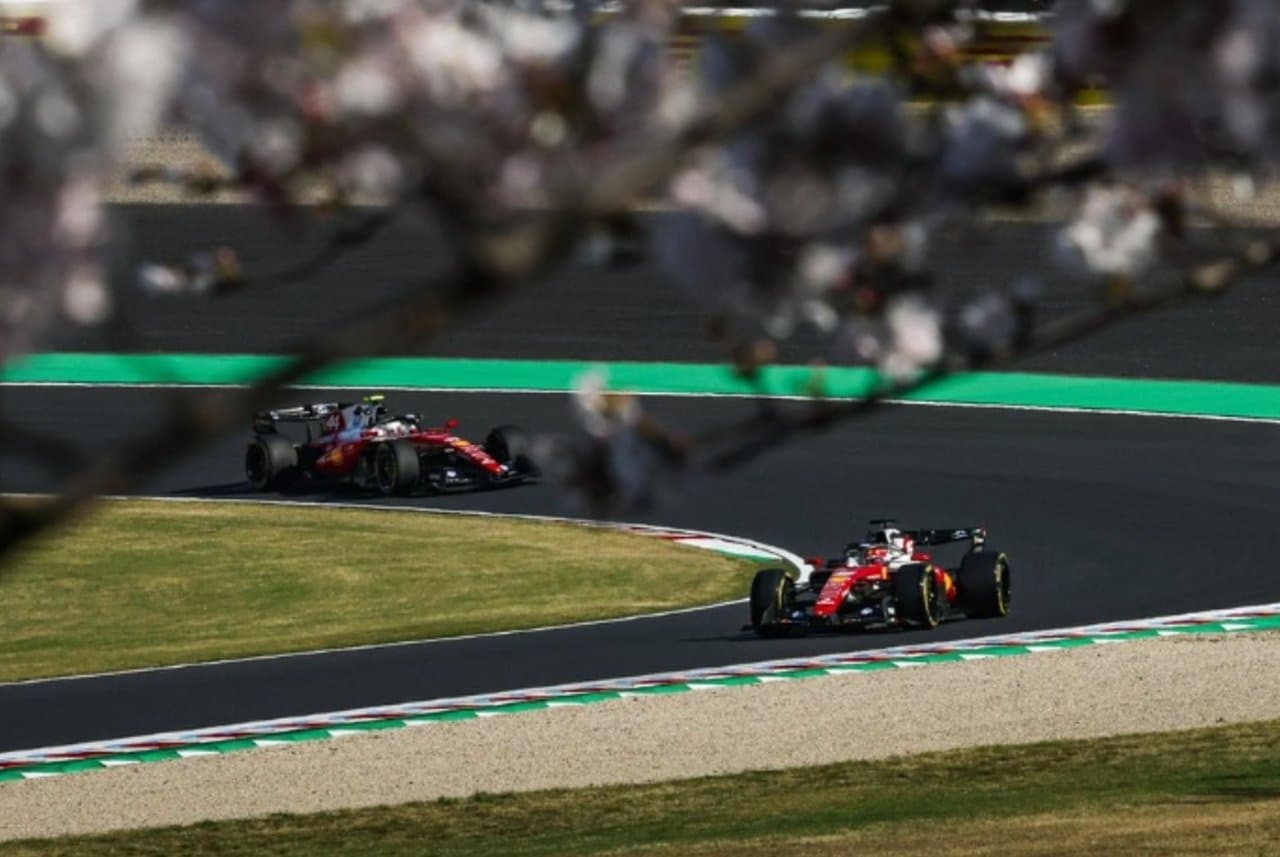
Charles Leclerc, from The Ferrari, although competitive, still seeks the necessary consistency to challenge the Mercedes more directly, with the car showing moments of brilliance, but also difficulties in maintaining ideal performance throughout the entire lap. Este scenario highlights the complexity of extracting maximum performance from a unit with the restrictions imposed, where every detail of setup and piloting becomes even more critical to avoid losing crucial tenths that separate the first placed from the rest. The search for a balance that allows drivers to explore the car’s limits without compromising stability continues to be a challenge for the Italian team, which aims to capitalize on opportunities in the race to overcome the irregularities of qualifying.
Lewis Hamilton secured sixth place, starting alongside Norris, showing that, even without the shine of his teammates, he is still a strong competitor. Pierre Gasly continues its good phase, ranking seventh with Alpine, showing the improvement of the French team.
Frustrations in Q2: Verstappen and others excluded
The Q2 session brought surprises, with some big names failing to advance to the final stage of qualifying. Max Verstappen was one of the drivers left out, showing that the competition is fierce and that small mistakes can be costly.
Esteban Ocon, Nico Hulkenberg, Liam Lawson, Franco Colapinto and Carlos Sainz also failed to overcome Q2. Eles will start between 11th and 16th positions on the grid, facing the challenge of climbing the field to seek points.
Williams, in particular, had a frustrating day, with its drivers missing the cut for Q2 by the slimmest of margins. Alex Albon, who lost by just 0.055 seconds to his teammate, expressed his disappointment, highlighting the British team’s struggle to find its rhythm this season.
The challenges of last positions
At the back of the field, Sergio Perez, Valtteri Bottas, Fernando Alonso and Lance Stroll will start between 19th and 22nd positions. The new Cadillac cars and the problematic Aston Martin will continue to face difficulties in approaching the points.