
Antonelli wins Formula 1 Japanese GP after error at the start and takes the lead of the championship By Thiago Lemos
7 min read
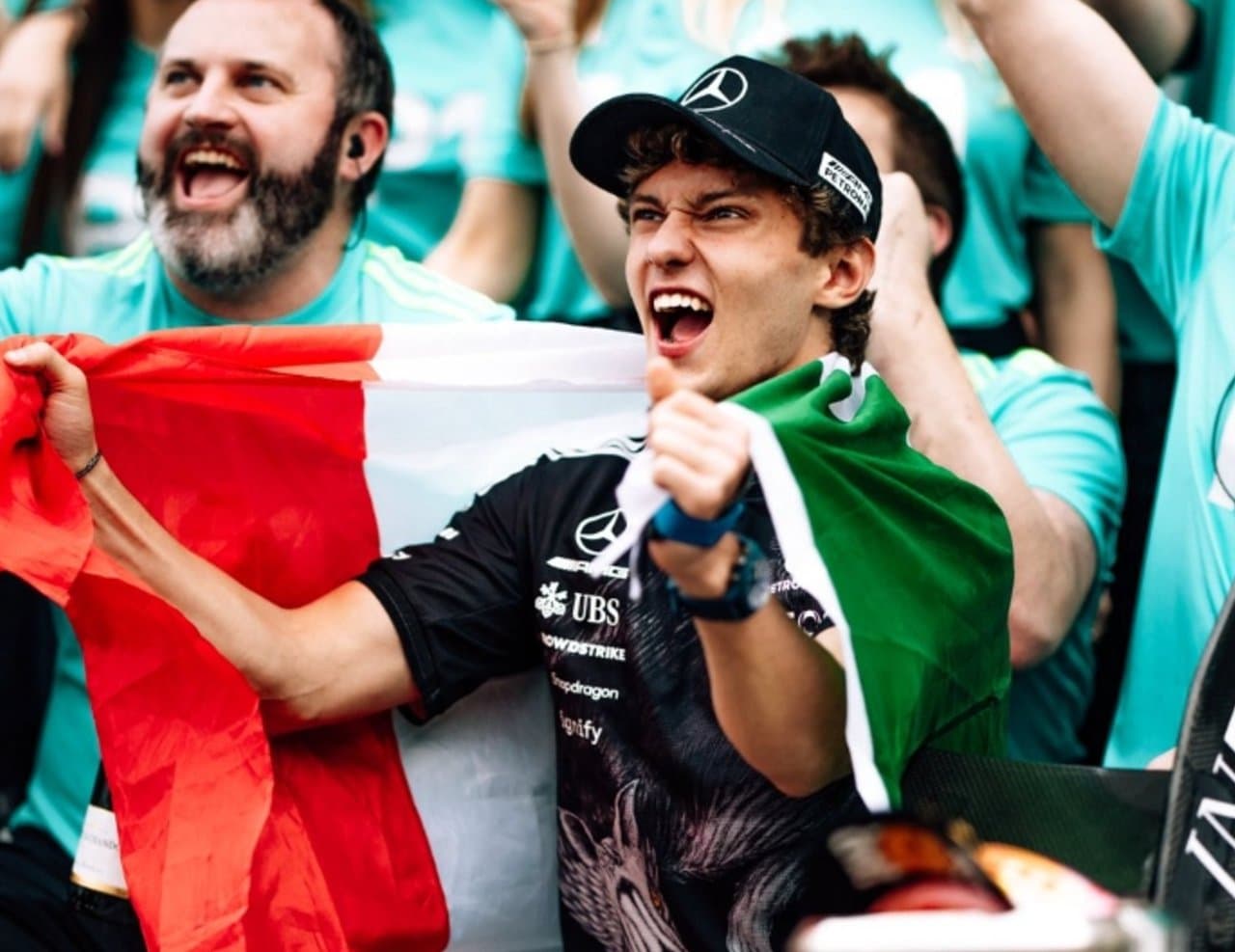 |
The Italian driver Andrea Kimi Antonelli, from Mercedes, achieved a remarkable victory in the Grande Prêmio of the Japão of Apesar Having started in pole position, the young competitor faced serious difficulties at the start and lost five positions in the opening meters of the race. The recovery was consolidated throughout the laps, allowing the driver to cross the finish line in first place and take over the top of the world classification table.
The race in Japanese territory was marked by a fluctuation in performance that tested the maturity of the 19-year-old competitor. Após dropped to sixth place on the first lap, Antonelli needed to remain calm to climb the pack on one of the most technical circuits on the calendar. The isolated triumph did not hide the technical problems faced by the car’s clutch system, a fact that was promptly recognized by the athlete in his official statements after the end of the event.
Overcoming in Suzuka and technical analysis of the start
Andrea Kimi Antonelli’s performance in the initial phase of the race was classified by the pilot himself as unsatisfactory due to the loss of traction at start-up. Segundo the competitor, the analysis of telemetry data will be essential to understand whether the error was due to manual operation or a failure in the electronic configuration of Mercedes’s car. The Italian highlighted that, in a category as competitive as the Fórmula 1, failures of this type can compromise the entire strategic planning of a weekend.
The Mercedes engineering team has already begun the component review process to ensure that the pilot has greater predictability in future events. Antonelli emphasized that the starts have been a critical point in his debut season, becoming the main focus of his preparation for the next stages. The driver’s honesty in admitting his vulnerabilities reflects the search for constant evolution within the structure of the German team.
- Difficulty modulating the clutch when the lights are off.
- Loss of five positions before the first corner of the Suzuka circuit.
- Need for intensive training during the three-week calendar break.
Strategy favored by the entry of the safety car
One of the decisive moments in the young Italian’s victory was the neutralization of the race through the entry of the safety car. The moment of the yellow flag across the entire circuit coincided with the scheduled stopping window, which allowed Antonelli to change tires with significantly less loss of time. Essa fortuitous circumstance was essential for him to return to the leading group and compete directly for leadership with his opponents.
Luck, however, was accompanied by an overwhelming race pace demonstrated by the Mercedes chassis in the hands of the Italian. Assim who found a free track, Antonelli managed to record consecutive fast laps, distancing himself from the competitors who were close behind. The balance of the car with the medium and hard compound tires showed that the team found an ideal setup for the high-speed characteristics of the Suzuka corners.
Intensive preparation for the rest of the season
With the end of the Asian leg and a 21-day break in the official calendar, the pilot plans to dedicate full time to the simulators. The objective is to acquire a more refined sensitivity with the steering wheel controls, especially when it comes to the initial launch. Antonelli declared that he does not intend to waste the advantage gained in the championship due to mistakes that he considers avoidable through repetition and technical training.
The leadership of the drivers’ world championship, achieved at the age of 19, places Andrea Kimi Antonelli as the youngest driver in history to occupy such a position in the Fórmula 1. The break will be used not only for physical rest, but for operational adjustments that guarantee safer and more efficient starts.
Mercedes closely monitors the development of its young talent, providing complete support so that deficiencies are quickly remedied. The trust placed in the Italian is repaid with results on the track, even when the initial conditions seem unfavorable. The focus now turns to maintaining leadership and mitigating operational risks that may arise in upcoming street races and permanent circuits.
Tire performance and consistent race pace
The strategic choice of Mercedes allowed Antonelli to explore the maximum potential of the vehicle throughout the entire length of the Japão GP. In the second stage of the race, with the use of hard compound tires, the car’s final speed was higher than that of the competing teams, making it easier to maintain first place. The driver highlighted that the feeling of driving on a free track was the difference in establishing the necessary safety margin until the final flag.
Managing tire wear in Suzuka is traditionally complex due to the abrasive nature of the asphalt and intense lateral forces. Antonelli demonstrated unusual skill for his age by saving equipment without sacrificing lap time, showing tactical maturity. Essa test reading capacity is what has guaranteed important points even on weekends where not everything goes as originally planned by the team.
The technical performance of car 12 was praised by analysts present in the paddock, who highlighted the aerodynamic recovery after the turbulence of the first lap. The clean air provided by the lead after the pit stops allowed the radiators and brakes to work at optimal temperatures, maximizing mechanical efficiency. The Mercedes’s mechanical assembly appears to have reached a level of reliability that allows the driver to focus solely on his personal performance on the track.
Impact of victory on the world driver classification
By adding 25 points from the victory in Suzuka, Antonelli made a significant jump in the table, surpassing veterans and world champions who appear on the current grid. Esta meteoric rise confirms the expectations generated from the youth categories, where the Italian has always stood out for his speed and adaptability. Leading the championship brings with it a new marking dynamic on the part of rivals, who now see the young man from Mercedes as the target to beat.
The Mercedes technical team highlighted that, although the leadership is a reason to celebrate, the focus remains on the evolution of the car for the European stages. The balance between the development of the driver and the updating of the car is what will define success at the end of 2026. The victory in the Japão is seen as a milestone, but the awareness that weaknesses still exist keeps the garage’s internal environment in a state of alert and continuous work.
Antonelli’s direct competitors have already expressed concern about the pace set by the Italian during Sunday’s sessions. The recovery capacity demonstrated in Suzuka serves as a warning that, even with initial failures, the pilot and Mercedes have tools to reverse negative scenarios. The championship enters a critical phase where the margin for error decreases and precision in every operational detail becomes the difference between the podium and loss in the score.
Test schedule and focus on the clutch
Planning for the next three weeks includes intense starting sessions on private test tracks authorized by the international federation. Antonelli wants to simulate various grip and temperature conditions to understand transmission system response variations. Esse level of detail is what differentiates elite pilots, and the Italian’s willingness to train during his time off is well regarded by the Mercedes board.
The clutch of a Fórmula 1 car is a highly sensitive component, operated by butterflies behind the steering wheel that require millimeter precision from the driver’s fingers. Pequenas variations in torque release can cause wheels to spin or activate the anti-stall system, which prevents the engine from stopping but costs precious seconds. The training aims to automate the release movement so that it occurs instinctively and perfectly in all possible weather conditions.
In addition to the mechanical part, the psychological aspect of the start will also be worked on with team experts. Manter maximum concentration while surrounded by 19 other cars at high speed requires emotional control that the young driver is improving. The victory in Japão served as an injection of confidence, but the goal is to reach the next stage with the certainty that pole position will turn into effective leadership at the first corner.
Final balance of the Japanese stage of Fórmula 1
The Grande Prêmio of the Japão delivered one of the most interesting races of the season, with intense disputes in all sectors of the grid. The victory of Antonelli crowns a work of resilience and shows that Mercedes has regained its technical protagonism within the category. The Japanese public, known for its fanaticism and respect for the sport, applauded the young winner, recognizing the talent demonstrated in overtaking and in race management.
The final analysis of the race shows that the stopping strategy was executed perfectly by the mechanics, with pit stops below the season’s average time. Esse support from the pits is essential to complement the driver’s talent, creating a winning ecosystem that is reflected in championship leadership. The next few weeks will be quiet on the tracks, but a lot of work behind the scenes at the factories in Brackley and Brixworth.
Andrea Kimi Antonelli ends her time at Ásia with consolidated global star status. The challenge now is to maintain regularity and prove that the mistakes made at the starts are definitely in the past of Suzuka. The Fórmula 1 remains vibrant, with new talents challenging the established order and bringing renewal to the top of world motorsport, while the teams prepare for the technical challenges of the tracks that will follow on the 2026 calendar.