
Avatar 3 arrives on digital platforms with a history of 1.5 billion dollars at the box office By Carolina Costa
6 min read
 |
The science fiction film directed by James Cameron has begun its distribution phase in the video on demand market. Após the period of exclusive screening in cinemas on a global scale, where it raised 1.5 billion dollars, the feature film became part of digital service catalogs for purchase and rental, including platforms such as Amazon Prime Video and Apple TV. The production advances in the chronology established by the previous film, focusing on the direct consequences of the conflicts involving the Sully family on the alien planet.
The script resumes the events immediately after the clashes seen in the last production, addressing the restructuring of the central characters in the face of the losses suffered. Jake Sully focuses his efforts on organizing a more robust defense system for the allied tribes, while Neytiri processes grief through a harsh defensive stance towards his surviving children. The geographical and cultural scope of the scenario is expanded, forcing the protagonists to establish contact with native groups that operate under different social and survival logics than those already documented in the franchise.

It is made available in digital format simultaneously in several territories, aiming to reach audiences who were waiting for the end of the cinematic exclusivity window. The domestic release strategy maintains the industry standard for high-budget productions, seeking to maximize revenues after the main box office cycle. Immediate access allows viewers to consume content at high resolutions tailored for home entertainment systems.
– The film presents new biomes and social structures within the fictional universe.
– Motion capture technology has been updated to record facial micro-expressions.
– The main cast returns to their original roles, accompanied by new additions to the previously unseen clans.
Territorial expansion and the unprecedented threat of the volcanic clan
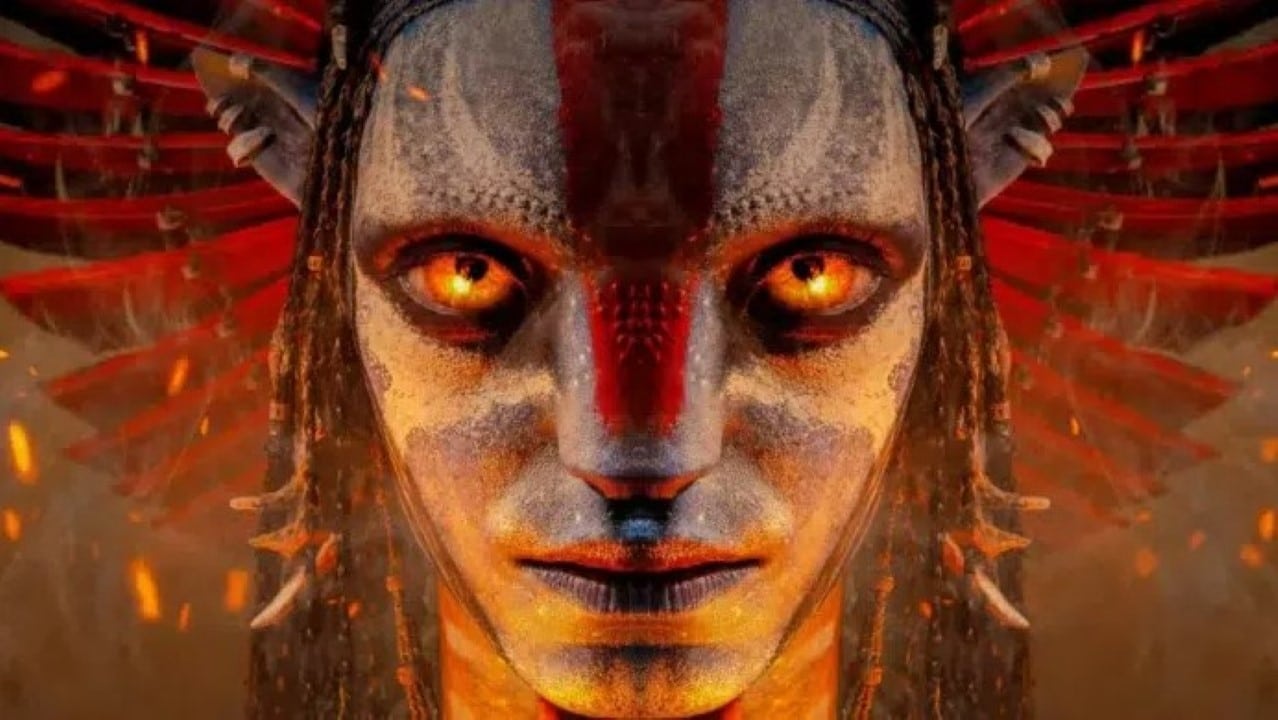
The narrative structure introduces a new native faction called Povo of Cinzas, characterized by hostile territorial behavior and extreme survival tactics. The leadership of this group is exercised by the character Varang, played by the actress Oona Chaplin, who establishes a direct counterpoint to the peaceful philosophy and environmental symbiosis presented by the previous tribes. The existence of this clan demonstrates behavioral diversity in the local species, showing that the planet’s inhabitants have deep ideological divisions.
The actions of Povo of Cinzas take on more complex contours when the group establishes a tactical alliance with the human military force present on the planet. Coronel Quaritch, operating permanently in a synthetic body, identifies in the aggressiveness of this tribe an opportunity to destabilize the resistance led by Jake Sully. The convergence of interests between the terrestrial invaders and the dissident native faction creates a scenario of asymmetric warfare.
The union between the human technological arsenal and the geographic and military knowledge of the volcanic clan results in coordinated offensives against pacified territories. Essa dynamics alter the previously established balance of power, requiring the protagonists to develop new containment strategies. The conflict stops being just a dispute between different species and starts to involve a civil war between the natives themselves.
Development of the new generation and survival dilemmas
The script allocates a significant portion of its screen time to the narrative arc of the younger characters, with emphasis on the trajectories of Lo’ak and Kiri. Lo’ak seeks to consolidate his position as a warrior within the family and tribal hierarchy, dealing with the expectations imposed by his father and the memory of his older brother. Suas Interactions with local fauna remain a central element of its development.
Kiri, in turn, deepens his investigation into the unique abilities he possesses in relation to the planet’s biological network. The character goes through a process of training and discovery that brings her closer to the role of shaman, requiring a technical and spiritual understanding of the ecosystem. Suas Capabilities become a strategic resource and a point of interest for conflicting factions.
Character Spider’s situation adds a layer of logistical and biological tension to the plot. Sendo a human raised among the natives, he faces severe physical limitations in the new environments explored, depending on oxygen equipment and suffering from adverse atmospheric conditions. Sua Vulnerability is a constant factor of concern for the group.
The relationship between Spider and Quaritch, his biological father, evolves amid territorial clashes. The character moves between loyalty to his adoptive family and the psychological attacks of the antagonist, generating situations of internal conflict that directly impact the tactical decisions of both sides of the war.
Advances in visual effects and the transition to smaller screens
The production team implemented new rendering tools to simulate the physical properties of volcanic environments, focusing on lighting generated by flames, smoke and suspended ash. The computer graphics work moves away from the blue and green color palettes of previous films, adopting warm tones and arid textures that required the development of new particle simulation algorithms. Technical precision aims to maintain the visual cohesion of the universe, even in the face of a drastic change in biome.
Adapting the material to the streaming format involved video compression processes that preserve the integrity of the textures and contrast of highly visually complex scenes. The direction prioritized the clarity of the action sequences, ensuring that the scale of the military ships and the agility of the computer-generated characters remain intelligible on televisions and mobile devices. Investment in post-production supports the technical standard required by the current digital entertainment market.
Financial performance and the impact on the entertainment market
Revenue of 1.5 billion dollars at the global box office consolidates the commercial viability of the franchise in the long term, even though it represents a lower amount than that raised by the first feature film. Financial data indicates solid audience retention in key international markets, which justifies the high production and marketing costs involved in the project. The result places the title among the main economic performances of the film season.
Entry into the video on demand market represents the second phase of product monetization. Digital platforms offer the film in both definitive purchase and temporary rental formats, generating an ongoing source of revenue that complements earnings from physical theater screenings. The distribution strategy aims to capitalize on residual audience engagement and reach consumers who opt exclusively for home media consumption.
Performances by the main cast and the introduction of new talent
Performance capture work requires a specific technical adaptation from the cast, where emotions need to be transmitted through facial and body tracking equipment. Sam Worthington and Zoe Saldana maintain the dramatic consistency of their characters, anchoring the action sequences in clear and tangible family motivations. The return of actors such as Sigourney Weaver, Kate Winslet and Cliff Curtis guarantees a base of experienced performances that support the credibility of the interactions between the virtual characters. The addition of Oona Chaplin to the main cast injects a different dynamic into the narrative, providing an antagonistic figure who operates outside of human military standards. Sua’s interpretation of the leader of Povo demands an aggressive physicality and a commanding posture that directly contrasts with the fluidity of the water and forest clans, enriching the spectrum of personalities present in the work.
Continuity of the franchise and planning for upcoming sequels
The narrative structure established in this third chapter sets the stage for the next two productions already confirmed by the studio. The final events indicate significant geographic and political changes on the planet, suggesting that future scripts will explore the direct consequences of native civil war and the persistence of human colonization. The production schedule remains active, with the visual effects teams already working on rendering the next biomes to be presented to the public.



