

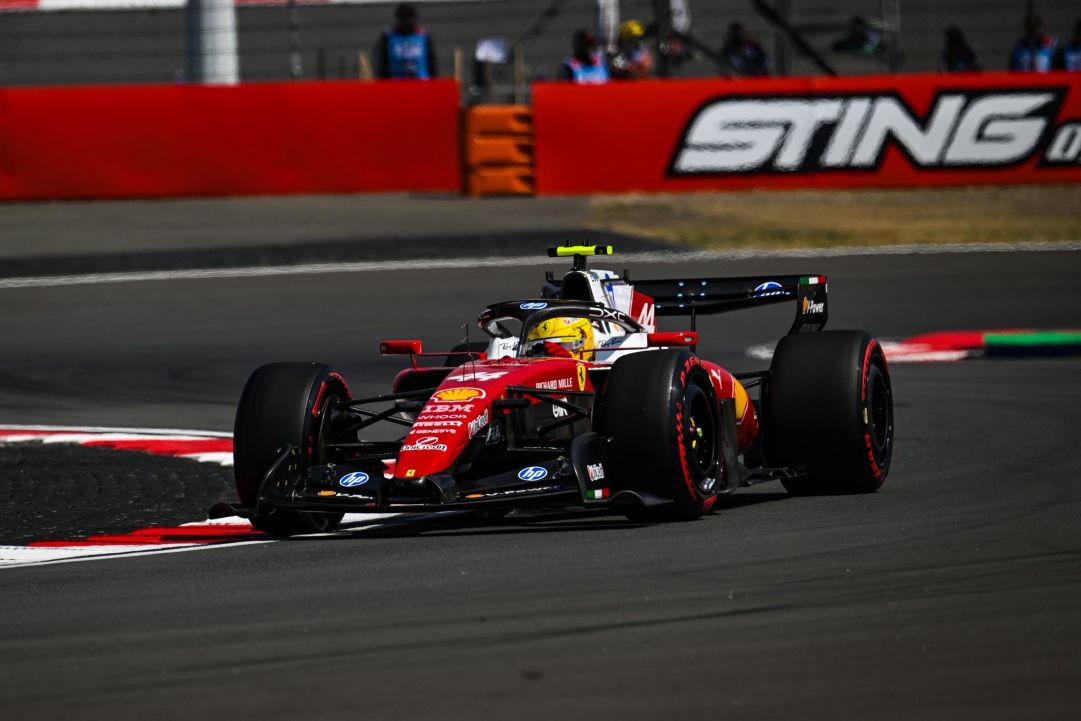
The seven-time world champion began a phase of deep immersion in the Italian team’s facilities, marking a significant transition in his professional career. Após twelve years defending the previous German automaker, the athlete focuses his efforts on understanding the dynamics of work in Maranello. The change required a technical and cultural adaptation, involving the assimilation of the internal processes and engineering philosophy of the new house. Sua Constant presence at the factory demonstrates a level of commitment that goes beyond standard contractual obligations. The Briton has actively participated in meetings with designers, seeking to align the characteristics of the future single-seater with his driving style. Essa proactive stance aims to ensure that the transition to the next regulatory cycle occurs smoothly. The recent victory in Grande Prêmio of China consolidated the mutual trust between the competitor and the technical management. The current focus lies on translating track sensations into concrete data for the development team, utilizing their vast experience.
Work in the simulator has become the main tool for testing hypotheses and validating aerodynamic concepts before manufacturing physical parts. Sessões Extensive virtual equipment allows the driver to evaluate chassis behavior under different load and suspension configurations. The correlation between virtual data and the reality of the track is a critical factor for the success of the project.
Priorities established by the technical team include specific guidelines for optimizing development time at facilities.
– Refinamento of the correlation between the wind tunnel and the virtual simulator.
– Estabelecimento for a communication channel without intermediaries with engineers.
– Análise Detailed chassis behavior in high-speed curves.
Technical integration and aerodynamic advances at Maranello headquarters
The Italian team focuses its resources on interpreting the new technical guidelines imposed by the international federation. The internal design requires an innovative approach to weight distribution and airflow management.
The direct involvement of the driver in the early stages of car design represents a considerable strategic advantage. The ability to provide accurate feedback on the behavior of the power unit and the efficiency of the energy recovery system guides designers’ decisions. The team seeks to maximize aerodynamic efficiency in conjunction with the new hybrid propulsion requirements, which provide for an equal division between the power generated by the combustion engine and the electrical system.
The complexity of the new regulations demands absolute synergy between the chassis and engine departments. The Briton has acted as a link between these two areas, promoting technical discussions that aim to eliminate bottlenecks in the manufacturing process. Durante visits to headquarters, he dedicates hours to comparative telemetry analysis, crossing information from past races with virtual projections of the new model. Active aerodynamics requires constant fine-tuning to ensure the car’s stability in braking and acceleration zones. Pilot experience makes it easier to identify practical solutions to complex engineering problems. The joint work has resulted in structural modifications to the preliminary design of the floor and wings, aiming to create rapid and consistent tire wear equipment.
Direct communication with the engineering department
The elimination of hierarchical barriers in internal communication was one of the first requests met by the team’s management. Direct contact with those responsible for aerodynamics and the power unit speeds up the decision-making process and avoids losing crucial information.
Weekly alignment meetings ensure that all areas of the factory are aware of development priorities. The pilot uses these occasions to detail his perceptions about the functioning of the auxiliary systems and the ergonomics of the cockpit, factors that directly influence comfort and performance in long races.
Cultural adaptation and leadership in Italian motorsport
The change to the Italian structure required a conscious effort to integrate with the local culture and the team’s characteristic working methods. Learning the language and understanding the nuances in interpersonal relationships within the factory demonstrate the athlete’s respect for the brand’s history.
Its collaborative stance has motivated employees from different sectors, from track mechanics to precision machine operators. The presence of an established champion in the work environment raises the level of demand and inspires the search for excellence in every detail of the production process.
The leadership role is exercised naturally, based on the exchange of experiences and the encouragement of creative thinking. The ability to keep the team focused on long-term objectives, even in the face of specific difficulties, is a characteristic valued by the organization’s top management.
Performance on the tracks and reflection on internal development
Recent performances in the current championship serve as a testing laboratory for validating concepts that will be applied in the future. The car’s behavior on demanding tracks provides real data that feeds the mathematical models used by engineers.
Close observation of pit stop operations and race strategy demonstrates the driver’s interest in optimizing all aspects of the competition. Efficiency in the pits is often discussed in post-race review meetings, with the aim of reducing downtime and avoiding operational errors.
The exchange of information between the track team and the base at Itália occurs in real time, allowing quick adjustments to the single-seater configuration. The driver actively participates in these analyses, suggesting modifications to the front wing and engine mapping to improve race pace.
The positive correlation between the updates introduced in the current car and the results obtained on the track reinforces the validity of the adopted work methodology. The success of recent aerodynamic innovations increases confidence in the chosen path for design in the next regulatory cycle.
Engine regulation and the impact on active aerodynamics
Future technical guidelines impose significant challenges with regard to the integration of the power unit with the chassis. The requirement for greater participation of electrical energy in the vehicle’s propulsion fundamentally changes the weight distribution and the cooling system. Engineers work to accommodate larger batteries without compromising airflow around the sides of the car, a task that requires creative thermal and structural packaging solutions.
The introduction of movable aerodynamic elements adds an extra layer of complexity to the single-seater setup. The driver needs to adapt his driving style to maximize the benefits of these systems on the straights, while maintaining the necessary stability in the braking zones. Work on the simulator focuses on creating control algorithms that make the transition between different aerodynamic states as smooth as possible, avoiding unpredictable chassis reactions during overtaking.
Search for the eighth world title and legacy in the sport
The partnership between the most successful driver in history and the most traditional team on the grid carries an undeniable historical weight. The motivation to win an unprecedented championship drives the level of dedication shown behind the scenes. The team, which faces a long period without world titles, sees this union as the ideal opportunity to return to the top of the sport. Strategic planning involves the technical development of the car and the construction of an environment shielded against external pressure. The athlete’s experience in dealing with fierce disputes is an invaluable asset in guiding the team. The focus on preparing the new equipment reflects the shared ambition to establish a new era of dominance on the track, redefining performance standards in the top category of motorsport.
Synergy between driver and constructor in the current season
The continuous evolution of the professional relationship between the parties indicates a rapid maturity of the technical partnership. Transparency in the exchange of information and mutual respect for the competencies of each area create a solid foundation for facing the engineering challenges that lie ahead in the coming months of intensive development.