
Formula 1 promise accelerates Sebastian Vettel’s legendary RB7 on historic display in France By Luís Henrique Costa
7 min read
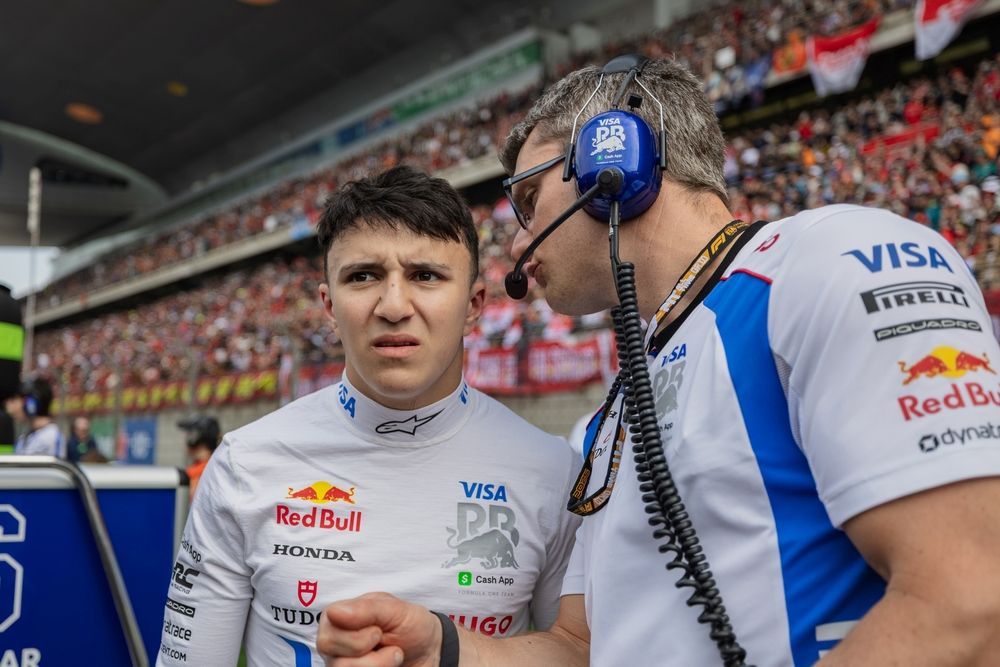 |
The Red Bull Racing team has confirmed that driver Isack Hadjar will take the wheel of the iconic RB7 model during the Grand Prix of France Historique. The motorsport event is scheduled for May 9th at the Paul Ricard circuit. The display marks a rare opportunity for the young French talent, who currently ranks as one of the leading promises to join the main grid of the highest motorsport category in the coming seasons. Driving the world champion single-seater represents a significant step in the athlete’s technical preparation and public exposure within the Austrian team’s development program.
The vehicle chosen for the demonstration has an immeasurable historical weight for the organization based in Milton Keynes. The RB7 chassis was the exact machine used by the German Sebastian Vettel to win the drivers’ world championship in the 2011 season. The presence of this specific car on French soil meets the team’s strategy of bringing fans closer to the old generations of engines, while at the same time promoting its new local talents in an environment of great media visibility and sports.
また近いうちにお会いしましょう、@gpfhistorique🇫🇷#F1||#RedBullRacing https://t.co/VfU7CuiaCP pic.twitter.com/F3ZB74nXSM
—オラクル・レッドブル・レーシング (@redbullracing)2026 年 4 月 2 日
- The event will bring together more than 225 historic cars from different categories.
- The lineup covers vehicles manufactured between the 1970s and 2010.
- Isack Hadjar will be the only active pilot in the current Fórmula 1 access system to participate in the main exhibitions.
Participation in the Paul Ricard route requires rigorous technical adaptation, even for a driver accustomed to the high speeds of the current Fórmula 2. The circuit, known for its extensive exhaust areas and the famous Mistral straight, offers the ideal setting for the naturally aspirated V8 engine to reach its maximum rotational capacity. The event organizers structured the schedule so that the Red Bull demonstration is one of the highlights of the weekend, attracting motorsport enthusiasts from all over Europa.
The return of classic engines to the French circuit
The Grand Prix of France Historique has established itself as one of the main classic motorsport meetings on the European continent. The current edition promises to surpass the attendance records of previous seasons, driven by the presence of machines that defined different technological eras. The event curators carefully selected the single-seaters to ensure a faithful representation of the aerodynamic and mechanical evolution of the sport over five decades.
The inclusion of the RB7 in the list of attractions raises the technical level of the exhibition. Diferente of cars from the 1970s and 1980s, which relied largely on mechanical grip, the Red Bull model represents the culmination of the era of complex aerodynamics before the introduction of hybrid engines. The organizers prepared special boxes with temperature control and restricted access to house the telemetry equipment necessary for the safe operation of the vehicle.
The logistics of transporting and operating a 2011 Fórmula 1 generation car involve a dedicated team of engineers and skilled mechanics. Red Bull Racing mobilized part of its historical heritage department to ensure that all hydraulic and electronic systems function with the same precision as when the car competed in the world championship. The engine ignition process requires preheating the fluids, a procedure that in itself attracts the attention of spectators in the pits.
Cutting-edge engineering and the legacy of the champion model
Designed by renowned engineer Adrian Newey, the RB7 is widely considered one of the masterpieces of modern automobile engineering. The car dominated the 2011 season with a superiority rarely seen in the history of the sport. The project exploited the regulations of the time to the fullest, using the blown diffuser concept, which directed exhaust gases to generate additional aerodynamic pressure even when the driver was not accelerating.
The numbers recorded by this specific chassis attest to its efficiency on tracks around the world. Durante that year, the team won 12 pole positions in 19 stages contested, demonstrating unparalleled qualifying speed. Sebastian Vettel converted this initial lead into 11 victories, accumulating enough points to secure the world title with several races to spare, while the team scored an impressive 650 points in the constructors’ championship.
The power unit that equips the RB7 is a 2.4-liter V8 engine, capable of reaching up to 18,000 revolutions per minute. Este thruster became famous not only for its reliability and perfect integration with the chassis, but also for the strident and characteristic sound it produced. The acoustics of this engine contrast sharply with current V6 turbo-hybrid power units, being one of the main reasons for nostalgia among historic event-goers.
The pull-rod suspension system at the rear, another signature of Newey designs from that era, allowed for extremely compact packaging of the gearbox and hydraulic components. Essa configuration reduced the single-seater’s center of gravity and optimized airflow towards the rear wing. The combination of these technical elements transformed the car into a machine that required a very particular driving style to extract its maximum potential.
Meeting of generations of world motorsport
The track at Paul Ricard will serve as a meeting place for legendary figures who wrote pivotal chapters in racing history. Nomes consecrated as René Arnoux, Jean Alesi, Olivier Panis and Felipe Massa confirmed their presence and will drive vehicles that marked their respective careers. The interaction between these veterans and Isack Hadjar creates a direct bridge between the glorious past of motorsport and the future represented by the young talents trained in contemporary driver academies.
The dynamic of the event allows the public to observe the fundamental differences in the riding approaches of different generations. Enquanto the veterans bring the experience of decades of competition in cars with less electronic assistance, Hadjar represents the new school of drivers, trained since childhood in very high fidelity simulators. The exchange of information behind the scenes about tire behavior, braking points and chassis reactions enriches the technical experience of everyone involved in organizing and executing the demonstrations.
Technical preparation and simulator training
To ensure the display runs flawlessly, Isack Hadjar underwent an intense preparation program at Red Bull Racing’s facilities in Milton Keynes. The driver spent hours in the team’s official simulator, calibrated specifically with the RB7’s original telemetry data collected during the 2011 season. Este training is critical because the characteristics of The older model’s drivability differs drastically from the Fórmula 2 cars that Hadjar regularly drives. The absence of the Halo system, the higher riding position, the immediate throttle response of the V8 engine and the enormous amount of downforce generated by the blown diffuser require a complete neuromuscular readaptation. Engineers focused on simulating the specific G-forces the driver will face in Paul Ricard’s high-speed corners, such as the famous Signes corner, ensuring he understands the limits of mechanical and aerodynamic grip before entering the real cockpit.
Security protocols and viewing history
Operating a Fórmula 1 single-seater outside of an official race weekend requires the implementation of extremely strict safety protocols. The technical team performs detailed inspections on critical components such as suspension arms, carbon fiber brake systems and monocoque integrity. The objective is to mitigate any risk of mechanical failure during demonstration laps, prioritizing the physical integrity of the driver and the safety of spectators in the stands.
Extra care is justified by the history of incidents in events of a similar nature. In past demonstrations, unpredictable factors such as wear on old parts or lack of ideal temperature in display tires have resulted in loss of control. Red Bull Racing established a conservative speed limit and engine map for the presentation of Hadjar, ensuring that the visual and aural spectacle is delivered without compromising the safety of operation on the French route.
Technological transition on the tracks
The presence of RB7 in Paul Ricard highlights the rapid technological evolution that Fórmula 1 has experienced in the last decade. The contrast between the relative simplicity of 2011 electronic systems and the complexity of today’s hybrid single-seaters demonstrates the category’s continued commitment to innovation in automotive engineering.
Public expectations and organization of the event
Ticket sales for France Historique’s France Historique saw a significant increase following the announcement of Red Bull Racing’s participation. Organizers have structured prime viewing areas along the main straight and in the heaviest braking zones, allowing fans to closely monitor the performance of the machines. The racetrack’s infrastructure was adapted to receive a volume of visitors comparable to the days of major international competitions.
In addition to the action on the track, the event will feature static displays and autograph sessions. The marketing strategy involves the creation of interactive zones where the public can learn about the technical details of the cars and the history of the teams. The initiative aims to strengthen the culture of motorsport in the region, offering an immersive experience that goes beyond simply observing demonstration races.
Importance for the young pilot’s career
The choice of Isack Hadjar to lead RB7 reflects the confidence that Red Bull’s leadership has in his professional development. Assumir The responsibility of driving a championship car in a large-scale public event tests maturity and the ability to deal with media pressure. Impeccable performance in exhibitions of this size is positively evaluated by team directors.
Direct contact with the engineering of a Fórmula 1 winning car provides Hadjar a valuable knowledge base for your career progression. Practical understanding of how an elite chassis responds to driver inputs helps improve your analytical skills. Este type of off-field experience complements standard training, preparing the athlete for the technical challenges they will face when definitively entering the main category of world motorsport.