
Experts monitor the approach between Venus and Pleiades with transits visible on Jupiter

Astronomy professionals and enthusiasts prepare optical equipment to monitor a series of celestial phenomena that occur in the first half of April. Comet C/2026 A1, classified as a solar ray, recently reached its perihelion, which attracts the attention of experts regarding its structural survival and consequent visibility on the western horizon shortly after sunset. Orbital dynamics provide a favorable scenario for mapping the night sky in different regions.
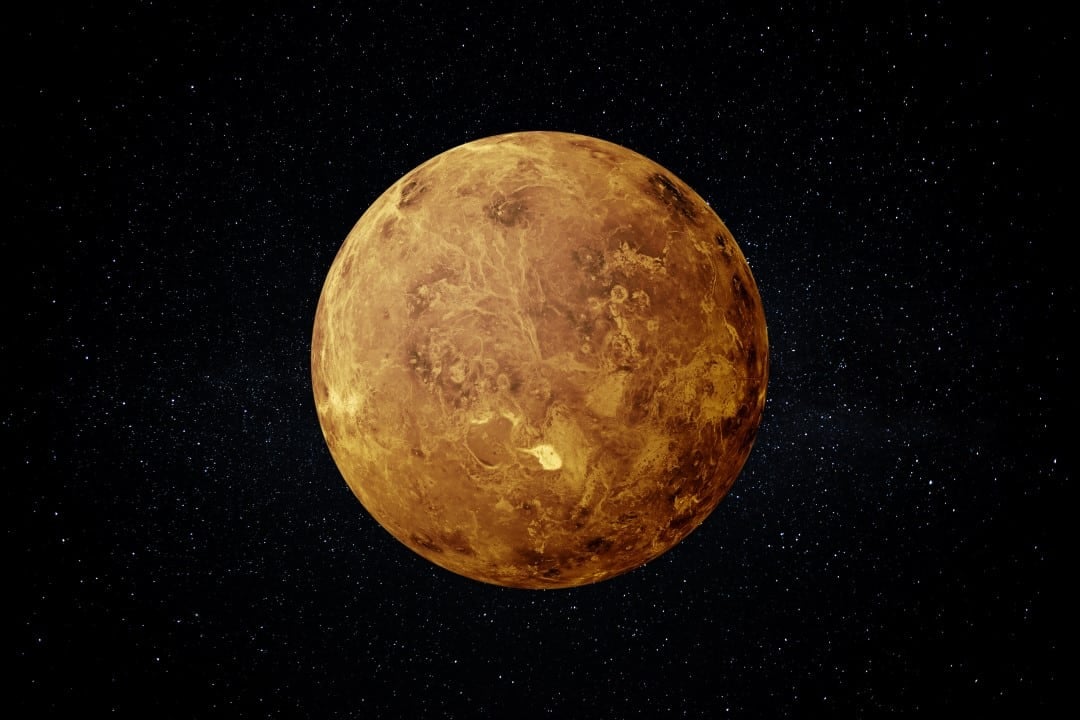
In the same western quadrant, the planet Vênus maintains an intense glow during the afternoon twilight, while the star cluster Plêiades gradually descends towards the planet. The apparent approach between the two celestial bodies occurs at a rate of approximately one degree per day, which allows continuous monitoring of the phenomenon with the naked eye or with the aid of basic observation instruments.

In parallel, Júpiter occupies an elevated position in the southwest during dusk, which offers ideal conditions for viewing its Galilean moons. Outros Solar system planets, such as Mercúrio, Marte, Saturno, and Netuno, appear in lower positions in the early morning sky, requiring specific atmospheric conditions and clear horizons for accurate detection by ground-based observers.
Gradual approach between Vênus and the cluster of Plêiades
Venus stands out as the brightest point in the western sky just after sunset, registering an apparent magnitude close to -3.9. The planet rises slightly each day in the same region where Plêiades shines softly as darkness settles in the Earth’s atmosphere. Durante During this period, the angular separation between the two celestial objects progressively decreases, reaching around 25 degrees at the beginning of April and maintaining a constant rate of reduction.
Astronomical records indicate that the distance between Vênus and the star cluster shortens by almost a degree daily, culminating in a close pass at a distance of approximately 3.75 degrees at the end of the month. The use of binoculars facilitates simultaneous viewing of both targets, especially in locations that have a western horizon free of physical obstacles and away from areas with intense urban light pollution. The rocky planet sets just after the end of twilight, which restricts the ideal observing window to a period of about 50 minutes after total darkness in much of the mid-latitudes.
Transits and shadow projections on the disk of Júpiter
Jupiter reflects sunlight with a magnitude of -2.1, appearing almost at the zenith when viewed from the southwest at dusk. The gas giant moves westward throughout the night, decreasing its apparent height until it sets during the early hours of the morning, with variations depending on the observer’s local time zone. The planet’s apparent diameter currently measures 39 arc seconds, a metric that reflects Terra’s gradual retreat from the Jovian orbit.
Callisto, the slowest orbiting Galilean moon, casts its dark shadow across the face of Júpiter on specific dates of the month, with the marking visible at a distance of two to three planetary diameters to the west. Grande Mancha Vermelha, the planet’s persistent anticyclonic storm, also transits the central meridian at times synchronized with lunar events. At subsequent times, the moon Io re-emerges from eclipses, emerging from the shadow cast by Júpiter about a radius away from the planet’s eastern edge.
Atmospheric dynamics and composition of the gas giant
High-resolution equipment allows astronomers to record unusual waves and streaks in Júpiter’s upper atmosphere, including openings in high cloud layers that reveal bluish hues deep within the planet. Estas complex atmospheric formations result from the predominant chemical composition of the gas giant, which is mainly formed by hydrogen and helium in fluid states. The scattering of light in these gases creates a visual effect that resembles why Earth’s skies appear blue when viewed at low angles, although the physical and chemical processes involved in the Jovian atmosphere operate on pressure and temperature scales radically different from those found in Terra. Continuous monitoring of these equatorial and temperate bands provides essential data on the planet’s thermodynamics.
Visibility of spring constellations and asterisms
Arcturus, classified as a characteristic bright spring star at Hemisfério Norte, rises on the eastern horizon and reaches an elevation comparable to that of Sirius in the southwest quadrant. The star serves as a celestial beacon for identifying other stellar structures in the same region of the sky.
On the west-northwestern horizon, Capella appears in an elevated position, competing in brightness and displaying a yellowish-white coloration that resembles the light emitted by Sol. The star system of Capella is actually composed of two yellow giant stars that orbit a common center of mass every 104 Earth days.
Telescopic observation of Capella reveals that it is accompanied by a distant pair of low-brightness red dwarfs, requiring instruments with good light-gathering capabilities for their detection. The identification of these multiple systems helps in the study of stellar formation and evolution.
Vega, known historically as the summer star, rises in the northeast in the final hours of the night. Vega’s location can be guided by the position of Ursa Maior, using the stars Mizar and its companion Alcor as reference points to draw an imaginary straight line towards the horizon.
Deep galactic structures in the constellation Leão
The star formation known as Foice of Leão rises vertically in the south after dusk, with the star Regulus as its lowest brightest point. The constellation Leão moves horizontally to the west, drawing the front paw, chest, mane and part of the head of the mythological animal in the sky. To the left of this main structure, a long right triangle completes the back and extended tail of the constellation, serving as a guide for locating deep-sky objects.
Deep space explorers aim their telescopes at the region beneath the back of Leão, home to a collection of galaxies made up of M66, M65, and NGC 3628. The M65 and M66 galaxies are separated by just a third of an angular degree, allowing them both to fit into the same field of view when using a low-power eyepiece. M65 has a compact and bright stellar core, while M66 has a more diffuse structure without a prominent central core. The spiral galaxy NGC 3628, seen in profile from Terra, is oriented perpendicular to the other two, with the trio located at a distance that varies between 31 and 35 million light-years from our solar system.
Celestial alignments and lunar phases at dawn
Lua reaches the waning quarter phase at specific times during the early morning, marking the last late waning phase of the current cycle. Quando the natural satellite becomes clearly visible in the night sky, the star formation known as Bule of Sagitário appears positioned to its right, with the constellation of Escorpião situated slightly further away and at a higher elevation.
During dawn, the celestial configuration levels out with all the highest objects in the sky. Stars Sirius and Procyon, belonging to the constellation Cão Menor, align vertically in the southwest quadrant during late twilight, creating an important visual marker for celestial navigators.
The red supergiant star Betelgeuse marks the shoulder of the constellation Órion, sitting to the right of the midpoint of Triângulo Inverno. Identifying these bright stars makes it easier to map adjacent constellations before sunlight completely obscures the celestial vault.
Positioning of Mercúrio and distant planets
Mercúrio maintains a stable apparent magnitude around zero and preserves a similar altitude in the clear early morning sky. The rocky planet appears a few degrees above the horizon, slightly to the right of the east cardinal point, about 25 minutes before sunrise of Sol. Using binoculars or wide-field telescopes significantly increases the chances of detection, as Mercury is the brightest object among the celestial bodies visible in the morning. Marte, Saturno and Netuno are also present in the same direction, but require exceptional atmospheric conditions for viewing. Urano, with a magnitude of 5.8, remains about 30 degrees high in the west at the end of twilight, positioned south of Plêiades, revealing itself only as a small nonstellar spot in high-magnification telescopes.
Technical recommendations for sky mapping
Descriptions of positioning on the horizon, including relative directions such as up, down, right, and left, are adapted for observers located at mid-latitudes. Astronomy enthusiasts should make necessary adjustments according to their specific geographic location, taking into account the latitude and longitude of the observation point to ensure accuracy in locating celestial targets.
To optimize the observation experience, experts recommend some fundamental practices:
– Utilizar detailed sky charts or updated astronomy apps for calibration.
– Escolher observation locations away from large urban centers to mitigate light pollution.
– Realizar the thermal acclimatization of the telescopes before the start of the mapping sessions.
Prior preparation of optical equipment and planning based on astronomical ephemerides are determining factors for success in monitoring comets, planetary transits and stellar conjunctions throughout the month.





