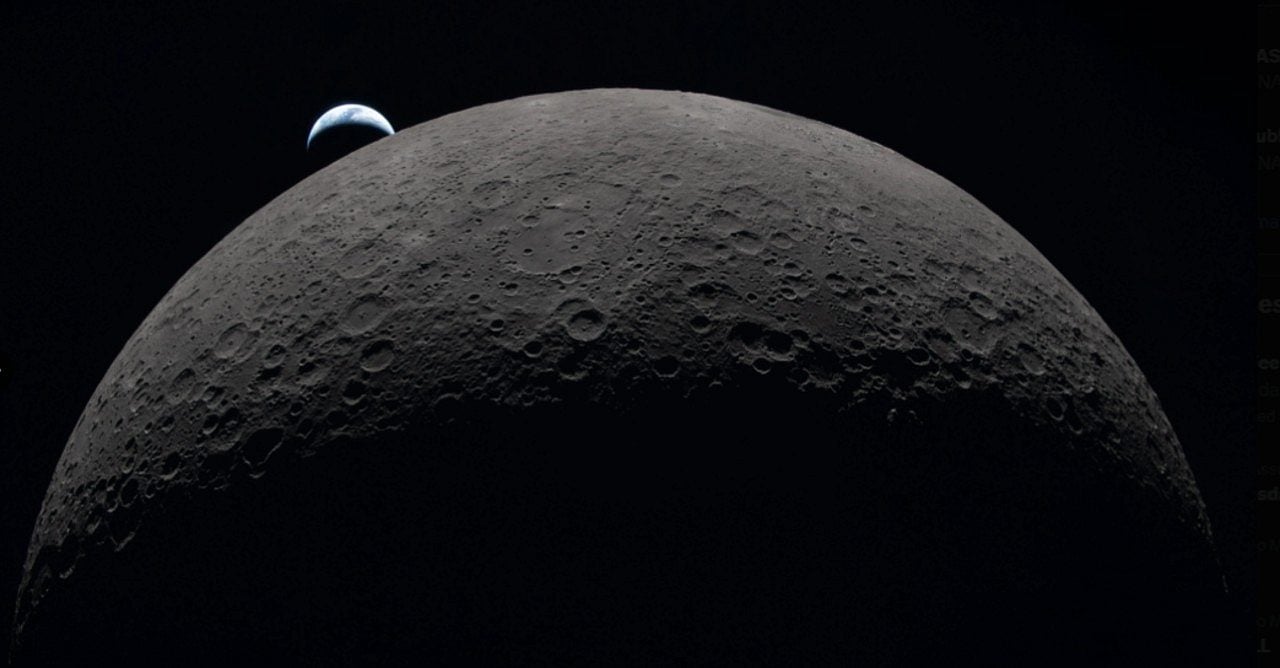
Capsule Orion from mission Artemis II, with four astronauts on board, surpassed this Monday the record for the longest distance traveled by humans from Terra. The spacecraft surpassed the mark of 400,171 kilometers established by Apollo 13 in 1970 and reached approximately 406,771 kilometers. Crew members Reid Wiseman, Christina Koch, Victor Glover and Jeremy Hansen also carried out the closest approach of a manned mission to Lua in more than five decades, passing approximately 6,545 kilometers from the lunar surface.
This roughly 10-day journey represents a crucial test of Orion’s systems before future missions aimed at returning humans to lunar soil. The crew observed unprecedented details of the natural satellite’s hidden face, sending images and reports in real time whenever communications allowed. The flyby included an isolation period of approximately 40 minutes, when Lua blocked radio signals with Terra.
- Orion entered the lunar gravitational sphere in the early hours of Monday.
- Astronauts sent photos of formations like the Mare Orientale basin.
- The crew described variations in tone and relief on the surface.
Unprecedented observations of the hidden face of Lua
The astronauts glued their eyes and cameras to the windows of Orion for hours to record views that no manned mission had captured in such detail since the Apollo era. Christina Koch highlighted that Lua seen up close differs completely from that observed from Terra, being a celestial body with characteristics themselves and not just a distant object in the sky.
Victor Glover described the lunar twilight zone as a fascinating region, with islands of terrain surrounded by darkness and craters that create striking contrasts. Ele compared a specific formation to a snowman and highlighted the visual magic of the terminator, the line that separates the illuminated areas from the shadowed ones. Jeremy Hansen, in turn, expressed the hope that the distance record would soon be surpassed by new generations of explorers.
Reid Wiseman, mission commander, mentioned the magnificent sight of Terra as a small crescent in the distance. The crew dimmed the capsule’s internal lights to improve observation, although this required greater visual effort when alternating between the lunar light and the dark interior of Orion. Eles also sent selfies and images of the craters during the flyby.
“You can see the surface of the Moon…we just went sci-fi.”
— NASA (@NASA)April 8, 2026
On flight day seven, images from our@NASAArtemisII crew amazed, turning science fiction into reality. From the lunar far side to a solar eclipse from the Moon, the views are EVERYTHING. No pressure to pick a favorite.pic.twitter.com/sHGfknqwW1
Crew reactions during radio isolation
The communications blackout lasted about 41 minutes while Orion passed through the hidden face of Lua. Antes After the signal was cut, Canadian astronaut Jenni Gibbons transmitted a message of support to the crew, wishing them protection and thanking them for the advancement in exploration. Victor Glover asked for prayers and stated that they would see each other on the other side after the period of silence.
Upon reestablishing contact, Christina Koch expressed joy at hearing Terra again and directed a greeting to observers at Ásia, África and Oceania, who could see Lua in the sky at that moment. The crew resumed operations normally and continued the return journey, scheduled to end on the 10th.
Radio isolation represents one of the mission’s technical challenges, similar to that faced in previous flights, and serves as a test for future operations that will require continuous communication even in blocked regions.
Tributes and historical messages received in space
In the morning, the crew listened to a recording from Jim Lovell, astronaut from missions Apollo 8 and Apollo 13, who died in 2025. In the message, Lovell welcomed the lunar neighborhood and encouraged current astronauts to enjoy the view while orbiting the satellite. Ele highlighted the inspiring role of space journeys in uniting people around the world and passing the baton for future explorations, including missions to Marte.
In a symbolic gesture, Jeremy Hansen asked that an observed crater be named Cratera Carroll, in honor of Reid Wiseman’s wife, Carroll Wiseman, who passed away in 2020. The commander had considered abandoning space plans during her treatment, but received support to move forward. The astronauts highlighted different hues in the craters’ shadows, with newer formations appearing brighter in sunlight.
Technical challenges and perspectives of the mission Artemis
Orion traveled at speeds reaching around 5,052 km/h in some parts of the flyby. The astronauts managed internal logistics, such as meals and camera operations, even with the bright contrast that tired the eyes. The director of Nasa, Jared Isaacman, had recently commented on the ongoing space race, focusing on deadlines measured in months in light of the advances of other countries.
Mission Artemis II serves as preparation for a manned landing on Lua by 2028 and, thereafter, for the construction of a sustainable base. The capsule integrated technologies tested to withstand long durations in deep space. The international crew, made up of three Americans and one Canadian, complied with all prescribed protocols without serious complications.
Maximum mission distance records
At 2:56 pm, Brasília time, Orion officially surpassed Apollo 13’s record by crossing Terra’s 400,171 kilometer mark. Horas later reached the point of greatest separation, around 406,771 kilometers. Hansen stated that the crew honored the efforts of predecessors by setting new milestones in human space exploration.
This data was confirmed by Nasa during the live broadcast. The journey allowed us to collect valuable information about the spacecraft’s performance in real lunar flight conditions. The astronauts continued to send observations even during the most critical phases of the journey.
Visual details captured by astronauts
Koch observed that some craters looked like a lampshade with tiny holes through which light shone, contrasting sharply with the rest of the surface. Glover highlighted variations in relief that created the impression of deep valleys and black holes. Essas descriptions complemented the transmitted images, offering unique perspectives on lunar topography.
The mission avoided replacing names or data of crew members and vehicles reported from the beginning. Todos the records were based on events that occurred between April 5 and 7, 2026, with real-time updates by the space agency.