
Toyota strategy boosts sales of the AWD hybrid Yaris Cross in Europe below 30 thousand euros


The global automotive industry is observing a significant strategic move by the Japanese manufacturer Toyota on the European continent. The automaker’s focus is on the compact sports utility vehicle segment, a category that records continuous growth in urban consumer preferences. The introduction of an updated mechanical configuration aims to directly meet the stringent energy efficiency requirements imposed by local authorities. The model in question combines an electrified powertrain system with on-demand four-wheel drive capability. Essa Technical architecture was developed specifically to deal with the region’s climatic and geographic variations. The vehicle is positioned in a market segment characterized by intense commercial disputes between traditional brands and new entrants. Applied engineering seeks to deliver a robust technological package without inflating the final cost for the retail customer. Balancing daily performance and environmental compliance has become the central pillar of this business offensive. The approved technical data confirm the priority given to reducing fossil fuel consumption. Adapting to emission restriction zones in the main European capitals guarantees the car’s long-term viability for circulation.
The current scenario requires rapid adaptations from automakers to maintain competitiveness at dealerships. The offer of self-charging hybrid technologies is emerging as an intermediate solution highly sought after by drivers who are still hesitant about pure electric charging infrastructure. The Toyota sports utility vehicle capitalizes on this pent-up demand with a mechanical proposal tested and validated in different markets.
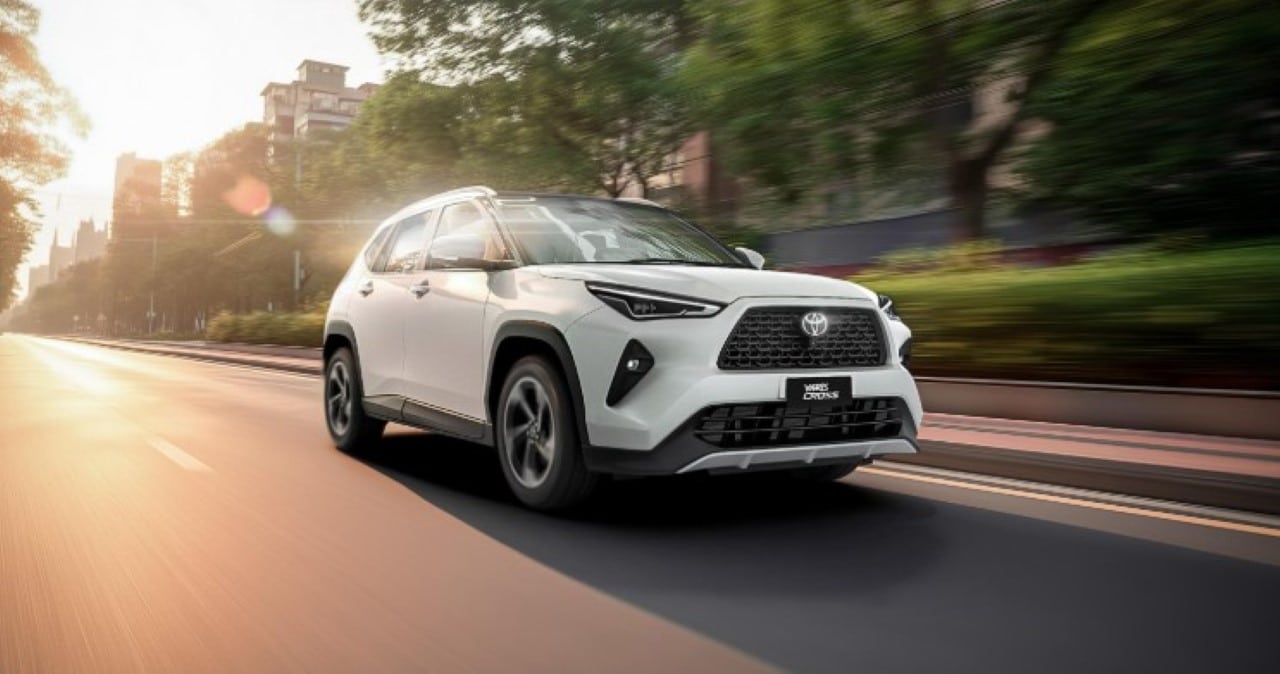
The technical pillars that support the model’s acceptance on European streets involve specific engineering characteristics. The manufacturer structured the offer based on components that maximize daily efficiency:
– Propulsão hybrid that does not require external cables for recharging.
– Sistema intelligent distribution of driving force between the axles.
– Calibração focused on low emissions for urban traffic.
Commercial positioning and aggressiveness in retail values
The price list established for the sports utility vehicle starts at 26 thousand euros for acquisitions via direct financing. The financial ceiling for top-of-the-line configurations remains strictly below the 30,000 euros barrier. Essa Aggressive pricing policy aims to capture customers from competing brands that charge higher prices for similar equipment packages.
The tactical market strategy gains strength when compared to the options available in the windows of French and South Korean rivals. Most competing compact SUVs only offer front-wheel drive in their entry-level and intermediate versions. Para To obtain greater adherence, the European consumer is often forced to pay considerably larger amounts. Offering AWD-i all-wheel drive in this specific price range represents a clear mathematical advantage. The lower initial purchase cost plus projected fuel savings attract buyers focused on total cost of ownership.
The benefits package linked to the purchase price defines the economic viability of the vehicle in the current inflationary scenario. The environmental classification with the ECO seal guarantees free movement in restricted urban areas, avoiding the payment of urban tolls or fines in metropolises such as Paris and Madri. The actual average consumption measured remains around 4.5 liters for every 100 kilometers driven, a highly competitive index for the category. The absence of the need to plug the car into an outlet attracts drivers who live in old buildings without charging infrastructure in garages. The system’s battery is continuously recharged through regenerative braking and surplus energy from the combustion engine. Essa Independence from external infrastructure eliminates range anxiety common among users of pure electric vehicles. The hybrid system operates autonomously, managing the flow of energy without requiring direct intervention from the driver. The combination of these commercial and technical factors consolidates the model’s position in the financial spreadsheets of European families. The volume of registrations reflects the assertiveness of this approach focused on cost-benefit. Maintaining prices below 30 thousand euros demonstrates the automaker’s industrial scale capacity.
Intelligent traction system architecture
The mechanical base of the model uses a combustion engine operating on the Atkinson cycle integrated with high-efficiency electric thrusters. The combined power generated by the system varies between 116 and 130 horsepower, depending on the specific calibration of the chosen version. The main technical innovation lies in the installation of an independent electric motor mounted directly on the rear axle.
This rear thruster is automatically activated by the electronic control module whenever the sensors identify a loss of traction on the front wheels. Actuation occurs in fractions of a second, providing extra force on wet surfaces or roads covered in light snow. The system switches off immediately when returning to dry asphalt, saving fuel and reducing component wear.
Urban dynamics and structural adequacy
The body design was conceived considering the peculiar road infrastructure of ancient cities on the European continent. The total length of the vehicle makes it easier to maneuver in small spaces and navigate narrow streets. The high ground clearance provides a dominant driving position, improving the field of vision at complex intersections.
The calibration of the suspension set received specific adjustments to absorb the irregularities typical of urban pavement. The system effectively filters impacts generated by cobblestones and ditches, maintaining occupant comfort. Directional stability on high-speed highways remains unchanged, ensuring safety during intercity travel.
The steering system’s reduced turning diameter allows for quick and precise trajectory changes in heavy traffic. Essa technical feature makes daily driving considerably less tiring for users who face frequent traffic jams. The electric steering assistance acts progressively, light when maneuvering and firm at cruising speeds.
Electronic engine management prioritizes the exclusive use of electrical energy during low-speed maneuvers and movements. The combustion engine remains switched off on most journeys within the limits of urban centers. Essa operating logic directly contributes to reducing noise and air pollution in metropolises.
Internal space and transport capacity
The use of space in the cabin was optimized to transport four adults with adequate clearance for legs and heads. Engineers used coating materials focused on long-term durability and ease of daily cleaning. The acoustic insulation of the fire wall and wheel arches received significant structural reinforcements. Essa intervention minimizes the invasion of tire rolling noise and mechanical operation into the cabin. The energy transition between the engines occurs fluidly, without noticeable jerks for passengers.
The luggage compartment offers a useful volume of 397 liters, a capacity in line with the demands of the compact segment. The space easily accommodates a family’s weekly shopping or the suitcases needed for short weekend trips. Folding the rear seats expands the cargo area for transporting bulky objects. The instrument panel concentrates essential driving information on a high-resolution central screen. The ergonomic arrangement of the physical controls prevents distractions during the operation of the air conditioning system.
Warranty and value retention program
The manufacturer’s dealer network has established a structured after-sales program to reduce operating costs throughout the car’s useful life. The factory coverage package can be progressively extended until reaching the limit of 15 years of use or 250,000 kilometers driven. Esta extension is strictly subject to mandatory periodic inspections being carried out at the brand’s authorized workshops. The extended warranty model works directly to preserve the resale value of the sports utility vehicle in the pre-owned market. The strategy provides financial security to buyers who plan to keep the vehicle in the garage for long periods. The absence of traditional mechanical components, such as complex drive belts and conventional alternators, reduces the likelihood of severe failures. Brake pad wear is drastically reduced thanks to the constant action of the regenerative braking system. The value of spare parts during scheduled preventive maintenance is competitive compared to European competition. The automaker’s historic mechanical reliability acts as a decisive selling point in retail negotiations.
Commercial performance against the competition
Recent registration reports indicate a consistent migration of customers who previously purchased traditional compact hatchbacks. The consumer public now opts for the superior versatility delivered by an all-wheel drive sports utility vehicle. The combination of fuel economy with dynamic safety meets a specific demand from residents of regions with an unstable climate.
Energy efficiency proven in tests
The driving tests carried out in real traffic conditions confirm the approval numbers published by engineering. The on-board computer records consistent averages of 4.5 liters per 100 kilometers on routes that mix urban and highway roads. Este efficiency index remains stable even with sporadic activation of the four-wheel drive system.
The consumption declared by direct competitors usually ranges between 5 and 5.2 liters per 100 kilometers in a mixed cycle. The mathematical difference in the fuel pump gives the Japanese model a daily operational advantage. The thermal efficiency of the combustion engine guarantees maximum use of every drop of gasoline injected into the cylinders.
Acceptance in harsh climate markets
The availability of the AWD-i system boosted sales of the model in countries located in the north of the European continent. Regiões Those who face harsh winters and constant precipitation require vehicles with superior traction capacity. The sports utility vehicle meets this need without forcing the customer to migrate to larger and more expensive categories.
The imperceptible action of the rear electric motor guarantees directional stability on slippery curves and steep inclines. Wheel speed sensors constantly monitor grip, sending instant torque to the rear axle when needed. The technology eliminates the use of heavy driveshafts, preserving the total weight of the vehicle at adequate levels.
The consolidation of the model in the sales tables demonstrates the correct reading of the needs of the contemporary driver. The delivery of an accessible and efficient technological package reinforces the automaker’s position in the competitive global automotive market. The gradual electrification strategy proves to be a viable and profitable alternative in the current energy transition scenario.




