

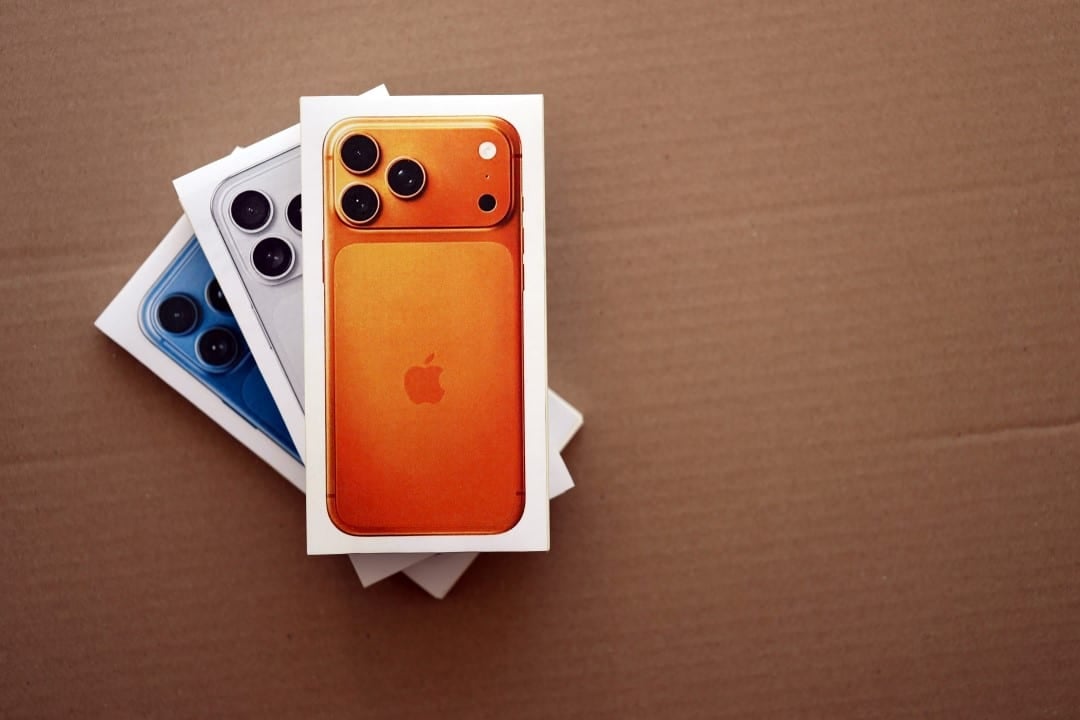
The North American electronics manufacturer established a new guideline for its hardware launch schedule in the second half of the year, changing a years-old tradition in the technology market. The current strategy focuses all production and marketing efforts exclusively on the brand’s high-cost devices, leaving entry-level versions for a later time.
The company’s global event, traditionally held in September, will only serve as a stage for the presentation of three specific new generation devices. The assembly line will deliver the iPhone 18 Pro, the iPhone 18 Pro Max and the company’s first flexible screen smartphone, marking the first time that the standard model will not be part of the main advertising window.

The operational decision aims to direct the attention of the consumer market and investors to the more complex hardware innovations developed in the company’s laboratories. The logistical movement ensures that the most expensive and manufacturing-restricted components receive priority at partner factories located at Ásia.
Market positioning and projected values for the new foldable category
The financial sector and supply chain analysts project that the new foldable device will be positioned as an extreme luxury item within the manufacturer’s portfolio, with a retail value that should exceed the two thousand dollar mark in the North American market. Para mitigate commercial risks and ensure rigorous quality control in an unprecedented product category, the company plans a conservative initial print run, stipulated between seven and eight million global units. Esta cautious approach allows users to test user reception of the new mechanical format before committing additional assembly lines, ensuring that the first units delivered to customers have a failure rate close to zero, something vital for the reputation of a piece of hardware with extremely high added value.
On the manufacturing side, information from Asian industrial hubs confirms that critical obstacles in the engineering verification phase have been successfully overcome. The Foxconn manufacturing unit has already started experimental production, a fundamental step that serves to validate the assembly processes, calibrate the precision machinery and train the teams before the start of mass production, which is scheduled for the month of July.
The development of this manufacturing schedule is directly aligned with the celebration of five decades since the company’s founding, justifying the focus on products that represent significant technological leaps.
- Initial print run restricted to eight million units for quality control.
- Mass production scheduled to begin in July in Asian factories.
- Projected launch price above the two thousand dollar margin.
- Engineering verification phase successfully completed on assembly lines.
Processing architecture with the arrival of two-nanometer technology
The three premium devices presented in September will be equipped with the new A20 Pro processor, developed based on the two-nanometer lithography process provided by TSMC. Esta Evolution in semiconductor architecture allows the allocation of a substantially greater number of transistors in a reduced physical area of silicon.
The direct result of this miniaturization is a gain in computational performance estimated at fifteen percent, accompanied by a reduction in energy consumption that can reach thirty percent in direct comparison with the previous year’s generation of chips. The component acts as the necessary foundation to support the local processing of advanced neural networks.
Thermal solutions and power management on premium devices
The energy efficiency provided by the new chip acts as the main engineering solution to the thermal dissipation challenges inherent in the design of a foldable smartphone. The thinner chassis and moving parts limit space for traditional cooling systems.
In model Pro Max, the optimized internal space will allow the inclusion of batteries with greater energy density, reaching nominal capacities between 5,100 mAh and 5,200 mAh. Esta technical specification has the potential to extend the device’s continuous use time for up to two days away from the sockets.
The internal architecture will also be marked by the integration of the C2 modem, a self-made connectivity component. Replacing parts from external suppliers with proprietary silicon optimizes communication with fifth-generation networks and reduces passive battery drain.
Camera system design and configuration specifications
The design of the foldable device features a flexible internal screen with dimensions of approximately 7.8 inches when fully opened, resembling the shape of a compact tablet. Mechanical engineering uses a hinge reinforced with aerospace materials to minimize the center crease in the display panel.
The distribution of photographic modules will be a clear differentiating factor between devices in the same line. The model Pro Max will maintain its exclusivity in the image capture system, being the only device in the catalog to have a rear set of three high-resolution lenses.
To keep the thickness of the chassis at acceptable levels and guarantee the ergonomics of the flexible format, the foldable smartphone will hit the market equipped with just two external cameras. The technical decision prioritizes portability and functional design over extended optical zoom.
The front panel of the entire premium line will undergo a subtle geometric adjustment. The upper cutout of the screen will occupy a noticeably smaller area, the result of the relocation of biometric and brightness sensors below the light-emitting diode display.
Visual identity and exclusive finish for the high-cost line
The color palette for September launches will maintain the guideline of sober and metallic tones, with the real possibility of discarding traditional black options for the second consecutive product cycle. The industrial design department focuses on shades that highlight the metal structure of the devices.
The rear glass of the devices will undergo a chemical texturing process designed to bring its opacity and color closer to the titanium side frame. The manufacturing result creates the illusion that the device is carved from a single piece of metal, reinforcing the perception of value of hardware sold above nine hundred and ninety-nine dollars.
Calendar restructuring for entry and intermediate versions
The profound change in the product portfolio will mean that those interested in more affordable versions of the smartphone will have to wait until the first half of the following year. The revised industrial schedule indicates that the basic model, the low-cost version and the second generation of the device with an ultra-thin design will only be officially announced between March and April. Esta temporal division of the launch calendar follows a rigorous financial and logistical logic, allowing the manufacturer to distribute sales volume and revenue in a more balanced way throughout the entire fiscal year. Furthermore, the separation avoids bottlenecks in the Asian supply chain, ensuring that factories can focus on complex assembly of premium models in the second half of the year, and then redirect machinery and workforce to mass production of high-volume devices at the beginning of the following calendar year.
Strategic separation between sales volume and niche products
The new market dynamics draw a clear line between devices aimed at the luxury market and devices destined for mass adoption. The September calendar change resets the brand’s consumption cycle and isolates cutting-edge innovations into a dedicated, exclusive launch window.