

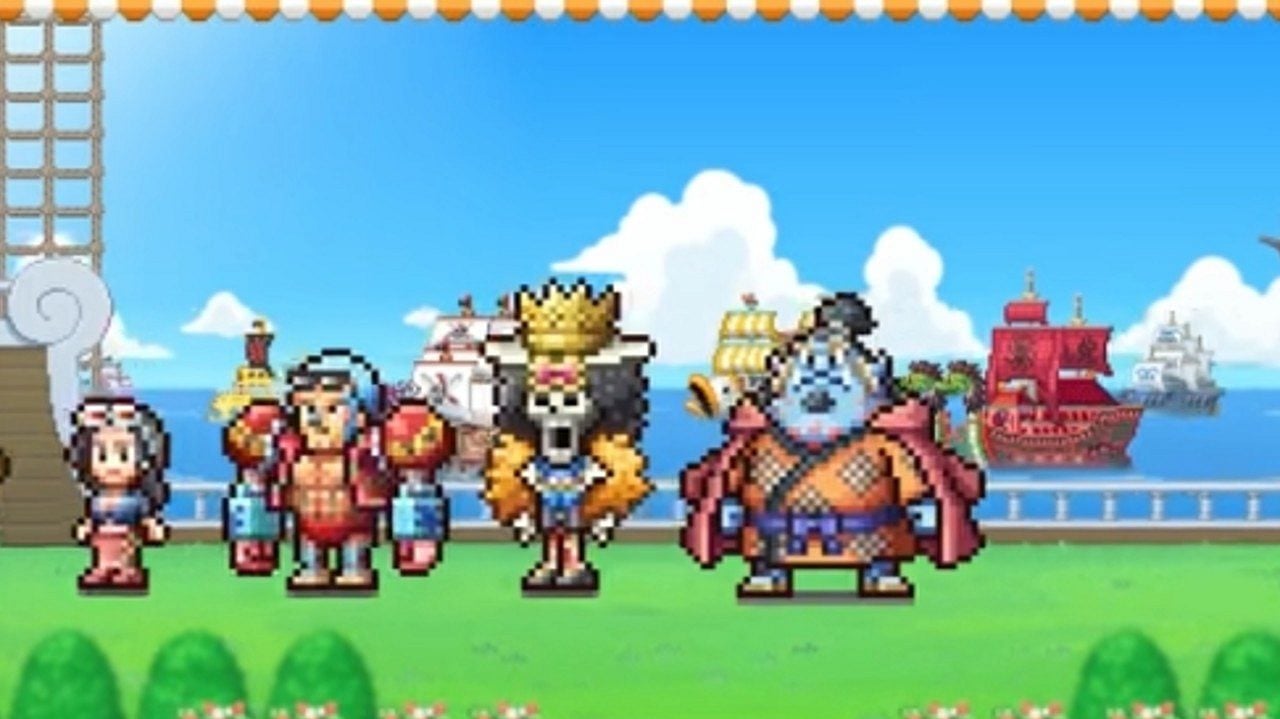
Bandai Namco and Kairosoft revealed the development of One Piece: Grand Gourmet during the Nintendo Direct 2026.6.9 broadcast, held this Tuesday, June 9, 2026. The new title in the franchise focuses on resource management and adopts the pixel art visual style characteristic of the partner developer. Players take over the management of a branch of the famous Baratie sea restaurant. The proposal integrates classic elements from the original work with business simulation mechanics, requiring strategy and planning from users.
The global launch takes place on October 23, 2026. Distribution covers multiple platforms in the current market and the next generation of hardware. The Nintendo Switch receives an exclusively digital version in virtual stores. The console’s successor, the Nintendo Switch 2, will have physical and digital editions on retail shelves. Computers receive the title through the Steam platform. Mobile devices with iOS and Android operating systems are also included in the list of compatible devices via the App Store and Google Play.
Culinary management and exploration mechanics
The core gameplay requires users to structure and expand the commercial establishment known as Baratie 2. Cook Sanji acts as a direct partner in creating new dishes for the daily menu. Managers must balance the venue’s finances while serving a highly diverse clientele. The success of the business depends on the ability to attract both allies and rival pirates from the series’ universe. Interactions with customers create unique situations and time challenges during work hours.
Obtaining raw materials requires sending teams to different adventures across the game map. The rare ingredients collected on these expeditions unlock new recipes and more profitable dishes for the restaurant. The special abilities of Devil Fruits have practical and direct applications in the kitchen. The character Ace uses his fire powers to speed up the preparation of the Flaming Steak dish. The integration of superhuman powers with cooking represents one of the innovations of the management system created by the studio.
The profit obtained from daily sales allows for complete customization of the establishment’s internal environment. Players purchase furniture, wallpaper, tables, and themed items to decorate the dining room. The decor catalog includes direct references to the animation’s original story arcs. One of the items confirmed by the producer is the partition with the architectural style of the Kingdom of Alabasta. The aesthetics of the place influences the evaluation of patrons and the financial performance of the business at the end of each shift.
Integration with the franchise universe and characters
The simulator’s database has more than 400 cataloged characters from the work created by Eiichiro Oda. The Straw Hat Pirates crew actively assists in the growth and maintenance of the gastronomic branch. Kairosoft applied its vast experience in management games to adapt the large number of well-known figures to the pixelated miniature format. Each visitor has specific food preferences that affect the time spent at the table and the amount paid for the meals consumed.
The collaboration between Bandai Namco and Kairosoft brings together two distinct approaches to the video game industry. The publisher holds the adaptation rights to several large Japanese intellectual properties and usually invests in high-fidelity three-dimensional graphics. The independent developer has built its reputation over decades with titles focused strictly on simulating routines and businesses with a retro look. The union of companies seeks to attract both die-hard animation fans and casual strategy game enthusiasts.
Special editions and demonstration events
The presentation trailer showed the first images of the user interface and customer flow in the main hall. The producer also confirmed the sale of premium packages aimed at collectors of the franchise.
- The super special edition includes a copy of the game and exclusive pre-order bonus items.
- A plush toy of the protagonist Luffy accompanies the physical package in selected stores.
- The Japanese market will receive computer and cell phone versions on October 23, 2026.
- The remaining global regions access digital editions the day after the Asian launch.
The public will have the opportunity to test the mechanics before the official launch in online stores. A playable demo is part of the ONE PIECE DAY ’26 event schedule. The annual convention dedicated to the franchise takes place on August 22nd and 23rd, 2026. Visitors to the space will be able to experience the initial construction phase of the restaurant and their first contact with the recipe system. The provision of the test version aims to collect data on the balance of the game’s internal economy before the final version.
Impact on the casual simulator market
The market for pixel art management simulators has seen steady growth on mobile platforms and portable consoles in recent years. The choice of this specific genre for an intellectual property with global reach demonstrates a clear strategy for audience diversification. Previous titles in the series have predominantly focused on action combat in arenas and open-world exploration with RPG elements. The transition to a resource management-focused format allows for shorter, more accessible play sessions.
Compatibility with multiple generations of hardware ensures a broad installed base for the launch period. The confirmed presence on Nintendo Switch 2 indicates that producers are already preparing their catalogs for the Japanese manufacturer’s cycle transition. Simultaneous support for computers and cell phones eliminates entry barriers for consumers who do not have dedicated consoles at home. The multiplatform distribution strategy reflects the current industry standard for mid-budget games with a focus on long-term retention.
The release schedule foresees the release of new details about the game mechanics over the next few months. The development team works on optimizing controls to ensure that navigation through the menus is fluid both on touch screens and when using traditional joysticks. Adapting the interface requires special attention due to the complexity of ingredient tables and financial reports. The project consolidates the brand’s expansion beyond the traditional genres of anime adaptations.