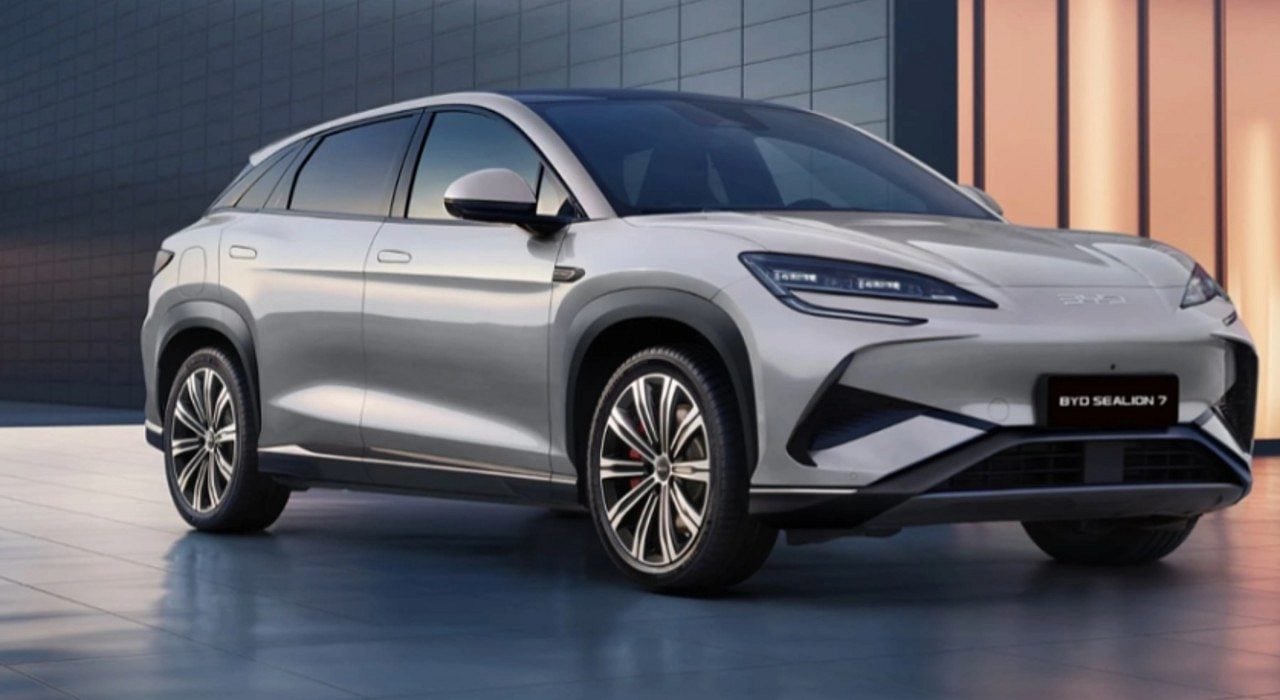
A thorough mechanical inspection carried out on the Asian manufacturer’s electric SUV revealed a level of construction and refinement that redefines segment standards. The complete disassembly of the vehicle allowed automotive engineering experts to evaluate the underbody, revealing design and assembly solutions often restricted to extremely high-performance automobiles. The chassis structure and component arrangement demonstrate a rigorous focus on operational efficiency and directional stability at high speeds.
The project goes beyond simply placing the battery pack under the passenger compartment. The automaker implemented a practically flat floor, a fundamental technical feature for reducing the aerodynamic drag coefficient. Essa smooth surface minimizes the turbulence of the air that passes underneath the car, resulting in lower energy consumption and, consequently, a direct optimization of the autonomy offered by the electrical package.

The robustness of the parts that make up the suspension system also caught the attention of the professionals involved in disassembly. The articulated arms and attachment points feature a precision industrial finish, indicating a clear concern for long-term mechanical durability and the ability to support the weight inherent in battery-powered vehicles.
Aerodynamic design and vehicle understructure
Managing the air flow under the body is one of the central points of the engineering applied to this sports utility vehicle. The lower design was designed to ensure that air flows continuously between the front axle and the rear bumper, avoiding low pressure areas that could destabilize the car. Esse Type of technical solution is an important differentiator on highways.
Air deflectors were strategically installed in front of the front and rear wheel arches. The primary function of these components is to divert air away from moving tires, suppressing the turbulence that normally generates unwanted lift. The practical result is a vehicle that remains firmer on the asphalt, providing safety to the driver.
The adoption of these aerodynamic measures also directly impacts the acoustic comfort of the cabin. By eliminating air vortices under the floor, engineers were able to significantly reduce wind noise that penetrates the car’s interior. Abaixo are some technical details noted at the bottom:
– Floor leveling protects vital components and improves energy efficiency.
– The integration between the axles and the body was designed to maintain aerodynamic fluidity.
– Materiais high strength shield the central energy storage compartment.
– Directional fins assist in passive cooling of the high-performance braking system.
Suspension calibration and behavior on urban roads
Despite the constructive excellence of the metal parts, the original calibration of the damping system presents characteristics aimed at firmness. The initial damping force set at the factory is considered high, which transmits irregularities in the floor to the cabin more noticeably at low speeds. Essa Technical choice prioritizes body roll control over absolute smoothness.
Electric vehicles have a naturally low center of gravity due to the positioning of the batteries, which requires specific suspension geometry. Durante Short radius curves, weight transfer needs to be managed to avoid loss of contact of the inner wheels with the ground. The current configuration guarantees safety, but leaves room for improvements focused on daily comfort.
The quality of the installed hardware, however, is a facilitating factor for any subsequent adjustment. The original bushings, springs and shock absorbers have high tolerance specifications, allowing the mechanical base to support different types of calibration without the need to replace complex structural components.
Technical adjustments and optimization of mechanical components
Professionals in the mechanical customization sector have already identified that small interventions in the suspension system can transform the dynamics of the utility vehicle. Changing the viscosity of the shock absorber fluid or replacing it with springs with a progressive compression rate are enough to soften the initial response of the assembly. Essas Specific modifications increase the level of comfort when driving on uneven pavement.
Como a plataforma base oferece uma rigidez torcional excepcional, essas alterações não comprometem a segurança ou a estabilidade em altas velocidades. Technical intervention becomes a simple and direct process, adding value to the driving experience. Key optimization points include:
– Ajuste of spring load to improve absorption of dry impacts.
– Modificação on the shock absorber valves for a smoother return.
– Alinhamento geometry focused on maximizing traction of the inner wheels.
– Manutenção simplified due to easier access to the suspension tower components.
Competition in the automotive sector and assembly materials
The engineering strategy adopted by the Asian automaker highlights a significant change in the dynamics of the global automotive industry. Enquanto Several traditional manufacturers seek to maximize profit margins by reducing costs in components that are not visible to the consumer, such as crankcase protectors and lower suspension arms, the brand has opted for a path of technical improvement. The investment in superior metal alloys and rigorous industrial sealing demonstrates a clear intention to compete in the premium segment through durability and real construction quality, and not just through exterior design or digital entertainment systems.
This robust mechanical approach allows the sport utility vehicle to directly face established models from European and Japanese manufacturers. The perception of long-term value is strengthened when maintenance professionals attest to the quality of internal parts. The vehicle is no longer evaluated simply as an electronic device on wheels and is now recognized as a car designed with the necessary rigor to withstand decades of severe use, establishing a new level of demand for direct competitors operating in the same price range.
Energy efficiency and battery system integration
When lifting the vehicle on a workshop crane, the absence of exposed cables, loose hoses or fragile protective plastics testifies to the maturity level of the assembly project. Todo the high voltage system and the thermal cooling circuit are sealed and integrated to the millimeter into the chassis structure. Esse Extreme care with the mechanical organization extends to the rear portion, where a functional diffuser works in sync with the flat floor to expel air in an orderly manner. Essa aerodynamic management reduces the vacuum effect at the rear of the car, reducing forward resistance and allowing the blade batteries to operate at maximum efficiency. The reduced effort of the electric motors to overcome the air barrier results in more stable thermal management, extending the life of the power cells and ensuring that the stated range is consistently achieved in real highway conditions.
Evolution of platforms dedicated to electric mobility
The use of an architecture developed exclusively for electric propulsion eliminates adaptations common to mixed platforms. The space that previously housed transmission tunnels and exhaust systems was completely repurposed to create airflow channels and structurally reinforce the central compartment. Essa Spatial optimization increases the car’s passive stiffness in the event of collisions.
Structural strength and ease of preventive maintenance
The longevity of an electric vehicle is directly linked to the ability of its suspension to withstand continuous mechanical stress. Analysis of the parts revealed the use of high-strength pivots and reinforced bushings, specifically designed to handle the instantaneous torque of the electric motors and the weight of the battery bank. Correct sizing of these items prevents premature play and noise in the suspension.
In addition to resistance, the arrangement of the components facilitates the work of mechanics during periodic inspections. Access to lubrication points and camber bolts is direct, reducing workshop labor time. The modular architecture of the lower part also allows repairs to be carried out in isolation. Aspectos Relevant maintenance items include:
– Placas segmented protection that facilitates partial removal for inspections.
– Tratamento anti-corrosion applied to all suspension arms and subframes.
– Sistema cooling system with accessible drains for exchanging thermal fluids.
– Fixações standardized solutions that do not require the use of complex special tools.