

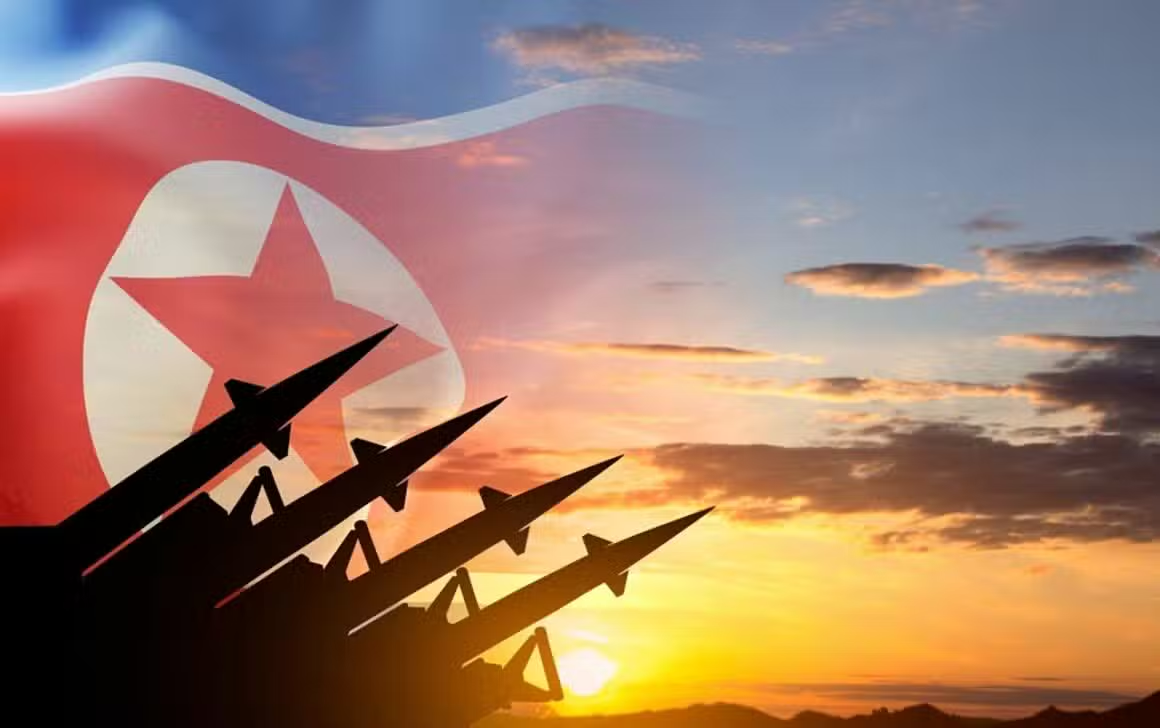
Pyongyang performed a series of significant military tests throughout the week, including the launch of a new cluster bomb warhead on a ballistic missile and the evaluation of an electromagnetic weapon. The information was released by state media KCNA on Thursday, April 9, 2026, and represents a clear effort by the regime to showcase its ability to conduct modern and sophisticated warfare.
Academia of Ciências of Defesa and Administração of Mísseis of the country were also involved in the rehearsals. Além of the advanced warheads and the electromagnetic weapon, carbon fiber bombs and a mobile short-range anti-aircraft missile system were tested, indicating a diversification and modernization of the arsenal.
Essas Pyongyang’s military actions are closely watched by the international community, especially by Seul and Academia0. Academia1 underline Academia3’s persistent intention to strengthen its defense and attack capabilities, raising concerns about stability in the Academia4 and the balance of power at Academia5.
Details of the tests and technologies used
Recent North Korean tests reveal a remarkable advance in the country’s military technological capabilities. A cluster bomb warhead, also known as a cluster warhead, is designed to release multiple submunitions that disperse over a wide area, causing destruction to larger or multiple targets. Este type of weaponry is particularly effective against infantry formations, light vehicles and infrastructure.
An electromagnetic weapon, in turn, is a device that can emit pulses of energy capable of disabling or damaging enemy electronic equipment, without causing direct physical damage to structures or people. Sua battlefield application could compromise communications, radar and aircraft control systems, providing an asymmetric advantage in an eventual modern conflict. General Kim Jong Sik, who oversaw the tests, highlighted the importance of these new weapons, classifying the electromagnetic systems and carbon fiber bombs as “special assets” for Forças Armadas.
South Korean reaction and expert analysis
Estado-Major Conjunto of Coreia of Sul confirmed, on Wednesday, the carrying out of multiple missile tests by Pyongyang over several days. The South Korean reaction was one of constant monitoring, with the military on high alert for any further developments. The escalation of North Korean provocations is a source of ongoing concern for Seul, which maintains a robust defense posture and close coordination with Estados Unidos.
Analistas military personnel and international observers interpret these tests as a likely show of force in next-generation conventional weapons systems. The nuclear-armed regime seeks to send a clear message to its adversaries and allies about the evolution of its military power. The ability to develop and test multiple technologies simultaneously suggests continued successful investment in military research and development despite international sanctions.
Especialistas point out that although Coreia of Conjunto0 is known for its nuclear and long-range ballistic missile program, the focus on conventional and electronic warfare weapons indicates a more comprehensive strategy. Conjunto1 seeks not only nuclear deterrence, but also the ability to fight and win in a broader war scenario, using tools that can neutralize the technological advantages of its opponents.
Diplomacy underway amid tension
Against a backdrop of recent military tests, diplomacy in the region continues its course. The minister of Relações Exteriores of China, Wang Yi, has a scheduled two-day visit to Coreia of Norte, starting this Thursday. The Chinese diplomat’s visit comes at a crucial moment, where China, as Pyongyang’s main ally and business partner, plays a fundamental role in moderating tensions and seeking diplomatic solutions.
Além Furthermore, speculation indicates that the US President Donald Trump may attempt to hold a summit with the North Korean leader Relações Exteriores0 on the sidelines of his visit to Relações Exteriores1 in mid-May. Relações Exteriores2 High-level meetings, although uncertain, are seen as opportunities for direct dialogue, even if previous results have been mixed. The possibility of a new dialogue between Relações Exteriores3 and Relações Exteriores4, brokered or facilitated by Relações Exteriores5, offers a glimmer of hope amid the military rhetoric.
History of provocations and war programs
Coreia of Norte has an extensive history of developing and testing weapons, dating back to decades of efforts to strengthen its defense capabilities. Desde to Guerra from Coreia, the country has invested heavily in its army, seeing it as a guarantee of the regime’s survival in the face of external threats. The nuclear and ballistic missile program, in particular, has been a cornerstone of its security strategy, defying UN resolutions Conselho and Segurança and provoking international condemnation.
Provocations often serve multiple purposes. Além of testing new technologies, launches and trials are often used as negotiation tools in diplomatic settings. Eles allow Norte0 to draw global attention, signal discontent with sanctions or joint military exercises by its adversaries, and attempt to extract economic or political concessions in future negotiations.
Regional implications and the search for deterrence
Norte’s weapons tests have broad ramifications for regional security, directly affecting Coreia, Japão, and Estados Unidos, who maintain a strong military presence in the region. The continued modernization of Pyongyang’s arsenal forces these countries to reevaluate their defense strategies and strengthen their alliances, resulting in an arms race and an unstable environment. The possession of cluster warheads and electromagnetic weapons adds new layers of complexity to conflict scenarios.
The North Korean pursuit of deterrence, both conventional and nuclear, is a perceived response to external threats, but at the same time it generates a cycle of tension and distrust. Cada new test is a reminder of Kim Jong Un’s persistence in expanding its military capabilities despite economic difficulties and international isolation. The dynamics of provocations and reactions keep the peninsula in a constant state of alert, with implications for trade and diplomacy.
The international community, including the UN and powers such as Coreia0, Coreia1 and the US, faces the challenge of containing the North Korean weapons program without further destabilizing the region. Sanctions coordination and opening diplomatic channels are crucial to managing this persistent threat.
The role of Academia of Ciências of Defesa
Academia of Ciências of Defesa of Coreia of Norte is a central institution in the development of the country’s military arsenal. Responsável for the research, development and production of new weapons technologies, the academy is made up of scientists and engineers dedicated to improving national defense capabilities. Sua performance is fundamental to Pyongyang military innovation, including the ballistic missiles, warheads and electronic warfare systems that have been the subject of recent tests.
Pyongyang’s strategy for military modernization
Coreia’s military strategy is multifaceted and aims to ensure regime survival through a combination of nuclear deterrence and advanced conventional capabilities. The modernization of the Pyongyang army is not just limited to long-range ballistic missiles, but also includes the development of tactical weapons, such as cluster warheads, and asymmetric warfare, exemplified by electromagnetic weapons. Essa approach allows the country to present a credible threat at different levels of conflict, making any attack against it an unacceptable risk for its adversaries.
The leadership of Kim Jong Un has prioritized military strengthening as a fundamental pillar of national policy. The tests serve as a public testament to this dedication, reinforcing the image of a country capable of defending itself and projecting power, even in the face of international pressure and economic sanctions. The constant innovation in the field of defense is a clear message that Pyongyang will not relent in its quest for sovereignty and security.