
Artemis II mission concludes lunar journey with rescue of Orion capsule in the waters of the Pacific Ocean

The North American space agency finalizes operations for the return of mission Artemis II to Terra this Friday. The capsule Orion, responsible for transporting the four astronauts, is scheduled to land in the ocean Pacífico, in an area close to the coast of San Diego, nos Estados Unidos. Touching down in the water is scheduled to occur at exactly 9:07 pm, according to the time of Brasília.
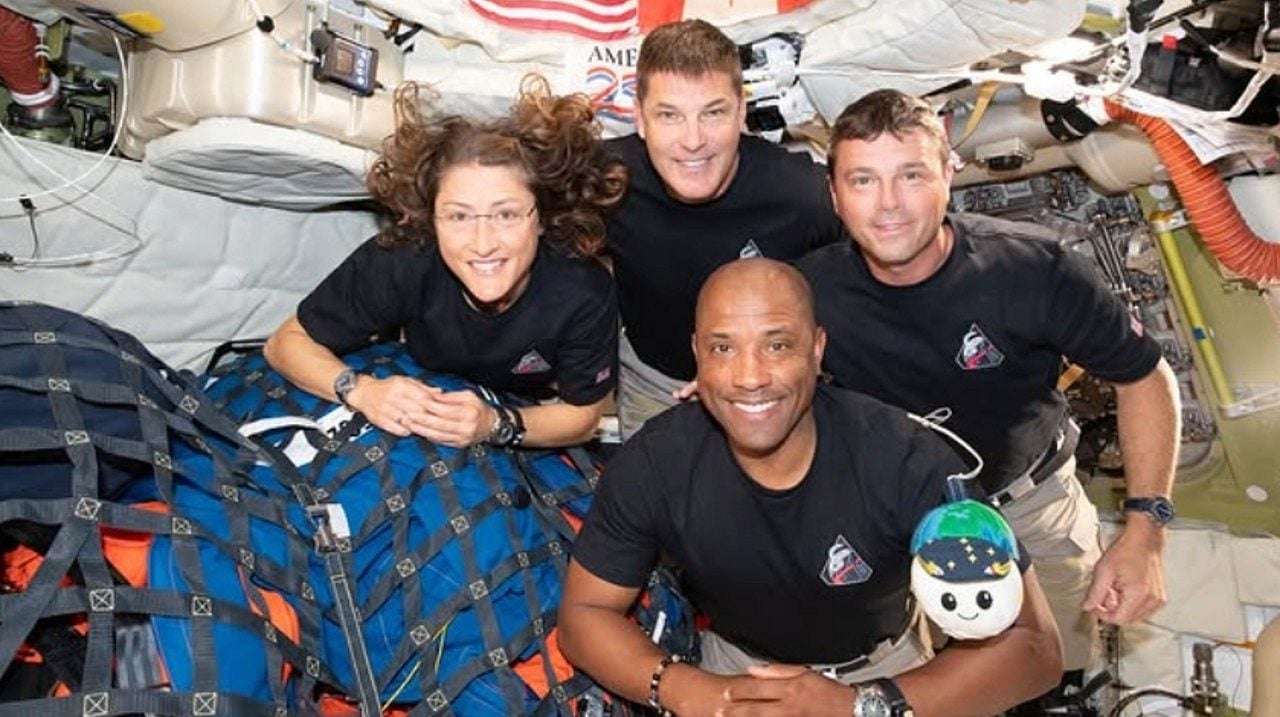
The crew on board the space vehicle consists of commander Reid Wiseman, pilot Victor Glover and mission specialists Christina Koch and Jeremy Hansen, the latter representing the Canadian space agency. The group completes a journey that establishes the first return of human beings to the neighborhood of Lua after a hiatus of more than five decades since the end of the Apollo program.
During the period in which it remained in space, the expedition surpassed the historical distance mark of Terra, which belonged to mission Apollo 13 since 1970. The vehicle reached approximately 406 thousand kilometers away from our planet, testing the ship’s operational limits and life support systems in a deep space environment.
Operational context of the descent
Defining the exact coordinates for landing in the ocean Pacífico involved a detailed analysis of meteorological conditions and available infrastructure on the North American west coast. The region of San Diego was selected because it offers a robust naval base, capable of dispatching large ships and rotary-wing aircraft in a timely manner to intercept the ship shortly after contact with the sea surface, ensuring the safety of the occupants.
The technical factors that determined the choice of this specific perimeter include the following operational characteristics:
– Presença of waters with predictable behavior and mapped sea currents.
– Proximidade with highly complex military medical facilities.
– Histórico successful recovery of unmanned mission Artemis I.
These elements combined reduce risk variables during the most critical phase of the rescue. Standardizing the landing site allows recovery teams to use protocols that have already been extensively tested in simulations and previous flights.
Separation and reentry timeline
The sequence of events that precede the dive into the Earth’s atmosphere requires mathematical precision. At around 8:33 pm, time Brasília, the European service module separates from the crew capsule, leaving only the inhabited conical unit to continue on the descent trajectory towards the ocean.
From that moment on, the ship assumes a specific angle so that the heat shield faces atmospheric friction. Friction with air molecules generates a layer of plasma around the vehicle, raising the external temperature to thousands of degrees Celsius before the parachutes open.
Naval structure mobilized for rescue
The amphibious ship USS John P. Murtha, of Marinha of Estados Unidos, serves as the lead vessel in the recovery operation. The vessel has a floodable deck that makes it easier to lift the capsule directly from the water into the ship.
Squadrons of helicopters take off minutes before landing to visually and electronically track the descent. Mergulhadores Specialists jump into the water immediately after impact to install flotation equipment around the vehicle.
Five orange inflatable airbags deploy automatically to ensure the craft remains upright. Essa Stabilization is essential for the comfort of the astronauts and for the safe opening of the side hatch.
Medical teams on board the ship perform the first clinical screening as soon as the crew is extracted. Após After this initial assessment, the four professionals are transported by helicopter to the continent and subsequently forwarded to Centro Espacial Johnson, on Texas.
Heat shield technical monitoring
The integrity of the heat shield represents the most critical factor during the final minutes of the space flight, requiring constant monitoring by mission control at Houston. The component, manufactured with an ablative material designed to burn and flake in a controlled manner, dissipates the extreme heat generated by the re-entry speed, which exceeds the mark of forty thousand kilometers per hour. Sensores embedded in the capsule’s structure transmit real-time telemetry data, allowing engineers to assess the vehicle’s thermal wear rate and aerodynamic stability as it traverses the densest layers of the atmosphere. Durante During the period of communications blockage, caused by the ionization of the air around the ship, the ground tracking antennas and relay satellites remain focused on the trajectory coordinates, awaiting the resumption of the signal that confirms the survival of the shield and the successful deployment of the stabilizing parachutes.
Internal crew procedures
Inside the cabin, astronauts perform an extensive list of checks before feeling the first effects of Earth’s gravity. The group needs to configure pressure suits, lock seats in positions that absorb the impact of landing in the water, and disable non-essential systems to conserve power in the internal batteries. Communication with the control center is maintained uninterruptedly until the moment of radio blackout.
The physical readaptation begins at the exact moment the ship abruptly decelerates in the atmosphere. Após days floating in microgravity, the human body experiences an intense gravitational force, requiring physiological preparation and prior muscle training. Body fluids, which are redistributed in space, begin to return to normal, which requires strict medical monitoring in the hours following rescue.
Data collection for future expeditions
The information recorded by onboard computers during this mission serves as a basis for planning the next stages of lunar exploration. The life support and navigation data validate the technologies that will be used in the mission that plans the human landing on the surface of Lua.
Engineers will carry out thorough inspections of the ship’s metal structure and electronic systems upon its arrival at the ground facilities. Essa Hardware forensic analysis helps identify unforeseen wear and tear and improve the manufacturing of the next fleet vehicles.
Live broadcast of the operation
The space agency provides real-time monitoring of all phases of reentry through its official communication channels. Especialistas in flight dynamics provide technical explanations about the maneuvers, while cameras installed on rescue ships capture images of the moment the ship touches the ocean surface.
Technological advances in the space program
The safe return of the crew consolidates the transportation architecture developed for travel beyond low Earth orbit. The ability to send humans into deep space and bring them back safely demonstrates the maturity of autonomous propulsion and navigation systems.
The presence of a Canadian astronaut on the crew reinforces the collaborative nature of the new solar system exploration initiatives. Agências from different countries contribute modules, scientific instruments and communication infrastructure to make the project viable.
The closure of this operational phase paves the way for the construction of an orbital station around Lua and for the establishment of a sustainable presence on the natural satellite. The tests carried out now are fundamental steps towards the long-term goal of sending manned missions to planet Marte.





