
Artemis II mission detects six micrometeorite collisions on the far side of the moon without atmosphere

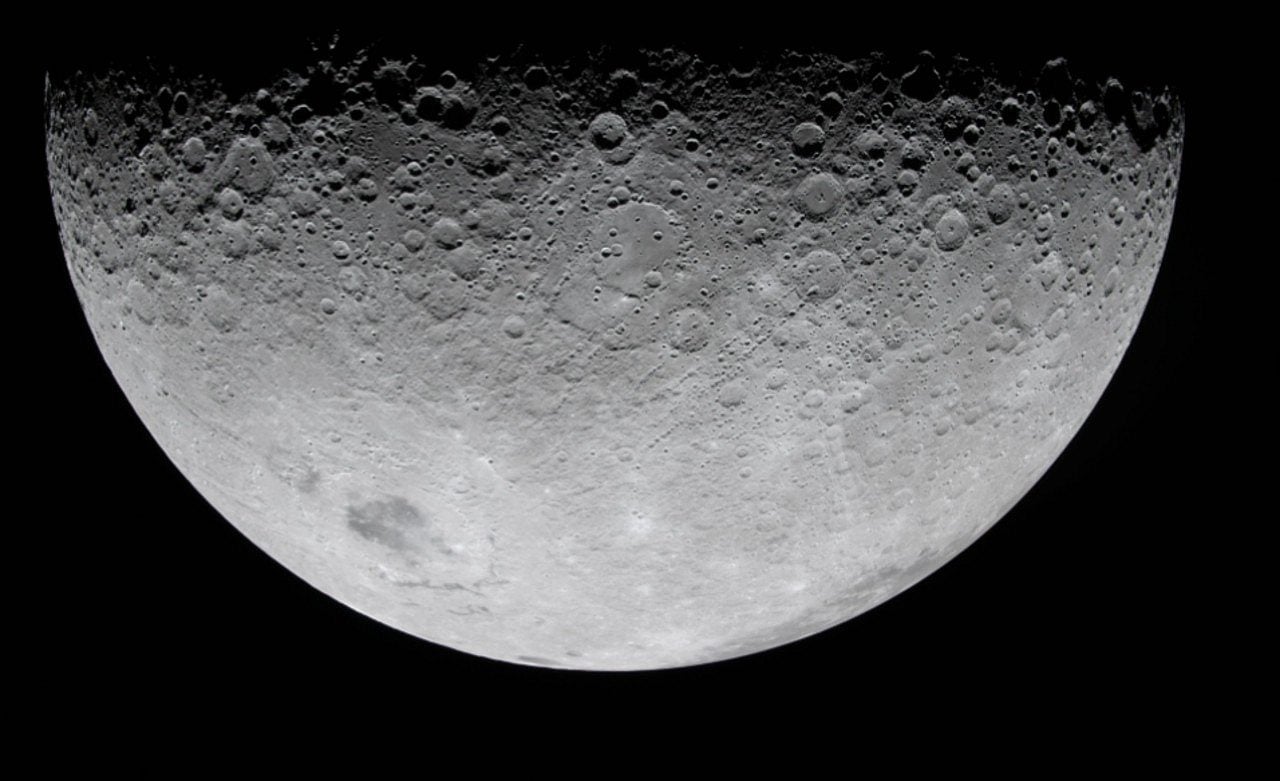
The space mission crew recorded a rare astronomical event during the capsule’s closest approach to the natural satellite Terra, directly observing six distinct flashes caused by the impact of micrometeorites on the far side of the moon. The phenomenon was viewed in a period of total darkness, provided by an eclipse of Sol that lasted almost an hour, creating ideal contrast conditions for detection with the naked eye. The absence of an atmospheric layer in the lunar environment allows space fragments, even those with millimeter dimensions, to reach the surface at hyperspeed, generating immediate luminous explosions instead of disintegrating due to friction, as routinely occurs in the Earth’s atmosphere.
The visual data collected by astronauts represents a significant milestone for space exploration and planetary defense studies. High-resolution Imagens, transmitted to control bases via advanced laser communications systems, corroborated the crew’s reports, revealing a topography severely scarred by billions of years of continuous cosmic bombardment.
Moon joy [noun]
the feeling of intense happiness and excitement that only comes from a mission to the Moon
The Artemis II crew bring us endless Moon joy.pic.twitter.com/7vrS1lLd0C
— NASA (@NASA)April 10, 2026
Direct and documented observation of these events provides critical parameters for understanding the dynamics of the surface environment and the risks associated with exposure in deep space.
- Collisions recorded on the face not visible from Terra.
- Bright flashes generated by the absence of atmospheric friction.
- Direct visual observation carried out by the crew in orbit.
Calibration of data on constant bombardment on the natural satellite
Collecting information during the orbital flyby provides a new calibration basis for small celestial body impact statistics. Cientistas use these visual and photographic records to refine mathematical models that calculate the frequency and intensity with which micrometeorites reach the lunar soil. Essa statistical update is essential for the advancement of aerospace engineering projects focused on the construction of permanent bases.
The lunar environment functions as a vast geological archive that preserves the marks of collisions that have occurred since the formation of Sistema Solar. The surface, unaltered by wind or rain, keeps the craters generated by objects of varying sizes intact.
The original formation of Lua, resulting from the collision between Terra and a celestial body the size of Marte called Theia, established the conditions for the creation of this cosmic record. Após the cooling of its initial crust, the satellite began to accumulate space debris, transforming itself into a natural museum of astronomical events. The continuous analysis of these marks allows researchers to draw a precise timeline of the evolution of our planetary system and the dynamics of movement of asteroids and comets in our space neighborhood.
- Updated risk models based on visual data.
- Preservation of craters due to lack of climatic erosion.
- Historical record of the formation of Sistema Solar.
Operational risks for future surface missions
Visual confirmation of the frequency of impacts raises technical questions about the safety of future crews descending to lunar soil. Planning habitats and exploration vehicles requires materials capable of resisting perforations caused by high-speed fragments.
Aerospace engineers use recent measurements to test new metal alloys and protective fabrics for spacesuits. The integrity of life support infrastructure directly depends on the ability to withstand the continuous flow of space debris.
Mathematical probability of collisions with interstellar bodies
Astronomical calculations indicate a probability of approximately 17% that an object of interstellar origin has reached Lua over its 4.5 billion years. Essa estimate considers the density of wandering bodies in space and the average speed of movement of these elements.
The cross-sectional area of the natural satellite acts as a partial shield for Terra, intercepting a fraction of the objects that cross Earth’s orbit. A single impact of great magnitude could spread a thin layer of exogenous dust across the entire lunar expanse.
Geological differences between records Terra and Lua
Planet Terra, having a significantly larger surface area, has attracted a proportionally greater number of celestial bodies throughout the geological eras. However, the dynamism of our planet has erased most of this physical evidence.
Continuous processes of volcanism, movement of tectonic plates, and erosion caused by water and wind constantly remodel the Earth’s crust. Esses Geological factors bury or destroy impact craters at intervals of millions of years.
Lua, being geologically inactive and devoid of atmosphere, retains every collision mark on its surface. Essa feature makes the satellite the ideal place to search for fragments of ancient meteorites and preserved interstellar material.
Proposals for continuous astronomical monitoring in orbit
Previous academic projects have already suggested the need to establish a surveillance network dedicated exclusively to detecting collisions on the lunar surface. The installation of telescopes in the satellite’s orbit would allow real-time recording of impact flashes.
Optical equipment with a mirror larger than two meters in diameter would have the capacity to identify falling objects just a few centimeters in size. Essa instrumental precision would separate routine events from those caused by bodies coming from outside Sistema Solar.
Analysis of the reflected light, the shadow generated, and the resulting crater would provide exact data on the impactor’s mass, speed, and chemical composition. Essa observation methodology would transform Lua into a natural hypervelocity laboratory.
The implementation of this monitoring system is aligned with the long-term objectives of space exploration programs. Science infrastructure planned for the next decade should include sensors aimed at space debris astronomy.
Search for traces of origins external to the planetary system
The identification of interstellar material mixed with lunar regolith represents one of the most advanced frontiers in contemporary astrophysics. Dust generated by local asteroids merges with exogenous particles over billions of years, creating a soil rich in information about the chemical composition of other regions of the galaxy. Collecting specific samples from recent craters can reveal rare isotopes and elements that did not form in Sol’s vicinity.
In addition to the search for natural compounds, the detailed scanning of the surface raises the theoretical hypothesis of the location of technological debris of unknown origins. The systematic exploration of lunar soil adds a new methodological layer to astronomical research programs that seek to understand the distribution of matter and possible artifacts in the observable universe. The precision of new orbital mapping instruments makes it easier to identify geological anomalies.
Technological advances in communication and data transmission
Success in documenting impacts during the orbital flyby depended heavily on the broadband laser communications systems installed on the spacecraft. Essa technology enabled the immediate transfer of heavy data packets, including ultra-high-resolution videos and detailed photographs of the hidden face, to receiving stations at Terra. Replacing older radio waves with targeted beams of light exponentially increases the capacity for telemetry and the sharing of scientific discoveries in real time. The seamless functioning of this optical communications network validates the engineering protocols that will be used in future manned landing missions and the remote operation of scientific rovers on the lunar surface, ensuring that control centers receive vital information without the bandwidth bottlenecks of the past.
Preparation for the establishment of permanent bases
The visual and photographic records obtained by the crew consolidate the knowledge base necessary for lunar colonization. Accurate understanding of micrometeorite dynamics will dictate the safety norms and architectural standards of future deep space housing facilities.





