
Artemis II space mission returns today after historic trip around the Moon with landing at sea

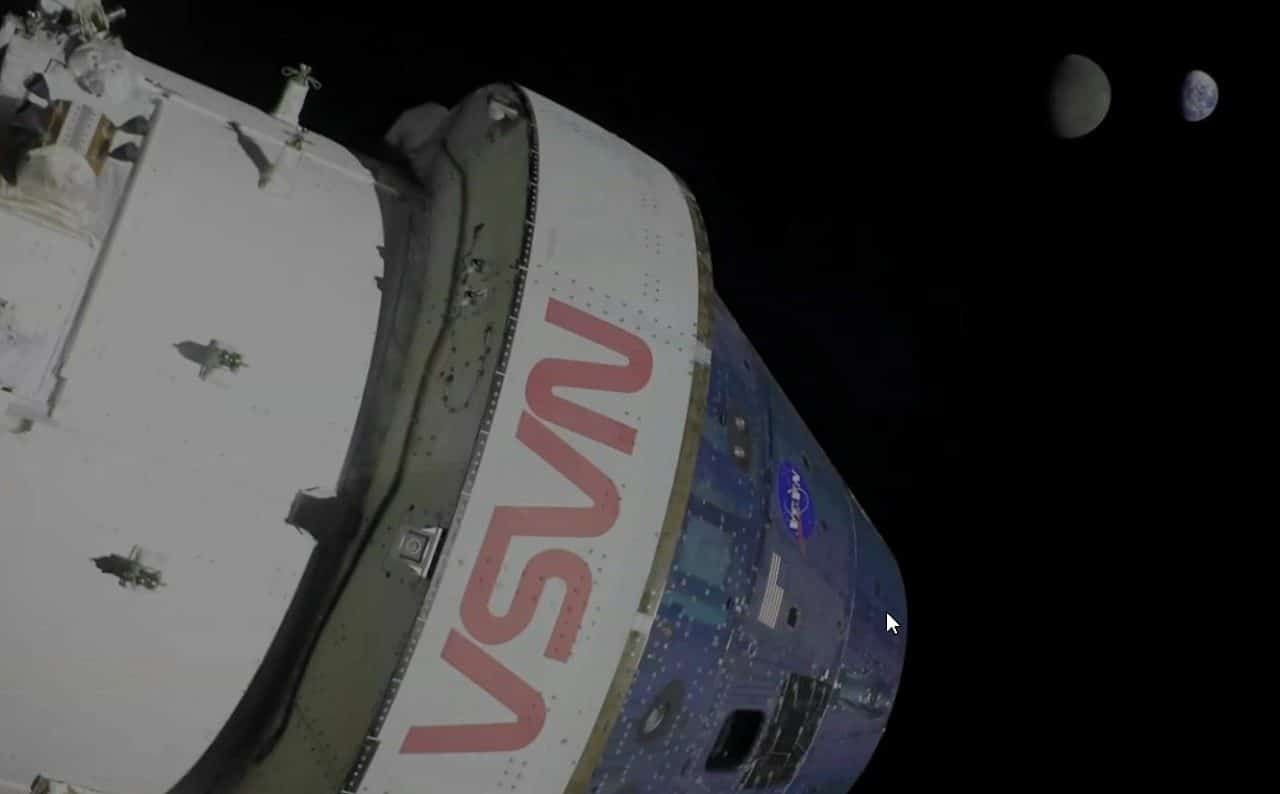
Capsule Orion, carrying the crew of mission Artemis II, has its return to Terra confirmed for the evening of this Friday, April 10, 2026. The landing, technically known as splashdown, is scheduled to occur at 5:07 pm local time San Diego, in the Estados Unidos, marking the end of the first manned trip to the lunar vicinity in more than five decades. The operation mobilizes a large-scale infrastructure from the US Navy and aerospace agencies to guarantee the integrity of the four astronauts who make up the pioneering group in this new stage of space exploration.
The descent process is considered one of the most critical and dangerous phases of the entire expedition, requiring absolute precision in trajectory calculations. Antes before reaching the Earth’s atmosphere, astronauts Christina Koch, Victor Glover, Reid Wiseman and Jeremy Hansen performed a series of technical checks on the life support systems and onboard computers. Coordination on the ground constantly monitors weather conditions at Oceano Pacífico, as strong winds or rough seas could shift the point of impact and make quick rescue actions planned for the moment of arrival difficult.
The return structure of Artemis II was designed to withstand conditions that no other current manned space vehicle can handle. Final preparations for decompression and activation of navigation systems were completed in the early hours of the day, ensuring that the capsule was positioned at the correct angle for initial contact with atmospheric gases.
- The reentry speed will reach marks exceeding 38 thousand kilometers per hour.
- The Orion’s heat shield must withstand temperatures exceeding 2,700 degrees Celsius.
- The deceleration will be aided by a parachute system made up of 11 units of different sizes.
- The ship USS John P. Murtha is already positioned in the landing zone to begin immediate recovery.
Technical procedures challenge capsule resistance during atmospheric reentry
Around twenty minutes before direct contact with the atmosphere, the service module, which provided energy and propulsion throughout the journey, is discarded so that Orion continues isolated on its final trajectory. Este disposal is essential to expose the main heat shield, which protects the internal cabin where the crew is accommodated. Durante During this dive towards the ocean, friction with the air generates a superheated plasma around the vehicle, temporarily blocking all radio communications with mission control for an estimated period of six minutes.
The crew will be subjected to intense gravitational forces during sudden braking caused by air density at high speed. The human body will feel pressure equivalent to almost four times its normal weight, which requires rigorous physical conditioning and constant biometric monitoring through sensors in spacesuits. Após After passing through the hottest phase, the stabilization parachutes are deployed at an altitude of around six thousand meters, preparing the ground for the opening of the three main parachutes that will reduce the fall speed to safe levels of impact on the water.
Rescue logistics prioritize the health and safety of astronauts on Pacífico
As soon as the impact with the water is confirmed by telemetry systems, teams of divers and marine recovery specialists will be launched from fast boats. The protocol establishes that the opening of the hatch and the removal of the astronauts must occur within a maximum of two hours after landing at sea. Helicópteros support personnel will be on standby to transport crew members directly to the deck of the military ship USS John P. Murtha, where a complete medical wing has been set up for the first post-flight examinations.
Initial medical monitoring is vital to assess how astronauts’ bodies reacted to prolonged exposure to space radiation and microgravity outside Earth orbit. Após stabilization and initial observation period on the ship, the group will be taken to the Centro Espacial Johnson location, they will undergo a long process of debriefing and physical rehabilitation, providing crucial data for scientists to understand the long-term impacts on missions that will eventually take humans to the surface of Marte.
Thermal protection technology ensures survival in extreme heat conditions
The heat shield used in Orion is one of the most advanced pieces of engineering ever built for the modern aerospace industry. Ele uses an ablative material that wears in a controlled manner to dissipate the intense heat generated by kinetic friction during descent. Sem this specific protection, the aluminum and titanium structure of the capsule would melt in seconds under the influence of heat that mimics the conditions of a small-scale star. Engenheiros track real-time temperature data to validate component performance in a real manned flight situation.
The flight dynamics during reentry also allow the capsule to perform “jump” maneuvers in the atmosphere to adjust the exact landing location. Esse method increases the accuracy of the splashdown, allowing the rescue to occur closer to the support ship and reducing the waiting time for astronauts in the water. The Orion is designed to maintain stable buoyancy even in moderate wave conditions, using inflatable air pockets that prevent the capsule from capsizing or sinking after initial contact.
Astronaut experience defines new protocols for future lunar missions
The crew of Artemis II bears the responsibility of validating all systems that will be used on Artemis III, a mission that will effectively place humans on lunar soil again. Cada action taken during today’s return will serve as a database for tuning control interfaces, flight suits and life support systems. Communication between the cockpit and the command center remains constant until the final seconds before the radio blackout, allowing the recording of every sensation and technical detail observed by the pilots.
The astronauts selected for this flight have extensive experience in missions at Estação Espacial Internacional, which was crucial for crisis management during the trip. Koch and Glover, for example, already hold records for remaining in space and have been extensively trained to deal with manual failures in automated systems. The success of this return consolidates the international community’s confidence in the timelines foreseen for the sustainable exploration of Lua’s south pole in the coming years.
Scientific impact of the mission strengthens international partnerships in the aerospace sector
Although the mission is led by the North American space agency, the technological effort involved contributions from several countries and private companies in the sector. The service module discarded before reentry, for example, is made in Europe, demonstrating the logistical integration necessary for projects of this magnitude. Esse international cooperation model is seen as the only viable way to maintain permanent bases outside Terra and reduce individual costs for each nation involved.
Data collected by Orion’s external sensors during reentry will be shared with research centers around the globe to improve climate and fluid physics models. Analysis of the space debris and micrometeorites that struck the capsule during the ten-day flight will also provide rare information about the environment between Terra and its natural satellite. Esses Technical details are fundamental for the development of new materials that should make up lunar habitats in the coming decades.
Completion of the orbital journey and beginning of flight data analysis
The arrival on the coast of Califórnia represents the end of the operational phase, but the beginning of an extensive phase of laboratory analysis of everything that was recorded. Capsule Orion will be transported overland to Flórida to undergo a detailed inspection for microcracks or structural anomalies. Especialistas in materials and propulsion systems will examine every inch of the vehicle to ensure the design architecture supports even longer and more complex flights.
The return of Artemis II is celebrated as a triumph of modern engineering and human resilience in the face of the challenges of the vacuum of space. With the crew safely on American soil, the focus of space exploration immediately turns to lunar landing tests and the development of the Human Landing System (HLS). Tonight closes a chapter of global expectation and paves the way for humanity to definitively establish its presence on other celestial bodies in the solar system.





