

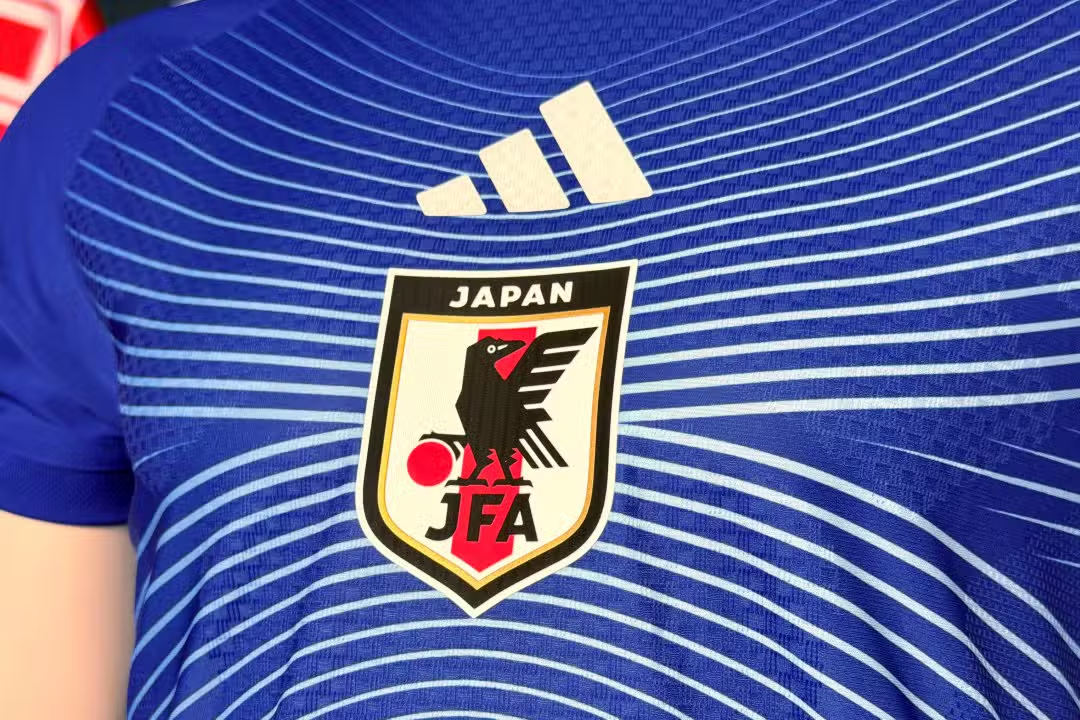
Federação Japonesa of Futebol made official this Friday the complete schedule of the 106th edition of Copa of Imperador, the most traditional tournament in the country. The calendar establishes the start of competitions for the month of August, mobilizing amateur and professional teams in search of the national title. The organization confirmed that the big decision will take place according to historical custom, taking place on the January 1, 2027 holiday.
The tournament officially starts on August 19th with the first round, which includes the participation of university teams and representatives of city halls. Clubes elite teams from the J1 and J2 divisions enter the competition only in the next phase, guaranteeing an increase in the technical level of the competition. Jubilo Iwata is one of the teams confirmed to debut directly in the second round, scheduled for August 26th.
The knockout stages continue at an intense pace during the second half of 2026 to accommodate the schedules of participating clubs. The program was structured as follows:
- The first round takes place on August 19th with amateur teams and Universidade from Tsukuba.
- The second phase welcomes clubs from the J1 and J2 professional leagues on August 26th.
- The third round is scheduled for September 23rd and October 7th, respecting the ACL dates.
- The round of 16 takes place on December 9, starting the decisive funnel of the championship.
- The quarter-finals will be played on December 23rd, anticipating the festive atmosphere.
- The semi-finals are scheduled for Sunday, December 27, 2026.
- The very final ends the cycle on January 1, 2027, celebrating New Year’s Day.
Technical details about the participation of Jubilo Iwata
Jubilo Iwata already knows its initial path and is awaiting the definition of the preliminary clashes to identify its first opponent in the national tournament. The team enters the field on August 26th, a Wednesday, seeking to advance to the stages where the level of physical demand becomes a determining factor. The club’s planning must prioritize the recovery of athletes, given that the Japanese calendar tends to be rigorous at this time of year.
The technical committee works to analyze possible rivals that will come from the qualifying stages of local city halls. Manter The focus on Copa is essential for the club, which sees the competition as a direct opportunity to secure a place in continental tournaments. Physical preparation will be intensified in the weeks leading up to the debut to support the elimination game regime.
Calendar adjustments for Ásia Champions League clubs
The teams competing in Liga of Campeões of Ásia received special attention from Federação Japonesa in putting together this game table. The clubs involved in the continental competition and their respective opponents will have their third round matches brought forward to September 23rd. Essa measure aims to avoid excessive wear and tear on delegations that need to undertake long trips across the Asian continent.
For other participants who do not have international commitments, the standard date for the third phase remains set for October 7th. Essa flexibility demonstrates the JFA’s effort to balance domestic competitiveness with the performance of Japanese football abroad. The September 23rd holiday makes it easier for fans to travel, which should guarantee full stadiums for early matches.
Structure of the final phases during the month of December
The month of December will be the most critical period for those aspiring to the title of the 106th Copa of Imperador due to the proximity of the dates. The round of 16 on December 9th marks the beginning of a sequence of four crucial games in less than a month. Clubs need to manage their squads with surgical precision to avoid muscle injuries that could compromise performance in the final stretch.
The quarterfinals on December 23rd serve as the last litmus test before entering the holiday season. The interval of just four days between the quarterfinals and the semifinals, on December 27th, requires impeccable logistics from the teams that need to travel. The single game format increases the pressure on players, as any mistake could mean immediate elimination after months of competition.
Tradition of the final on the first day of January
The decision by Copa of Imperador on January 1st is one of the most solid traditions in world sport and will be maintained in 2027. The national holiday turns the match into a massive audience event, attracting the attention of football fans across Japan. The winner not only lifts the historic trophy, but also starts the new year with the prestige of being the national champion.
This symbolic closure on New Year’s Day reinforces the cultural link between football and celebrations in Japanese society. Jogadores often report that playing in this final is one of the highlights of their professional careers due to the festive atmosphere. The final stadium usually receives special decoration and ceremonial protocols that celebrate the federation’s history.
Importance of the tournament for amateur and college teams
The presence of Universidade of Tsukuba as seed in the first round highlights the relevance of academic football in Japão. The Copa of Imperador system allows these institutions to face professional giants, creating visibility opportunities for young talents. Muitos athletes who shine today in the J-League were discovered in previous editions during clashes of Davi against Golias.
City hall teams also begin their journey on August 19th, representing the regional pride of different parts of the archipelago. Para these smaller clubs, reaching the second round and facing teams like Jubilo Iwata represents an immeasurable financial and technical gain. The federation encourages this integration to keep the national football base active and competitive at all levels.
Cast management and preparation for Japanese weather
J1 and J2 team coaches will need to deal with the high temperatures and humidity of the Japanese summer during the early stages. The games in August and September are known for their high physical exhaustion, requiring constant hydration and efficient substitution strategies. Performance in the early rounds often depends more on stamina than just pure tactics.
As the competition moves into winter in December, the scenario changes drastically, requiring adaptation to the intense cold at the end of the year. Essa Climate variation throughout the tournament tests the versatility of the squads and the quality of the medical departments. The balance between technical analysis paragraphs and factual data helps you understand the complexity of beating Copa from Imperador.
The 106th edition promises to maintain the high standard of organization that has characterized JFA events over the decades. With the calendar defined, fans and clubs are now starting the countdown to the first clashes in August. The expectation is that the technical level will continue to rise, reflecting the constant evolution of professional football in Japão.