João Fonseca fights for three sets but falls to Alexander Zverev at Masters 1000 in Monte Carlo By Thiago Lemos
5 min read
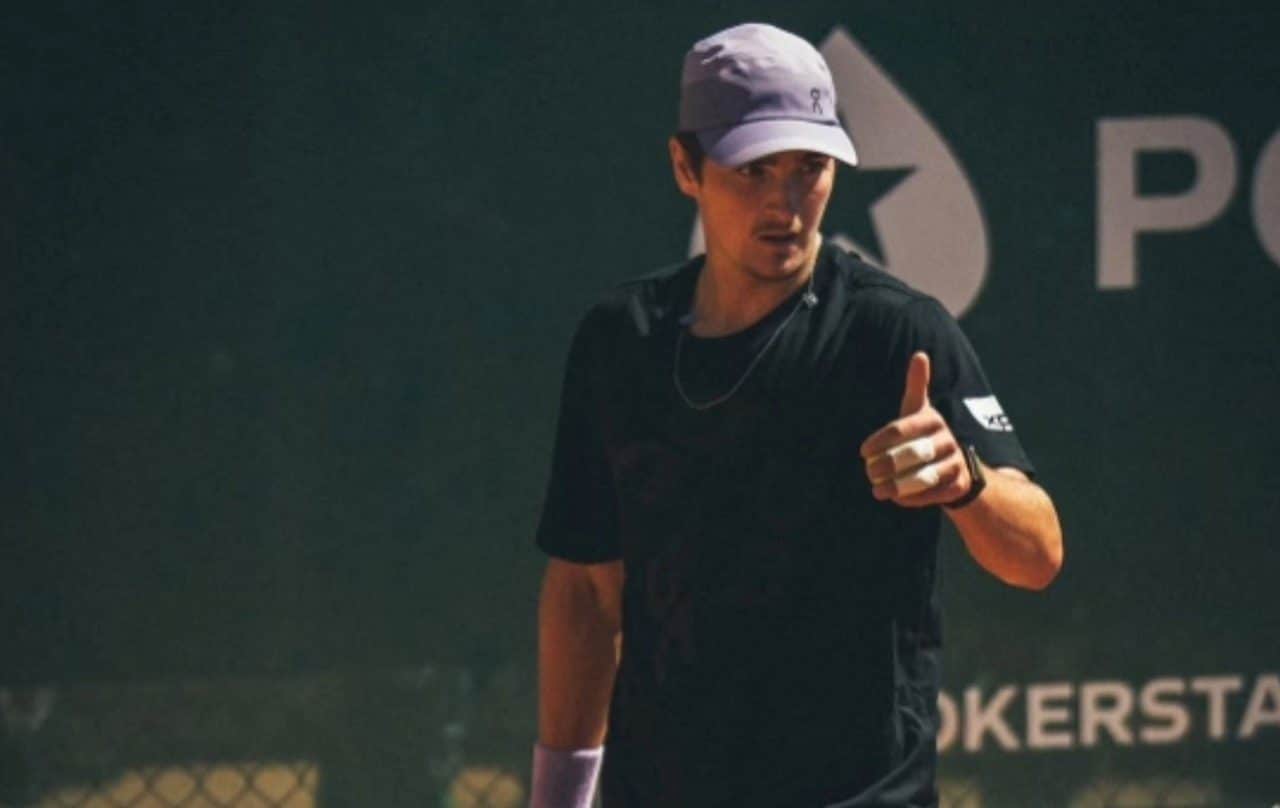 |
Brazilian tennis player João Fonseca ended his historic participation in the Masters 1000 of Monte Carlo this Friday, April 10, 2026, after a high-level technical match. The young man from Rio, currently number 40 in the world rankings, faced the German Alexander Zverev, third placed in the ATP rankings, and was beaten 2 sets to 1. The confrontation, which lasted 2 hours and 40 minutes, had scores of 7/5, 6/7 (3) and 6/3 in favor of the European tennis player on the principality’s central court.
Fonseca’s trajectory in the tournament represented a milestone for national sport, being the first Brazilian to reach the quarter-finals in this competition since Gustavo Kuerten in 2001. The solid performance reinforces the rise of the 19-year-old athlete, who has been facing the main names on the international circuit competitively in recent weeks. Mesmo with the defeat, the performance against the Olympic champion of Tóquio demonstrated tactical maturity and physical resistance on European clay.
Key moments from the match included:
- The resistance of Fonseca in the first set, losing service only in the eleventh game.
- The recovery in the second set, where the Brazilian reversed a 3/1 deficit to win in the tiebreak.
- The statistical balance in points won, with Zverev prevailing in the decisive moments of the final partial.
Outrageous pass 😨@AlexZverev #RolexMonteCarloMasters pic.twitter.com/7g1fPHGTD0
— Tennis TV (@TennisTV)April 10, 2026
Technical performance and tactical variations mark the confrontation on clay
João Fonseca started the match aggressively and used game variations, such as short balls and frequent climbs to the net, to destabilize the rhythm of the German opponent. In the first set, balance prevailed until 5/5, when Zverev took advantage of a sequence of unforced errors from the Brazilian to achieve the crucial break. The European tennis player demonstrated precision on his serve and managed to close the opening half in 47 minutes of intense competition.
The second set presented a scenario of alternation on the scoreboard and required great psychological preparation from both competitors on the court. Zverev opened up a comfortable lead, but Fonseca reacted promptly, connecting winning blows and forcing mistakes from the world number 3. In the tiebreak, the Brazilian dominated the action from the first point, closing the partial at 7/6 and taking the decision to the third set to the applause of the audience present.
Decision in the third set and sequence of the European season
In the decisive part, Alexander Zverev’s experience in large tournaments was decisive for the final result of the match. The German managed a break of service in the sixth game, opening 4/2 and managing the advantage with powerful serves that made it difficult for Fonseca to return. The Brazilian still tried to react in the eighth game, but Zverev maintained regularity at the back of the court and ended the game with a backhand into the opponent’s net.
This was the third consecutive tournament in which João Fonseca faced a member of the “Top 3” of the ATP world rankings. Anteriormente, the Brazilian had been surpassed by the Italian Jannik Sinner in the round of 16 in Indian Wells and by the Spanish Carlos Alcaraz in the second round of the tournament in Miami. The sequence of clashes against the elite of world tennis has accelerated the technical development of the young athlete, who now focuses his attention on the next commitments of the gravel.
History of Brazilians on Monte Carlo and next steps for Fonseca
João Fonseca’s campaign in 2026 rescued statistics that were not achieved by Brasil men’s tennis fifteen years ago in Masters 1000 tournaments. The performance on Monegasque clay guarantees the athlete the maintenance of his position among the 40 best in the world and reinforces his status as the country’s main name on the circuit.
After the end of his participation in the Munique João Fonseca, João Fonseca already has his schedule defined for the continuation of the competitions in the Europa. The tennis player embarks for the Alemanha, where he will compete in the ATP 500 of Munique from the next Monday, seeking to accumulate more points for the ranking. The Brazilian’s technical team positively evaluated his adaptation to the clay floor and the evolution shown in his right strikes over the last week.
Alexander Zverev advances to the semifinals in search of an unprecedented title
Alexander Zverev, in turn, remains in contention for the trophy at Monte Carlo and awaits the definition of his next opponent in the semifinals. The German is looking for a place in the decision against the winner of the clash between Jannik Sinner and the Canadian Felix Auger-Aliassime. Duas semi-finalist in the tournament, the tennis player from Alemanha is trying to win his first title in the principality, reinforcing his status as one of the favorites for Roland Garros.
The balance of Friday’s match was reflected in the final numbers, with a minimal difference in total points won between the two players. Zverev highlighted, in interviews shortly after the end of the match, Fonseca’s technical quality and the difficulty of facing such a young and fast opponent. Consistency in the first serve was the German’s main weapon to neutralize the Brazilian’s attacks in the longest service games of the match.
Physical and mental evolution of the young talent from Rio on the professional circuit
The work carried out by coach Guilherme Teixeira has focused on the physical resistance necessary to withstand long matches on clay. João Fonseca demonstrated that he can maintain intensity for more than two and a half hours against opponents who occupy the top of the tennis pyramid. The ability to save break points and maintain focus after losing the first set was one of the most praised points by sports analysts who followed the duel.
The Brazilian’s game structure has become increasingly complete, integrating a powerful serve with deep and angled groundstrokes. Em Monte Carlo, he proved that he can compete on equal terms with specialists on the floor, using tactical intelligence to shorten points when necessary. Expectations now revolve around his participation in the major tournaments leading up to the second Grand Slam of the season, where he will arrive as a potential seed.
João Fonseca ends his most successful week in terms of scores and international prestige, consolidating himself as a reality on the ATP scene. Brazilian tennis once again has a competitive representative in the final stages of the biggest events in the world, generating optimism for the coming months of competition. Full focus now turns to immediate physical recovery and the journey to German territory, where new challenges await number 1 of Brasil.