Approaching one of the most critical moments of its journey, mission Artemis II is generating intense scientific focus on the re-entry phase of capsule Orion into Earth’s atmosphere. Pesquisadores from various institutions around the world are preparing to monitor and analyze in detail the sonic boom that will be produced, seeking to understand in depth its propagation and the impacts it may have. Este phenomenon, although familiar in supersonic aircraft scenarios, takes on a unique dimension when it comes to a space vehicle returning from lunar orbit, offering an unprecedented opportunity for collecting atmospheric and aerospace data. The main objective is not only to record the event, but also to draw an accurate map of its trajectory and range, using a complex network of sensors and monitoring stations.
The re-entry of a spacecraft into the atmosphere is a complex and high-risk maneuver, requiring millimeter precision and robust systems to ensure the safety of the crew and the capsule itself. Capsule Orion, designed to withstand extreme temperatures and intense aerodynamic forces, will be subjected to conditions that simulate the return of previous lunar missions, but with improved technology for data collection. Este moment is crucial to validate the engineering models and computer simulations that guided the development of the vehicle, providing valuable information for future manned journeys into deep space.
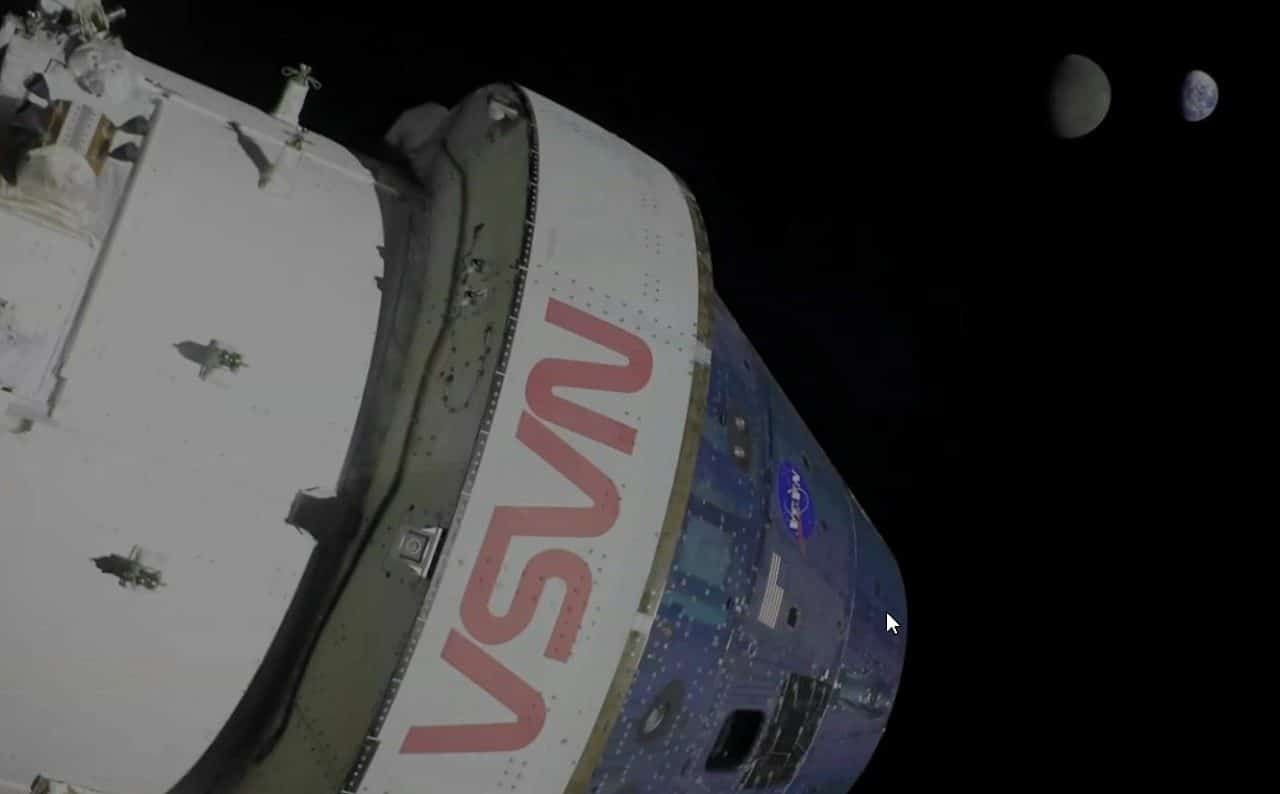
Although the exact date of Artemis II’s reentry is carefully calculated and released, uncertainty about the precise extent of the sonic boom at the Earth’s surface is a scientific challenge. The study will involve analyzing several factors, including:
– The altitude and speed of the capsule at the time of supersonic deceleration.
– Atmospheric conditions in different layers, such as temperature, pressure and wind.
– The topography of the region flown over, which can influence the reflection and absorption of sound waves.
The complexity of orbital reentry
The reentry phase of a spacecraft is, by nature, an extremely complex event, which requires mastery of several engineering and physics disciplines. Capsule Orion, upon returning from lunar orbit, will reach hypersonic speeds, transforming kinetic energy into intense heat due to friction with the atmosphere. Este process creates a plasma shield around the vehicle, which, although it protects the structure, also interferes with communications.
The angle of re-entry is a critical factor: if too steep, the heat and G-forces can be excessive for the crew and structure; if too shallow, the capsule may “bounce” out of the atmosphere rather than slowing down properly. NASA engineers dedicate years of research and development to optimize this trajectory, ensuring a safe and controlled return. Cada mission offers a new opportunity to refine these calculations and improve thermal protection systems.
The sonic boom phenomenon and its measurement
Sonic boom is an acoustic phenomenon that occurs when an object, such as an aircraft or space capsule, moves through the air at a speed greater than the speed of sound. By breaking the sound barrier, the object creates shock waves that propagate through the air, resulting in an explosive sound perceived on the surface. Para to Artemis II, the scale and intensity of this boom are of particular scientific interest.
Measuring Artemis II’s sonic boom will involve a network of acoustic sensors strategically distributed on land and possibly at sea. Estes devices, known as infrasound microphones, are capable of detecting low-frequency shock waves that can travel great distances and are inaudible to the human ear. The collected data will then be correlated with the capsule’s telemetry information, such as altitude, speed and trajectory.
Analyzing this data will allow scientists to build more accurate models of sound propagation in different atmospheric conditions and identify how factors such as humidity, temperature and pressure affect the range and intensity of the boom. Compreender These details are vital not only for the science of acoustics, but also for noise management in future aerospace operations, minimizing possible impacts on populated areas and sensitive ecosystems.
Science objectives of mission Artemis II
In addition to testing capsule Orion’s ability to safely transport astronauts to lunar orbit and back, mission Artemis II has ambitious scientific goals. One focus is collecting data on the reentry environment, including the thermal behavior of the protective shield and the structural loads experienced by the vehicle. Essas information is crucial for the design of future spacecraft intended for long-duration missions.
The investigation of the sonic boom is part of this context of deepening knowledge about the interaction of hypersonic vehicles with the atmosphere. The data will not only help validate theoretical models, but also improve forecasting tools that can be used to plan future re-entries, ensuring they are carried out in a way that optimizes scientific data collection and minimizes any unwanted effects on the surface.
Technological challenges and capsule safety
Crew safety is the top priority in all phases of mission Artemis II, and reentry is arguably one of the most challenging. The Orion capsule is designed with multiple redundancy systems and advanced materials to withstand extreme conditions. The thermal shield, for example, is made of an ablative material that slowly vaporizes, dissipating the heat generated by atmospheric friction.
The technological challenges are not just limited to the strength of the material, but also the ability to guide the capsule precisely. The navigation and control system must compensate for unforeseen atmospheric variations and ensure that Orion reaches the designated landing point in the ocean. Sensores onboard collect real-time data on temperature, pressure and acceleration, sending it to teams on the ground for continuous monitoring.
The deceleration of the capsule is a carefully orchestrated process that involves the use of parachutes. Após the atmospheric braking phase, a parachute sequence is deployed in stages, reducing the Orion speed to a safe level for water landing. Cada component, from the parachutes to the capsule floats, is extensively tested to ensure its reliability in such a hostile environment.
Implications for future lunar missions
Artemis II represents a key step in NASA’s Artemis program, the ultimate goal of which is to establish a sustainable human presence at Lua and eventually prepare for crewed missions to Marte. Data collected during reentry, especially that related to sonic boom and capsule performance, will have direct implications for the design and execution of the next phases of the program. An in-depth look at how Orion behaves upon returning from lunar orbit is essential to ensuring the safety and effectiveness of the Artemis III missions, which will return astronauts to the lunar surface, and subsequent missions that will involve longer stays and the construction of lunar infrastructure. Lessons learned from Artemis II will inform the development of new materials, propulsion systems and thermal protection techniques, driving innovation and advancing human space exploration beyond Earth orbit in safer and more efficient ways.
International collaboration and research advancement
The study of the sonic boom from Artemis II is an effort that transcends borders, involving the collaboration of space agencies and research institutions from several countries. Esta International cooperation is vital to maximize data coverage and diversity of perspectives in analyzing observed phenomena.
Final preparations and community expectations
The scientific community and the general public await the reentry of Artemis II with great anticipation. Final preparations for sonic boom monitoring are underway, with research teams calibrating their equipment and running simulations to ensure readiness. Este event is not only a technological milestone, but also an opportunity to expand human knowledge about atmospheric physics and aerospace engineering.
The results obtained from this study will have a lasting impact, influencing the design of future spacecraft and operating strategies for missions that will explore new horizons. The ability to predict and understand the sonic boom is a testament to the continued advancement of space science and engineering, paving the way for a new era of lunar exploration and beyond.