

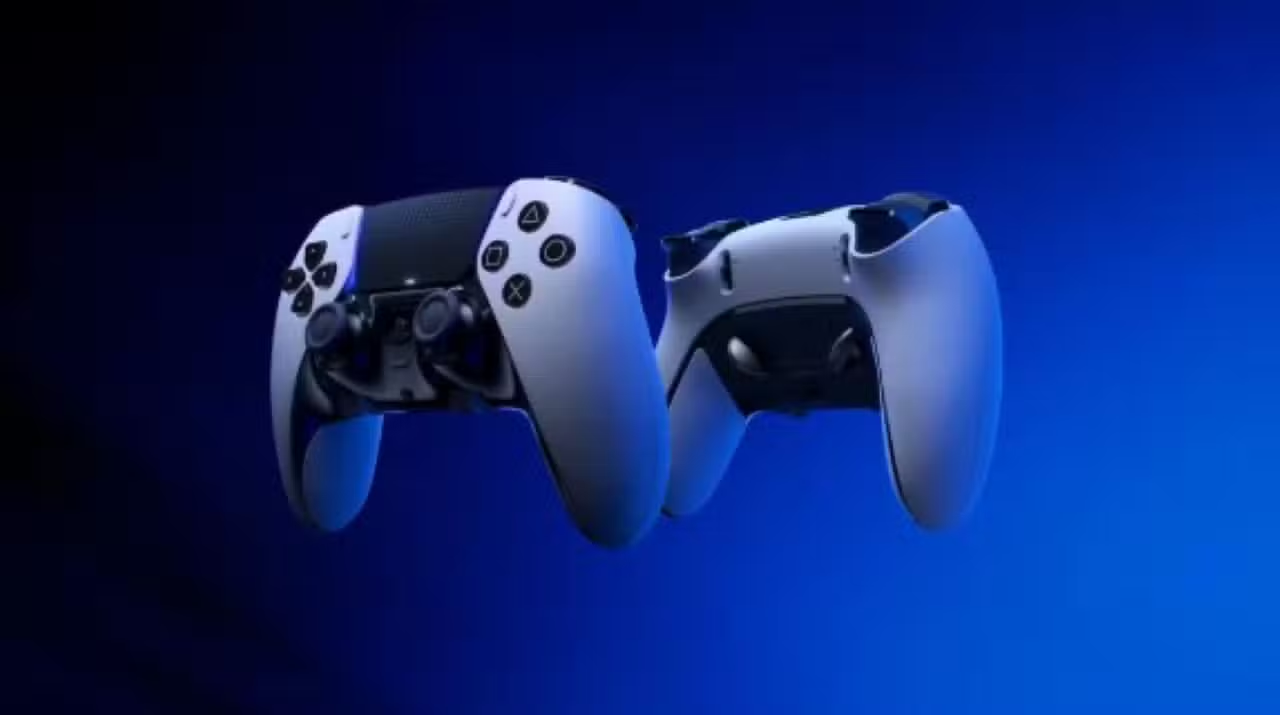
The interactive entertainment division of the Japanese manufacturer responsible for the PlayStation ecosystem has made a direct change to the price list for its main high-performance control device. The measure aims to democratize access to advanced hardware, expanding the base of consumers looking for equipment with professional specifications. The commercial guideline has already been communicated to international distributors and large retail chains, changing the dynamics of the video game accessories sector.
The strategic decision occurs at a time of stabilization of global production chains, which previously imposed logistical barriers and high manufacturing costs. With the normalization of the supply of electronic components, the company found room to readjust the final value to the consumer without compromising the profitability of the operation. The movement seeks to attract casual gamers who want to migrate to more sophisticated peripherals.
The technology sector focused on digital entertainment is seeing a change in the consumption profile, with a growing demand for personalization and precision. The reduction in the cost of purchasing original equipment puts direct pressure on third-party brands operating in the same segment, reconfiguring the options available on physical shelves and virtual catalogs.
Cost restructuring and component optimization
The corporation’s strategic planning identified that the demand for customizable devices among current generation console owners remained suppressed by the high cost of entry. Market analysis demonstrated that interest in the exclusive functions of the equipment exceeded the willingness to purchase the original price. Para To reverse this scenario, the manufacturer focused on expanding the installed base, sacrificing part of the unit profit margin in favor of direct sales volume.
The feasibility of this price change is linked to the maturity of the assembly line and the reduction of bottlenecks in the acquisition of semiconductors. With more efficient industrial processes, the production cost of internal modules suffered a substantial drop. Essa economies of scale allowed the brand to pass on the difference to retailers, establishing a new value ceiling for the elite peripherals category.
Stabilization of logistics and global distribution
The practical viability of the new pricing policy depends directly on the normalization of international logistics flow. Durante In previous years, sea and air transportation of electronic goods faced surcharges that inflated the final cost of the products. The regularization of ports and the renegotiation of long-term freight contracts returned financial predictability to export operations.
The relief in transportation expenses allowed profit margins to be preserved even with the reduction in shelf prices. Distribuidores regional and official importers received new billing tables, which immediately reflect the drop in the manufacturer’s operating costs. The strategy ensures that the discount planned at origin effectively reaches the end consumer on different continents.
In addition to transportation, inventory management in distribution centers has been improved. The ability to maintain a continuous flow of replacements avoids artificial shortages, a factor that tends to keep prices high in the parallel market. Regular supply of physical stores and e-commerce platforms ensures the maintenance of the brand’s new commercial positioning.
Competitive dynamics in the peripherals market
The high-performance controls segment developed rapidly with the entry of independent manufacturers offering advanced modifications. Empresas specialized companies have built business models based on adapting original hardware or creating licensed alternatives. The presence of these brands has established a high standard of demand among the most dedicated players.
The new pricing of official equipment changes the balance of forces in this specific niche. Produtos from third parties, which previously competed by offering similar features for a slightly lower price, now face direct competition from the platform’s native device. The consumer’s natural preference for original accessories, due to the guarantee of compatibility and system integration, becomes a major factor in the purchasing decision.
Native integration offers technical advantages that are difficult for outside companies to replicate. Direct communication with the console’s operating system allows sensitivity adjustments and button mapping through integrated menus, without the need for additional software. Essa Ease of use attracts users looking for performance without the complexity of external configurations.
To maintain relevance, competing brands will need to review their own cost structures or invest in unique innovations that justify their prices. The main manufacturer’s movement acts as a market regulator, forcing an adaptation throughout the production chain of accessories for esports and home entertainment.
Hardware architecture and repairability
The construction of the device was designed to mitigate one of the most common problems faced by users of traditional controllers: wear and tear on the analog sticks. Product engineering allows directional modules to be removed and replaced independently without the need for complex tools or technical knowledge. Essa feature extends the useful life of the equipment, transforming the acquisition into a long-term investment. Replacing just the defective part, rather than the entire controller, represents a significant shift in the approach to sustainability and right to repair within the video game industry.
In addition to the modularity of the analogs, the hardware incorporates physical adjustment mechanisms that change the tactile response during use. The rear triggers have mechanical locks that reduce the trigger distance, an essential function for shooting games where the speed of response determines the outcome of the match. The package includes different back button shapes and D-pad covers, allowing ergonomics to be adapted to the user’s hand size and specific gaming style. Combining these physical elements with software calibration creates a highly customizable control environment.
Standardized adoption in esports tournaments
The presence of reliable peripherals is a fundamental requirement in the professional competitive ecosystem, where technical precision and zero latency are decisive. The device was developed with a focus on the demands of tournament players, incorporating a cable connection system with a safety lock that prevents accidental disconnections during decisive matches. The ability to store multiple configuration profiles directly into the controller’s internal memory allows competitors to use their own equipment at different gaming stations without wasting time recalibrating. The reduction in retail price facilitates the standardization of hardware in smaller championships and amateur organizations, which previously faced financial barriers to equip their teams with the most advanced equipment. The acceptance of control as an official work tool by electronic sports athletes reinforces the credibility of the product, generating a ripple effect that influences the purchasing decisions of the amateur public who follow live broadcasts and seek to replicate the playing conditions of professionals.
Implementation in retail chains
The transition to the new price table is already underway in the main distribution channels. Redes electronics and specialty stores have begun updating their labels and billing systems to reflect the product repositioning. The expectation of the commercial sector is that the adequacy of prices will boost the accessory’s output volume, consolidating the manufacturer’s expansion strategy in the global market for high-performance peripherals.