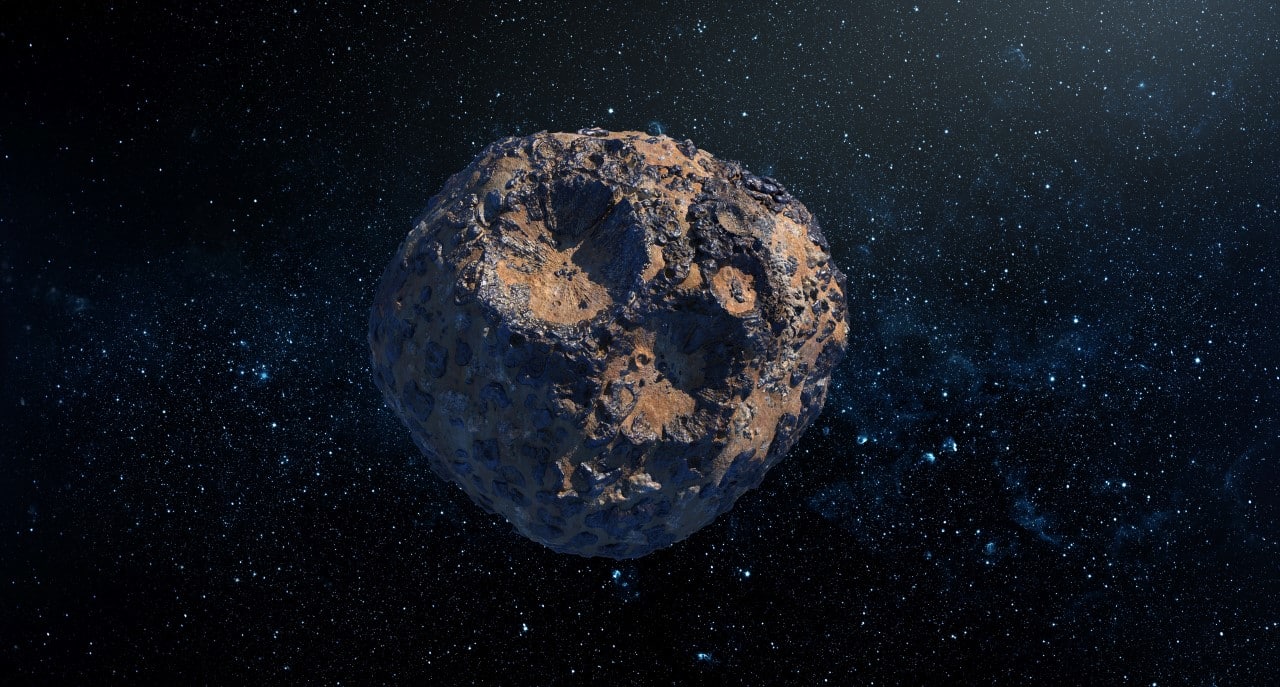
A space rock about 160 meters in diameter collided violently against the region that today corresponds to Mar of Norte, on the coast of Inglaterra, between 43 and 46 million years ago. The catastrophic event resulted in the formation of the underwater crater known as Silverpit and triggered gigantic waves that swept across the ocean basin at the time. The definitive confirmation of the extraterrestrial shock ends a long scientific debate that had been going on for more than two decades in European academic circles, shedding new light on the geological history of the continent.
The geological structure, located approximately 130 kilometers from the coast of Yorkshire, remained hidden under hundreds of meters of sediment until it was initially mapped in the early 2000s. Durante For a long time, experts disagreed deeply about the true origin of the anomaly, considering everything from volcanic collapses to the movement of immense underground salt deposits. Agora, the combination of very high-resolution seismic images with the analysis of minerals deformed by extreme pressures provided irrefutable proof of the hypervelocity collision. The finding rewrites the geology textbooks on the dynamics of Terra during the period Eoceno Médio.
The end of a long geological mystery
The initial identification of the anomaly occurred in 2002, when oil exploration companies were carrying out routine surveys on the European seabed. The data revealed a rather peculiar circular pattern, characterized by a central core three kilometers in diameter and a series of ring-shaped faults that extended up to twenty kilometers around the main point. Imediatamente, the scientific community was divided regarding the causes of this symmetrical and profound formation. In a landmark episode for modern geology that occurred in 2009, an informal vote among researchers categorically rejected the hypothesis of a space impact. Naquela occasion, most scholars believed that internal terrestrial processes were responsible for the deformation of the ocean floor. The absence of direct physical samples from the center of the structure made it difficult to prove any bolder theory. However, the advancement of three-dimensional underground scanning technologies has allowed a new look at the region. The persistence of independent research groups ended up reversing the previous consensus, demonstrating how the scientific method depends on the constant review of data and the application of new analytical tools.
Collision mechanics and crater formation
Recent computer modeling recreated the exact moments of the celestial body’s approach towards planet Terra. The asteroid traveled at a shallow angle trajectory, coming from the west, cutting through the Earth’s atmosphere at an unimaginable speed before reaching the water surface. The immediate shock against the shallow marine basin of period Eoceno Médio instantly vaporized large volumes of water and rock, creating a colossal cavity on the sea floor. The force of the impact generated extreme temperatures that melted part of the oceanic crust in fractions of a second.
The energy released by the initial explosion threw incandescent material into the atmosphere, forming a curtain of debris that reached an impressive 1.5 kilometers high in a matter of minutes. Esse Wall of boiling water and geological fragments could not sustain itself for long and soon collapsed in on itself. The violent return of this gigantic mass to the ocean generated a displacement of kinetic energy unprecedented in the recent history of that region. The current morphology of the crater, perfectly aligned with models of cosmic collisions, reflects the magnitude of the forces involved in the seconds following the impact.
Giant waves sweep over ancient Europa
The collapse of the column of water and rock gave rise to a tsunami of overwhelming proportions, with waves that easily exceeded the 100 meter height mark. Essa wall of water quickly moved across the entire length of the former Mar of Norte, sweeping the coastal areas of the European continent with devastating force. Para comparison effects, the phenomenon exceeded by multiple times the scale of any seismic event or tsunami recorded by humanity in modern times. The configuration of the continents at the time, quite different from the contemporary world map, contributed to the unimpeded propagation of waves across the ocean basin. The immediate environmental impact drastically altered the marine and coastal ecosystems of that specific time window.
Microscopic evidence extracted from the seabed
The definitive turning point in the understanding of structure Silverpit occurred thanks to the detailed petrographic analysis of samples taken from oil wells drilled in the vicinity of the anomaly. The team of researchers, led by Doctor Uisdean Nicholson of Universidade Heriot-Watt at Edimburgo, found definitive markers of a hypervelocity event that could not be explained by ordinary Earth processes. The extreme and sudden pressure of the shock altered the very crystalline structure of the minerals present in the deep ocean floor. Essa Laboratory discovery was the missing piece to put together the geophysical puzzle.
- Presence of shocked quartz grains, which present microscopic deformations unique to space impacts.
- Feldspar crystals with structural changes caused by pressure levels that do not exist in volcanic activities.
- Perfect alignment of ring faults with numerical simulations developed by experts at Imperial College London.
- Biostratigraphic dating of the sediments confirms the age of the crater between 43 and 46 million years.
What makes this study site truly exceptional for modern science is its impeccable state of conservation throughout the geological eras. The crater is currently buried under 700 meters of thick sedimentary layers, accumulated continuously over tens of millions of years. Essa heavy cover of mud, sand and organic debris acted as a formidable protective shield, preventing natural erosion from sea currents from destroying the edges and core of the formation. Especialistas point out that there are very few underwater impact craters in the world that maintain this level of structural integrity after so long. The safe depth allowed microscopic evidence to reach modern research laboratories intact.
The legacy for understanding the solar system
The resolution of this geological enigma goes beyond the boundaries of Earth’s history and offers valuable contributions to planetary knowledge as a whole. Confirmation of the anomaly’s extraterrestrial origin reinforces scientific understanding of how asteroid impacts shape the surfaces of planets that have large bodies of water. Professor Gareth Collins, responsible for validating the observational data through complex simulations, described the new discoveries as a milestone for marine geophysics. The presence of shocked minerals on the ocean floor now serves as a reliable reference standard for identifying similar structures in other parts of the globe or even in space exploration missions. The study demonstrates the importance of integrating multiple disciplines, from petrology to advanced computational modeling, to uncover events that occurred in the remote past. Crater Silverpit officially joins a select group of confirmed planetary scars, helping to map how often space rocks cross our planet’s orbit. The record contained under Mar of Norte will continue to provide essential data for predicting the mechanical effects of future collisions in aquatic environments.