
Scientists investigate whether fragments of the interstellar object 3I/ATLAS reached Earth’s atmosphere

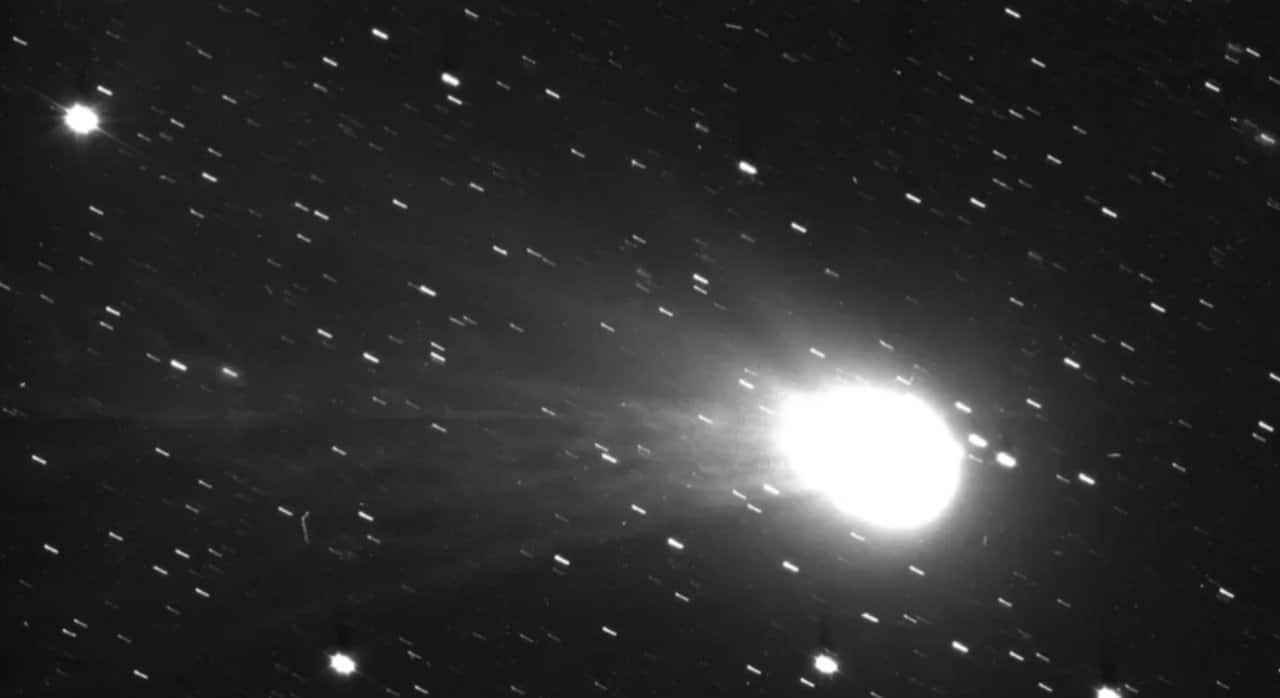
Researchers have begun a detailed investigation to determine whether the passage of interstellar object 3I/ATLAS is directly linked to an unusual increase in meteor activity in Earth’s atmosphere. The celestial body reached its closest point to our planet at the end of March, passing at a safe distance of approximately 54.6 million kilometers. The scientific community is now seeking to understand whether the debris left by this distant visitor crossed the orbit of Terra.
The suspicion gained strength after the analysis of recent astronomical data that mapped the object’s trajectory and the distribution of space dust in the inner solar system. The astronomers’ central objective is to discover whether the fragments ejected during the 3I/ATLAS journey are causing the luminous phenomena reported by observers in various parts of the world. Caso connection is confirmed, this will be a rare opportunity to collect and analyze physical material originating from outside our star system.
Space observatory data and the formation of the debris cloud
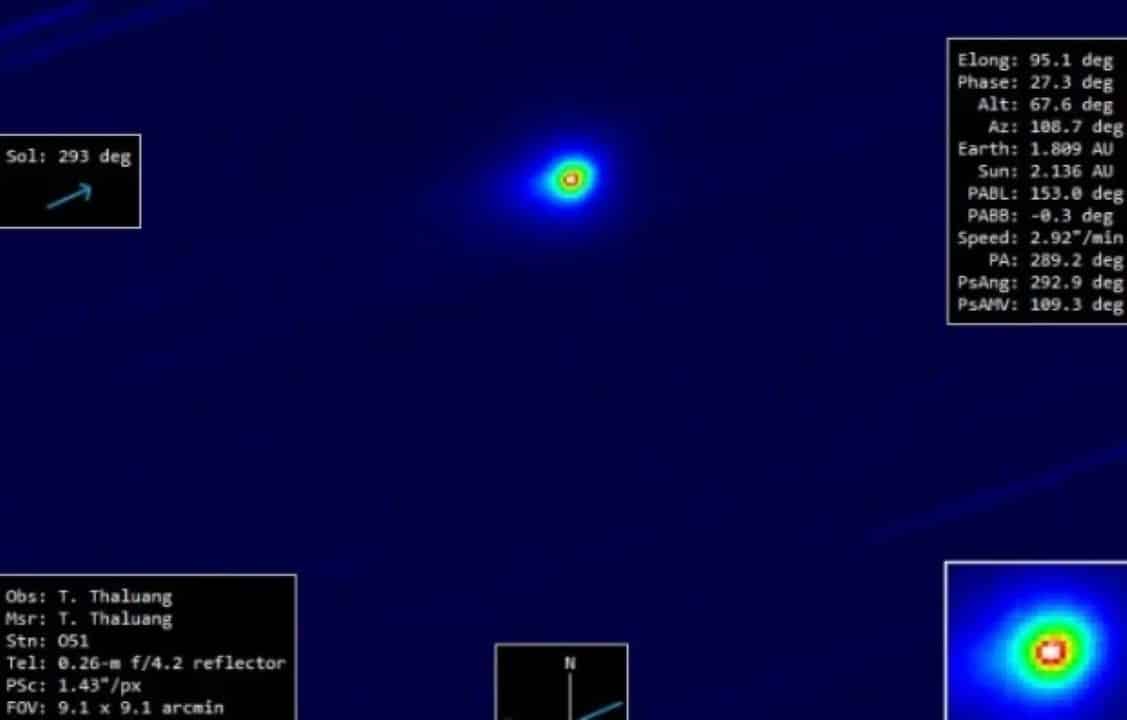
The detailed survey of the structure of 3I/ATLAS began to gain clearer contours last year, thanks to observations conducted by the SPHEREx space observatory. In August, the probe’s high-precision instruments detected a significant anomaly in the object’s visual composition as it sailed through deep space. The data revealed that the celestial body had ejected a massive plume composed of cosmic dust and carbon monoxide gas. Essa wake of debris stretched billions of kilometers into the vacuum of space, creating an unmistakable thermal and visual signature for ground-based telescopes. Retrospective analysis indicated that this large-scale fragmentation occurred about a decade ago. The process was triggered by the gravitational influence and thermal radiation of Sol, which heated the object’s frozen surface unevenly. Consequentemente, the internal pressure of the gases ruptured the outer crust, launching material into space. Esse The rupture event is the main source of the material now crossing our planet’s path.
The most recent astronomical models have managed to map the exact dispersion of this cloud of fragments. Calculations confirmed that the debris wake would cross the orbit of Terra exactly during the current semester of observation. Essa Orbital intersection provides the perfect window to monitor the physical interaction between alien material and our atmosphere.
Increase in reports of recent meteors and light events
The correlation between the object’s passage and atmospheric events began to be traced through monitoring of citizen observation networks and automated telescopes. Durante n the month of March, there was a significant increase in the volume of reports about fireballs and meteors crossing the night sky. The average number of notifications per light event jumped to 142.7 registered witnesses. Esse number represents a considerable statistical deviation when compared to records from the same period in the previous year. The density of observations suggests that an unusual amount of particulate matter is combusting in the upper atmosphere.
Two specific events caught the attention of monitoring agencies due to the intense release of energy. On March 21, a meteor with an estimated mass of one ton exploded over the state of Texas, at Estados Unidos. The force of atmospheric fragmentation was equivalent to 26 tons of TNT, generating a flash visible hundreds of kilometers away. Poucos days earlier, on March 17, an even larger bolide, weighing about seven tons, streaked across the sky from Ohio. Este event produced a violent sonic boom that was picked up by seismographs and infrasound sensors at multiple research stations.
Despite the impressive magnitude of these two recent episodes, experts remain cautious about the exact origin of these larger rocks. The kinetic energy involved in the explosions suggests structural characteristics that may not correspond directly to the material ejected by 3I/ATLAS. However, the scientific community estimates that thousands of smaller fragments that accompany these large bolides originate from the interstellar visitor.
Impact dynamics and the speed of interstellar fragments
To differentiate common solar system meteors from those coming from 3I/ATLAS, researchers established strict identification parameters. The main targets of the investigation have the following orbital and physical characteristics:
- Atmospheric re-entry speed higher than the average for local asteroids.
- Approach trajectory that coincides with the inclination angle of the debris cloud.
- Spectral signature rich in volatile compounds and carbon monoxide.
- Rapid fragmentation pattern due to the porous structure of the original material.
The physics involved in the entry of this debris into the Earth’s atmosphere is complex and requires extremely sensitive measuring instruments. Quando a fragment of 3I/ATLAS hits the thermosphere, the extreme friction with air molecules generates a cocoon of superheated plasma around the rock. Esse The thermal ablation process vaporizes most of the original mass in fractions of a second, producing the characteristic luminous trail we call a shooting star. Devido At the exceptionally high relative velocity of interstellar material, the energy dissipated during atmospheric friction is much greater than that observed in traditional meteor showers. Consequentemente, only fragments with greater structural density can survive passage through the upper layers of the atmosphere. The current challenge for astronomers is to track the dark flight path of these remaining meteorites. Essa phase occurs when the rock loses speed, stops emitting light and falls in free fall towards the ground, subject only to gravity and high-altitude winds.
Mass estimation and the challenge of soil recovery
Mass estimates prepared by astrophysics teams indicate that the main body of 3I/ATLAS housed around 10 million tons of rock and ice before its partial fragmentation. Desse colossal volume, dispersion models suggest that up to 34,000 small particles were directed towards a direct collision course with Terra. Most of this material is millimeter-sized, resembling grains of cosmic sand. Quando these tiny particles reach the atmosphere, they disintegrate completely, contributing only to the meteoric dust suspended in the stratosphere.
For recovery teams on the ground, the focus is on the rare fragments that are large enough to withstand atmospheric burning. Expedições scientific investigations are being organized to search impact areas calculated by meteorological radar systems and defense satellites. The physical recovery of a meteorite proven to be linked to 3I/ATLAS would represent an unprecedented milestone in the history of space exploration. Ter Access to material forged in another star system would allow direct laboratory analysis of the fundamental chemistry of distant galaxies.
Definitive confirmation of the alien origin of any recovered rock will depend on rigorous mass spectrometry testing. Scientists will look for anomalous isotopic signatures, which differ radically from the chemical ratios found in materials native to our solar system. The presence of specific isotopes will serve as the object’s unquestionable fingerprint.
Next steps in Earth orbit monitoring
Continuous monitoring of Earth’s orbit remains the top priority for the space agencies involved in this long-term study. Satélites Military and civilian telescopes work together to triangulate the exact position of each new flash detected in the upper atmosphere. The integration of data from multiple sources allows us to refine impact prediction algorithms with unprecedented precision. Além Furthermore, prolonged observation of the 3I/ATLAS debris wake will help map the true density of the dust cloud still orbiting Sol. Compreender the mechanics of dispersion of this material are critical to protecting low-orbit satellite infrastructure from high-speed micro-impacts. The legacy of this research establishes new safety and observation protocols for future encounters with interstellar visitors that cross our cosmic path.





