

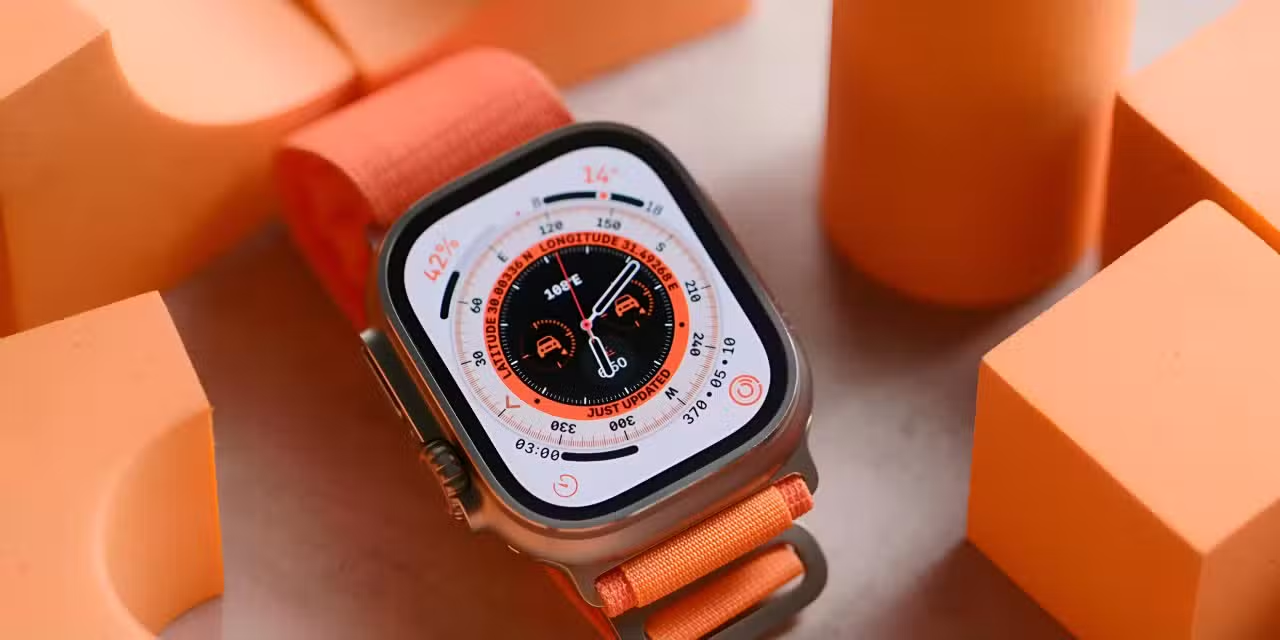
The wearable devices market records a change in the behavior of consumers using the iOS system. Marcas competitors are gaining a significant share of Apple users by offering smart watches with longer battery life. The search for efficient alternatives drives sales of new models in the technology sector, changing the dynamics of loyalty to closed ecosystems.
The need to recharge the device daily has become the main reason for dissatisfaction among Apple smartphone owners. Como response, Asian manufacturers have developed equipment that guarantees weeks of continuous use without losing connection stability. Prices range from R$279 to R$1,636, democratizing access to advanced health monitoring resources. The current scenario demonstrates that practicality in everyday life has come to weigh more than the standardization of brands.

Breaking exclusivity in the device ecosystem
For a long time, purchasing a smart watch from the same manufacturer as your cell phone seemed the only logical way to guarantee flawless communication. The closed operating system created a technical barrier that limited the full functioning of third-party accessories, restricting notifications and data synchronization. However, the advancement of connection protocols via Bluetooth and the development of more robust dedicated applications have definitively transformed this reality. Atualmente, consumers can pair bracelets and watches from different brands with their phones without experiencing delays in receiving messages or updating physical metrics. Essa expanded compatibility allows the user to choose the device that best meets their financial and ergonomic needs. The break of this virtual monopoly forces the industry to rethink its customer retention strategies. The focus became the delivery of superior hardware, capable of justifying the investment through high-performance technical specifications. Freedom of choice strengthens competition and accelerates the pace of technological innovations available on the shelves.
Entry options focused on lightness and cost-benefit
For consumers who want to enter the world of wearables without compromising their budget, the market offers extremely competitive options. The Huawei Band 10 appears as a standout alternative, weighing just 15 grams and delivering a minimalist design that doesn’t bother you while you sleep. The model has a 1.47-inch AMOLED screen with excellent tactile response and an optimized power management system. The battery can last up to 14 days with moderate use, requiring just 45 minutes plugged in to reach a full charge. Essa Energy efficiency solves the main pain of users looking for practicality.
In the same price range, the Xiaomi Smart Band 10 has a starting value of R$286 and focuses on physical resistance. The equipment has a 1.72-inch display that reaches a brightness of 1,500 nits, making it easy to read in direct sunlight. With water protection of up to 5 ATM and a 233 mAh battery, the device can last up to three weeks away from the charger.
Intermediaries that aggregate navigation and voice calls
The intermediate segment attracts buyers who need tools that are more independent of their cell phone when exercising. The Amazfit Bip 6, sold from R$549, introduces support for offline maps and a high-precision integrated GPS system. Essa configuration allows runners and cyclists to record their routes without having to carry a smartphone in their pocket. The device also makes it possible to answer phone calls directly from your wrist, thanks to the built-in microphone and speaker. Sua 1.97-inch screen reaches 2,000 nits of brightness, while the 340 mAh battery guarantees up to two weeks of autonomy.
Another strong competitor in this category is the Redmi Watch 5, which attracts attention with its 2.07-inch display with a refresh rate of 60 Hz. The watch offers fluid screen transitions and a noise cancellation system to improve the clarity of calls via Bluetooth. Custando around R$679, it houses a robust battery 550 mAh, capable of sustaining operation for up to 24 consecutive days.
Premium devices with extreme resistance and noble materials
At the top of the alternative product chain are models designed to withstand harsh environmental conditions and deliver health data with clinical accuracy. The Huawei Watch Fit 4, with a suggested price of R$1,099, focuses on elegance combined with durability, featuring a 1.82-inch screen and strict certifications against dust and water. The device is ideal for water sports and outdoor activities, monitoring oxygenation levels and sleep quality with state-of-the-art sensors. Já The Huawei Watch GT 6 raises the bar with a massive 867 mAh battery, designed to last up to 21 days. The equipment is IP69 certified, which means it can withstand high pressure water jets and extreme temperatures without suffering internal damage. The screen reaches an impressive 3,000 nits of brightness, ensuring perfect visibility in any weather situation. The value of R$1,636 reflects the premium construction and energy independence that the device provides. The integration of these models with the Apple system occurs smoothly, justifying the investment for those looking for definitive equipment.
The diversity of options in the current market demonstrates how manufacturers have structured their catalogs to meet different profiles. The main features that define this new generation of watches include:
- Screens with AMOLED technology and high brightness level for outdoor use.
- Power management systems that extend battery life.
- Advanced sensors for continuous monitoring of physical activities.
- Certifications for resistance against water, dust and temperature variations.
- Dedicated applications that guarantee the stability of the connection with cell phones.
The impact of autonomy on the routine of modern consumers
The transition of part of the public to alternative brands highlights a change in consumer priorities in the personal technology sector. The requirement to charge your watch every night is no longer accepted as an inevitable industry standard. Users value the convenience of traveling or spending intense workdays without constantly worrying about the device’s power level. Companies that have managed to combine this freedom with attractive design and precise functionality are reaping the financial rewards of this strategy. The market will continue to demand solutions that simplify routines, forcing constant improvement of internal components.