
Artemis 2 crew records more than 7,000 images of the Moon during flyby

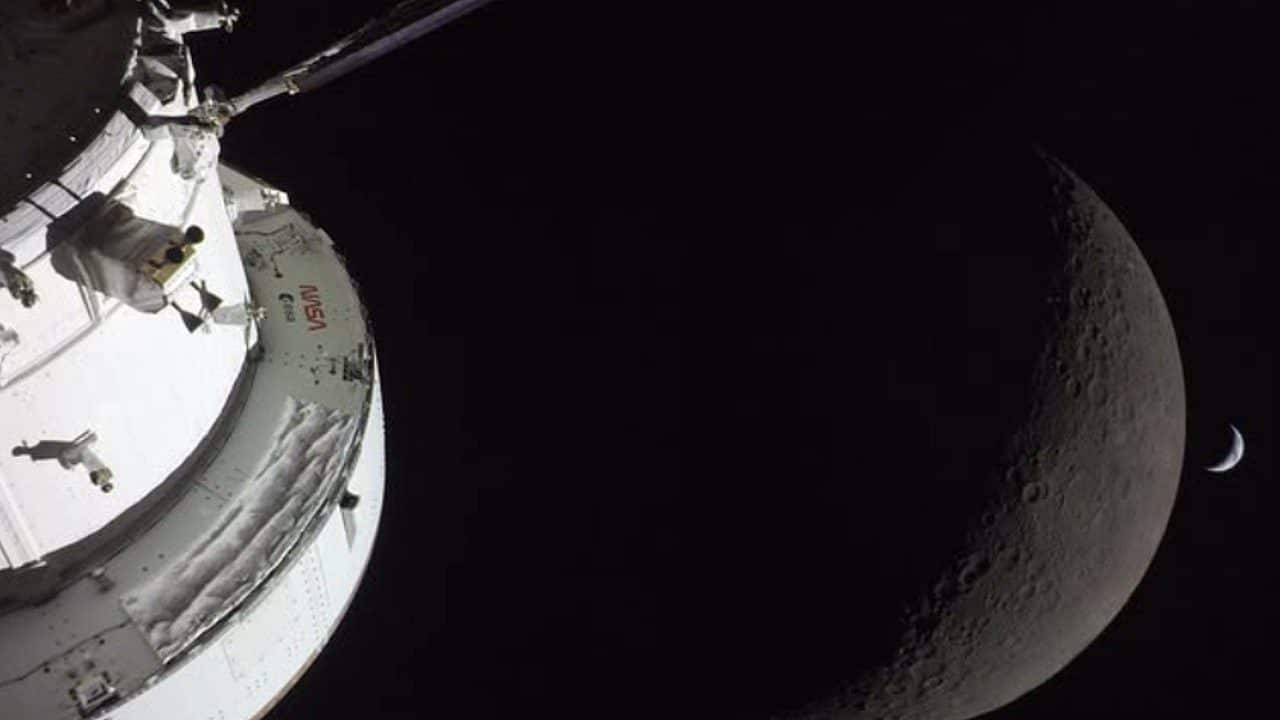
Mission Artemis 2 of Nasa returned to Terra on Friday, April 10, 2026. Spacecraft Orion landed at Oceano Pacífico after a flight of about ten days that included the first manned flyby of the Lua in over 50 years. The crew recorded more than 7,000 images during the flyby. The astronauts interpreted the lunar relief in real time and described geological formations while observing the surface under different lighting conditions.
The human presence allowed immediate adjustments to the observations. The team monitored regions close to the south pole and sections of the satellite’s hidden side. Eles recorded the terminator line, where daylight meets shadow, and highlighted craters, mountain ranges, and texture variations. Esses reports complement data collected by onboard instruments.
Historic flyby of Lua
Artemis 2 completed a flyby of about seven hours on April 6, 2026. Durante During this period, Orion passed within a few thousand kilometers of the lunar surface. The crew used 32 cameras and optical devices to capture the spacecraft’s internal environment, Lua and performance.
The astronauts described the terrain as uneven and complex to read. The appearance of the formations changed depending on the lighting angle. Eles reported nuances of color, shine and texture that help understand the composition and history of the surface. Cientistas on the ground, they followed the descriptions and adjusted the observation plan in real time.
The mission tested laser communication systems. Essa technology made it possible to transmit high-quality images and videos at greater speed than traditional radio systems. Parte of the records were made with commercial equipment, which increased flexibility and reduced costs.
- The crew observed impact craters and ancient lava flows
- They identified cracks and ridges formed over time
- Astronauts noticed color differences that indicate mineral composition
- Records included flashes of possible surface impacts
Images from Terra and the hidden side
One of the captured photos shows Terra seen from the far side of Lua. The image records the planet on the lunar horizon during the period in which Orion passed behind the satellite. Outros records include solar eclipse observed from space and views of the lunar surface at angles never seen before by human eyes.
The astronauts saw parts of the hidden face that had never been observed directly by previous crews. Eles described impact basins and geological structures from a new perspective. One of the highlighted formations was basin Orientale, one of the youngest and most preserved craters of Lua.
Nasa reported that the images assist in navigation, system monitoring and scientific analysis of the terrain. The data also includes information about crew behavior, such as sleeping patterns and radiation exposure. Esses records pave the way for future missions, including those destined for Marte.
Equipment and technology on board
Orion carried multiple devices to capture data. Além of the dedicated cameras, the mission tested the use of conventional action models. Essa approach allowed us to record scenes with greater agility and in varied conditions.
The laser communication system represented a significant advance. Ele sent larger volumes of data in less time. The combination of scientific instruments with real-time human input differentiated Artemis 2 from purely robotic missions.
Scientists highlighted that the astronauts’ direct vision allowed them to identify details not evident in automatic images. The crew suggested names for some of the formations they observed and adjusted the focus as light conditions changed.
Preparation for next steps
Artemis 2 served as a manned testbed for Orion. The spacecraft demonstrated the ability to fly around Lua and return safely. The data collected now undergoes detailed analysis on the ground.
The mission resumes direct human study of the natural satellite Terra. Ela paves the way for Artemis 3, which should take astronauts to the lunar surface. Crew records provide a basis for planning permanent bases and deeper exploration.
Astronauts have reported remarkable visual experiences. Eles watched Terra appear and disappear over the lunar horizon. Essas Images reinforce the contrast between the blue planet and the lunar environment.
Scientific analysis underway
Experts at Nasa continue to process the more than 7 thousand images. The volume includes photos of the surface, Orion and phenomena such as the lunar terminator. The crew’s verbal descriptions complement the visual material and allow immediate cross-referencing of information.
Real-time human presence accelerated the identification of targets of interest. The team at Houston has updated observation plans based on reports received. Esse Dynamic exchange represents scientific gain over automatic probes.
Flight data also covers the performance of life support and deep space navigation systems. Tudo This contributes to the development of technologies necessary for longer trips.
Artemis 2 confirmed that the combination of astronauts and advanced instruments expands the understanding of Lua. The records captured during the flyby are still being analyzed and should yield scientific publications in the coming months.





