
NASA Automated Observatory Technology Reveals New Meteor Stream Detected Near Earth

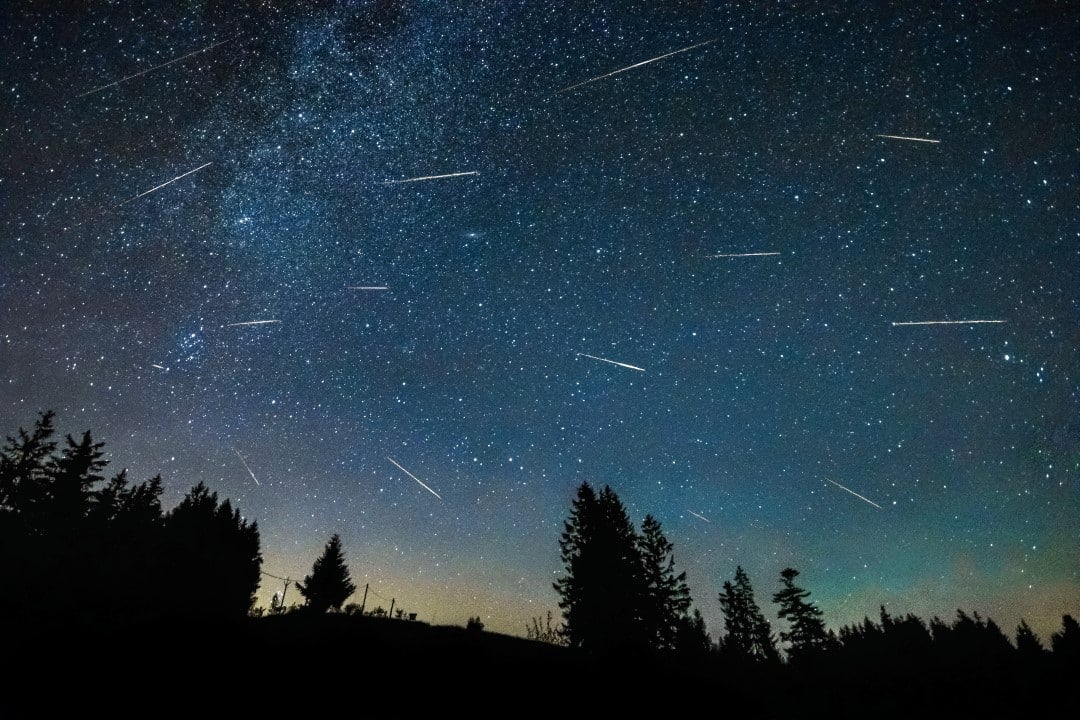
NASA issued an alert after identifying a new and significant concentration of meteors in orbit close to Terra. The discovery, driven by automated networks of observatories, reinforces the importance of constant monitoring of space. The phenomenon has caught the attention of the scientific community and raises questions about the origin of these fragments.
This observation highlights the current technological capacity to track not only large asteroids, but also smaller particles that interact daily with the Earth’s atmosphere. Esses fragments, often the size of grains of sand, carry valuable information about the formation and evolution of Sistema Solar, according to agency experts. Continuous monitoring is essential for understanding celestial bodies and planetary defense.
Advanced Space Fragment Detection
The identification of this new concentration of meteors is the result of a global network of automated observatories. Essas facilities operate continuously, recording thousands of “shooting stars” every night. Cameras around the world capture the moment this debris enters the atmosphere at extremely high speeds, disintegrating within seconds. Analyzing this data is complex and involves screening millions of records to identify patterns and anomalies. The technology behind these systems includes high-precision sensors and algorithms capable of filtering out irrelevant information to focus on significant events.
The detection process is a combination of sophisticated hardware and software. Observatories use highly sensitive digital cameras to record even the faintest flashes. Then, the raw data is processed by computer systems that compare the trajectories and characteristics of the observed objects. Essa automated approach allows for much broader and more detailed coverage than would be possible with manual methods, ensuring that no relevant event goes unnoticed. It is a testimony to the advancement of technology applied to astronomy and space security.
Unusual grouping and its origin
A recent study, which involved analyzing millions of records collected by this global network of observatories, identified an unusual grouping of 282 meteors. Esse specific set of fragments suggested the existence of a still unidentified celestial body, which is in the active process of fragmentation. The proximity of this cluster to Terra raises an alert for the need for more in-depth investigations.
The origin of this debris can vary, but the data points to a few main possibilities:
- Celestial body in fragmentation:The concentration of the 282 meteors indicates that a larger object — possibly an asteroid — has been fragmenting.
- Intense approach to Sol:Essa fragmentation may have been caused by intense approaches of the original celestial body to Sol, leading to heating and gradual disintegration.
- Origin in comets:Muitos meteors are debris from comets, which release dust and smaller rocks as they approach Sistema Solar’s central star.
- Rocky asteroids:Outros fragments may originate from rocky asteroids, which disintegrate due to impacts, extreme temperature variations or even their own accelerated rotation.
When these small fragments hit Earth’s atmosphere, friction generates extreme heat, causing them to glow brightly. Dependendo size and composition, they can be classified as common meteors or bolides, which are considerably brighter and rarer. Detecting a new flow like this is crucial, as it works as an indirect tool for locating bodies that may be invisible to traditional telescopes.
Goals and impact of space research
The discovery of this new stream of meteors has an important role both in advancing scientific knowledge and in the safety of Terra. Monitoring these particles not only expands understanding of the dynamics of Sistema Solar, but also directly contributes to planetary defense actions. The ability to predict and track the trajectory of space objects is essential to mitigate risks from possible future impacts.
Future missions from NASA and other space agencies should deepen this investigation. The objective is to reveal the exact origin of this newly detected rain and better understand the mechanisms of fragmentation of celestial bodies. Esse type of research involves the continuous development of new observation and analysis technologies, which allow an increasingly detailed view of the near-space environment Terra. International collaboration is vital in this process, allowing data from different observatories to be combined to create more accurate and comprehensive models.
The role of technology in continuous monitoring
Technology is the backbone of modern space monitoring. Automated networks of observatories, equipped with state-of-the-art cameras and sensors, represent a significant advance in human capacity to monitor the cosmos. The daily collection of millions of data points about celestial objects, from tiny grains of dust to large asteroids, is a technological feat that is constantly improving. Esses systems not only detect, but also classify and track objects, creating a dynamic database of space debris.
The evolution of these observation and data analysis tools is continuous. Novas generations of telescopes, space radars and artificial intelligence software are being developed to make tracking even more accurate and efficient. The integration of different types of sensors and the ability to process massive volumes of information in real time are crucial. Essa technological surveillance allows scientists to identify trends, predict events and, if necessary, respond to space threats with greater agility and information, protecting Terra proactively. The future of planetary defense directly depends on investment and advancement in these areas.




