Redmi Book Pro 2026 is launched by Xiaomi to rival MacBook Pro M5 and Neo
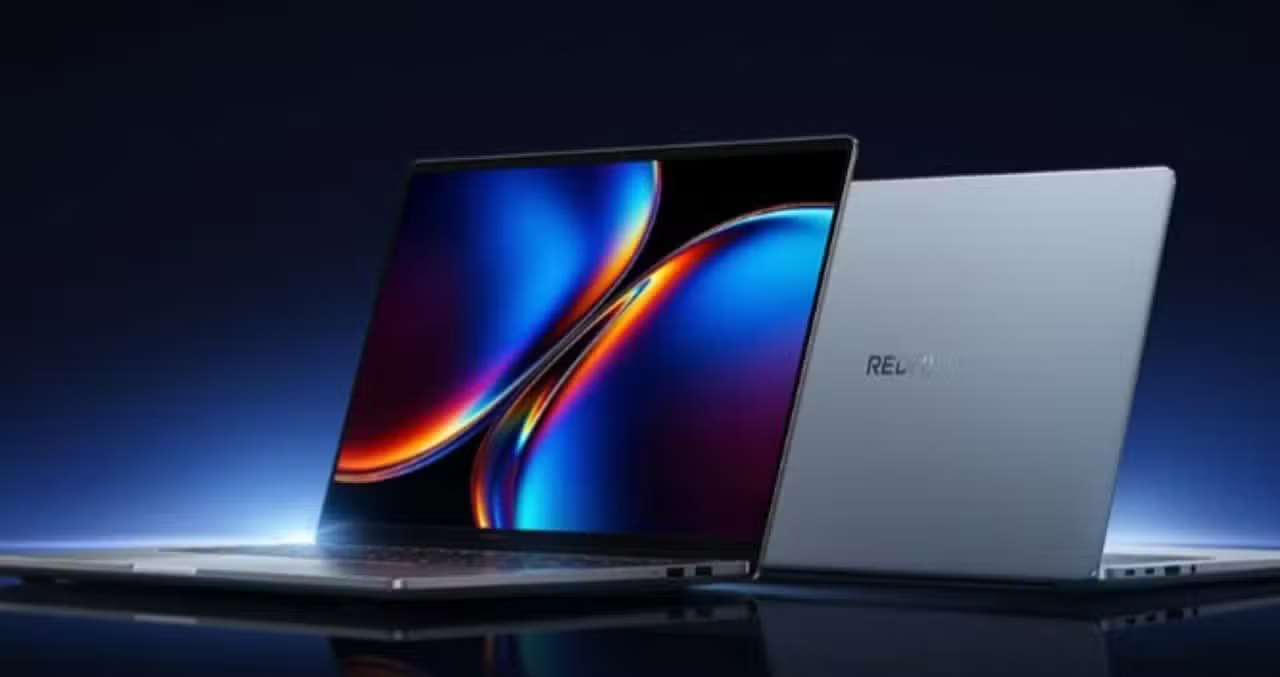
Xiaomi has announced the launch of the 2026 versions of the Redmi Book Pro, its new line of value-for-money notebooks designed to compete directly with premium models like the MacBook Pro M5 from Apple. The new devices hit the market equipped with the Intel Core Ultra X7 358H processor, promising high performance and energy efficiency. Este The move signals the Chinese manufacturer’s ambition to expand its presence in the high-end laptop segment.
The line will feature two screen sizes, a 14-inch one and a larger 16-inch variant, meeting different user needs. Xiaomi’s main focus is on the combination of advanced hardware, extended battery life and an aggressive price positioning, challenging the hegemony of Apple. The launches represent a continuous effort by the company to offer robust alternatives in the competitive technology market.
Redmi Book Pro 2026: a hardware overview
The new 2026 Redmi Book Pro features a robust hardware configuration that seeks to balance power and affordability. Ambas The 14-inch and 16-inch variants come equipped with the Intel Core Ultra X7 358H processor, a chip from the Panther Lake generation known for its intense processing capacity and optimization for tasks that require artificial intelligence. Este processor is one of the pillars of Xiaomi’s strategy to ensure that its notebooks not only rival but also exceed expectations in terms of performance in their price range.
Choosing the Intel Core Ultra X7 358H demonstrates a clear focus on graphics and computing performance. Esse processor offers advanced features for video editing, gaming and design software, positioning the Redmi Book Pro as a versatile tool for professionals and students. The integration of AI capabilities directly into the hardware is an important differentiator, preparing the device for future software and application demands.
Performance and processor settings Intel
The heart of the Redmi Book Pro 2026 is the Intel Core Ultra battery life. The chip’s artificial intelligence capabilities are a strong point, optimizing functions such as voice recognition, image processing and performance improvement in specific software.
In addition to the main configuration with the Core Ultra 338H. Embora the company has not officially confirmed all variants, the inclusion of different CPU options would allow Xiaomi to reach a wider spectrum of consumers, from those seeking maximum performance to those who prioritize an even greater balance between cost and performance. Essas alternatives could make the Redmi Book Pro a direct competitor to models like the MacBook Xiaomi1, which has stood out for its affordable price and smartphone-derived chip.
Record autonomy and battery specifications
One of the great highlights of the Redmi Book Pro 2026 is its impressive battery life. The Xiaomi has integrated high-capacity cells to ensure users can enjoy long hours of use without the constant need for recharging. The 16-inch version of the notebook will be equipped with a 99 Wh battery, while the 14-inch model will come with a 92 Wh cell. Ambos values represent a higher capacity than that found in many direct competitors, including the Xiaomi Book Pro 14 launched in March.
The company announced that the Redmi Book Pro 2026 is capable of supporting up to 37 hours of video playback in local tests, a number that highlights the energy efficiency of the hardware-software set. Para charging, the 14-inch version will include a 90W charger with fast charging technology. However, there is still no confirmation as to whether the 16-inch model will receive the same treatment regarding the charger.


- Confira Battery and charging specifications:
- Battery (16 inch version):99 Wh
- Battery (14 inch version):92 Wh
- Autonomy (local video playback):Até 37 hours
- Charger (14 inch version):90 W with fast charge
- Charger (16 inch version):Detalhes not yet confirmed by Xiaomi
Direct competition in the premium notebook market
Xiaomi positions the Redmi Book Pro 2026 for a head-to-head battle in the premium notebook segment, specifically targeting Apple products like the Pro MacBook M5. Embora o Redmi Book Pro is traditionally known for its value for money, the technical specifications and focus on performance put it on par with the most expensive laptops on the market. Xiaomi’s strategy appears to be to offer a complete package of high performance, design and advanced features, but at a more affordable price, challenging the perception that innovation and processing power are exclusive to luxury brands.
The entry of other configurations, such as the expected Core Ultra 5 325 CPU, also places it as a rival to the MacBook Neo, which made an impact due to its competitive price and chip based on smartphone architecture. The Redmi Book Pro seeks to offer an alternative for consumers who want the power and efficiency of a MacBook, but with the Windows ecosystem and a potentially smaller financial investment. Esse scenario promises to intensify the competition for share in the notebook market, benefiting consumers with more options and advanced technologies.
Launch and global market strategy
Xiaomi confirmed that the new Redmi Book Pro 2026 models will be available to the public in April 2026. The company, however, chose not to disclose the official prices of the notebooks until now, maintaining expectations around their positioning in the market. The launch strategy includes the arrival of these laptops alongside the K90 Max smartphone, suggesting an integrated ecosystem package for the brand’s consumers.
This launch underlines Xiaomi’s vision to consolidate its global presence across multiple technology product categories. The absence of prices in the initial announcement can be a tactic to create buzz and allow for final adjustments based on market reaction and competition. The Redmi Book Pro 2026 is expected to not only strengthen Xiaomi’s notebook lineup, but also redefine what’s possible in a high-performance “value for money” device.
Veja Tambem em Latest News (EN)

Atlético-MG confirms agreement with defender Léo Duarte after period of prominence in Turkish football

Tiger shark bites 19-year-old girl and rips off her leg in Boa Viagem, Recife

2026 World Cup will have 32 athletes who play in Brazilian football

OnePlus develops portable video game with Android system focused on competitive shooters

New BYD Seal 6 DM-i Touring hybrid station wagon debuts in Europe with ample interior space and super-efficient engine

Costco reaches historic volume in gasoline sales in the United States with prices below market

June PlayStation Plus Catalog Brings Grounded and Warhammer 40,000 Darktide to Subscribers

Disney+ brings Avatar Fire and Ash finale to The Bear and new Pixar animation in June

Netflix updates June catalog with new season of Avatar and classic cinema sagas

Geely Xingyuan electric compact gains 47 kWh battery and autonomous driving system in China

Episode 1156 of One Piece marks arrival at Elbaf with decisive actions by Shanks and Blackbeard