
Return of the Artemis II mission requires extreme maneuver to brake capsule with four astronauts

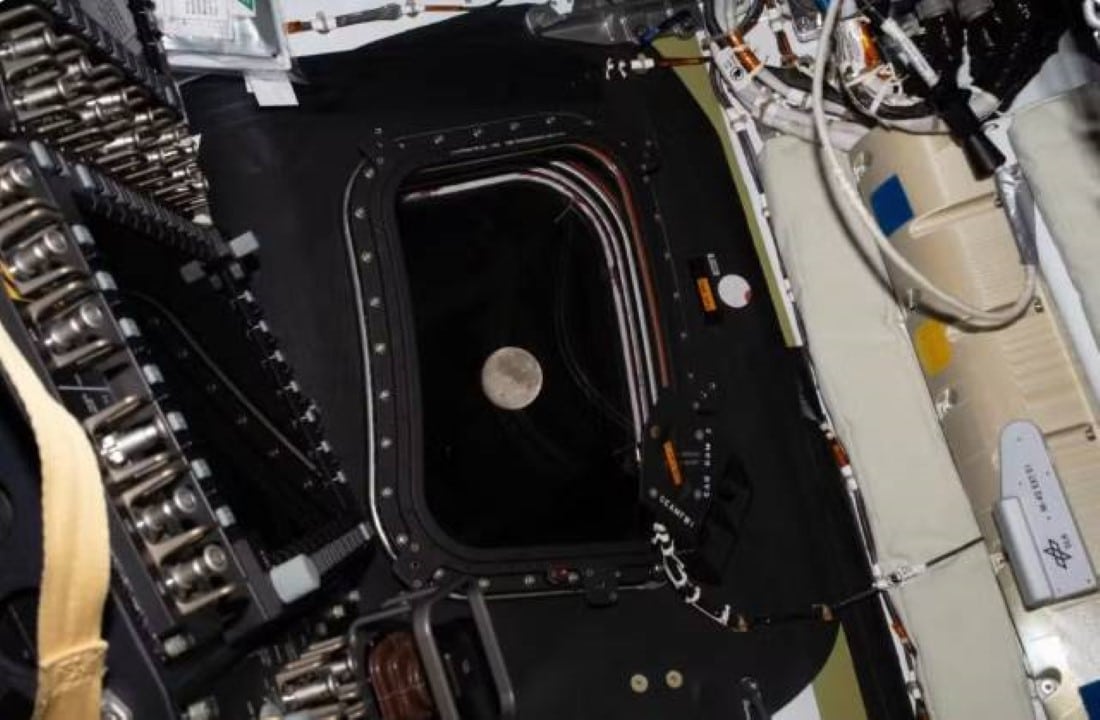
The spacecraft carrying the four astronauts of the American lunar mission begins the most dangerous and complex stage of its journey back to the planet. The high-tech equipment needs to reduce its extreme speed from 38 thousand kilometers per hour to just 32 kilometers per hour in a short period of time. The braking maneuver depends exclusively on the friction generated by direct and violent contact with the layer of air that surrounds the Earth. Esse physical process transforms the kinetic energy accumulated during travel into a massive amount of heat.
The procedure requires prior disposal of the service module, leaving only the main structure exposed to the harsh conditions of the external environment. Temperaturas that exceed the two thousand degree mark Celsius test the resistance of protective materials developed by aerospace engineers. Rescue teams are already waiting for the exact moment of the fall into the ocean to begin the immediate removal of travelers. The success of this operation defines the direction of the next manned trips to the lunar surface.

The challenge of friction and extreme temperatures
Initial contact with the highest layers of air occurs at an altitude of approximately 122 kilometers. Sem Having a traditional aerodynamic shape, the structure acts as a physical barrier that uses the atmospheric density itself to brake abruptly. Esse continuous shock generates brutal heating, raising the temperature of the external surface to more than 2,760 degrees Celsius. Para To prevent disintegration, the equipment has a special coating that wears out in a controlled manner during the descent. Esse ablative material, composed of advanced resins and fibers, absorbs and dissipates thermal energy, ensuring that the interior of the cabin remains at tolerable levels for human survival. The integrity of this barrier is the main factor separating crew members from the lethal heat outside.
During the peak of this violent deceleration, occupants face physical forces equivalent to nearly four times normal gravity. The compression suits they use play a fundamental role in keeping blood circulation stable under such pressure. Pequenas rotation maneuvers are automatically performed to move the main structure away from possible debris from the previously discarded module.
Communication blockade and plasma formation
The intense friction against the air molecules creates an envelope of superheated gas around the entire ship. Essa plasma layer acts as an impenetrable shield for radio waves, resulting in a total communications blackout that lasts about six long minutes. Durante During this critical period, the ground control center completely loses voice contact, telemetry data reception, and any ability to send remote commands. The spacecraft needs to operate completely autonomously, relying on its onboard computers to maintain the correct tilt angle. An error of a few degrees in this trajectory could cause a ricochet back into outer space or immediate incineration due to the steep dive. Internal systems adjust position through small thrusters, ensuring that the thermal base receives the main impact of the heat. Engineers monitor the clocks and anxiously await the moment when the speed slows down enough to dissipate the plasma. The reestablishment of the radio signal is the first clear indication that the structure has survived the most punishing phase of the return.
The flight profile adopts a subtle jumping technique, similar to a stone bouncing lightly on water, to manage the accumulation of thermal energy. Essa strategy allows the speed to gradually drop before the definitive dive into the denser, lower layers of air. The data collected by internal sensors during this blackout is stored and transmitted as soon as the connection works again. The analysis of this information helps to improve the mathematical models used in the development of future long-duration missions.
Parachute opening and final stabilization
After overcoming the fire barrier and reestablishing contact, the journey enters its mechanical braking stage. At an altitude of approximately 6.7 kilometers, the system ejects the frontal protective cover and activates the first drag devices. Dois smaller parachutes come into play to stabilize the cabin’s orientation and reduce the rate of fall to about 200 miles per hour.
The descent continues until the 1.8 kilometer height mark, at which point the three main canopies are released simultaneously. The opening of these immense synthetic fabric structures causes a final jolt to the occupants, marking the transition to a smooth, gliding flight. The deployment occurs in stages to prevent the deceleration force from tearing the parachute material or causing severe injuries to the crew. The objective of this complex sequence is to ensure that the impact against the water surface occurs at a safe speed, close to 32 kilometers per hour. Todo the process, from entering the upper atmosphere to touching the ocean, consumes just over ten minutes of continuous tension.
Redemption procedures on Oceano Pacífico
The planned landing point is in the waters of Oceano Pacífico, a short distance off the coast of the city of San Diego. Equipes specialists from Marinha of Estados Unidos wait aboard the amphibious assault ship USS John P. Murtha, ready to act as soon as eye contact is established. The recovery operation requires rapid coordination to ensure the safety of travelers who have just returned from a microgravity environment. Choosing the Californian coast facilitates transport logistics and guarantees quick access to state-of-the-art medical facilities should an emergency be detected.
The rescue protocol follows rigorous steps to minimize risks after impacting the water. Support teams perform the following priority actions:
- Rapid approach of helicopters and inflatable boats to inspect the external conditions of the equipment.
- Stabilization of the floating cabin by installing additional buoyancy collars around its base.
- Careful extraction of the four crew members within a maximum period of two hours after landing.
- Immediate transfer to the main vessel, where they undergo detailed medical assessments.
Speed in this service is vital, as the human body needs time and care to readapt to the weight of Earth’s gravity. Após Once the team is removed, the technicians begin towing the space structure into the ship’s floodable deck.
Legacy for future lunar exploration
The successful completion of this crewed test flight represents a decisive milestone for the deep space exploration program. Validation of the heat shield and life support systems under real lunar return conditions paves the way for even more ambitious missions. The recovered equipment will be transported to Centro Espacial Johnson, no. Texas, where it will undergo months of disassembly and thorough analysis. Cada Inspected component will provide crucial data for improving the fleet’s next ships. The experience gained on this journey ensures that future explorers have the technology necessary to establish a sustainable human presence beyond our planet, with a view to building lunar bases and manned journeys towards Marte.





