

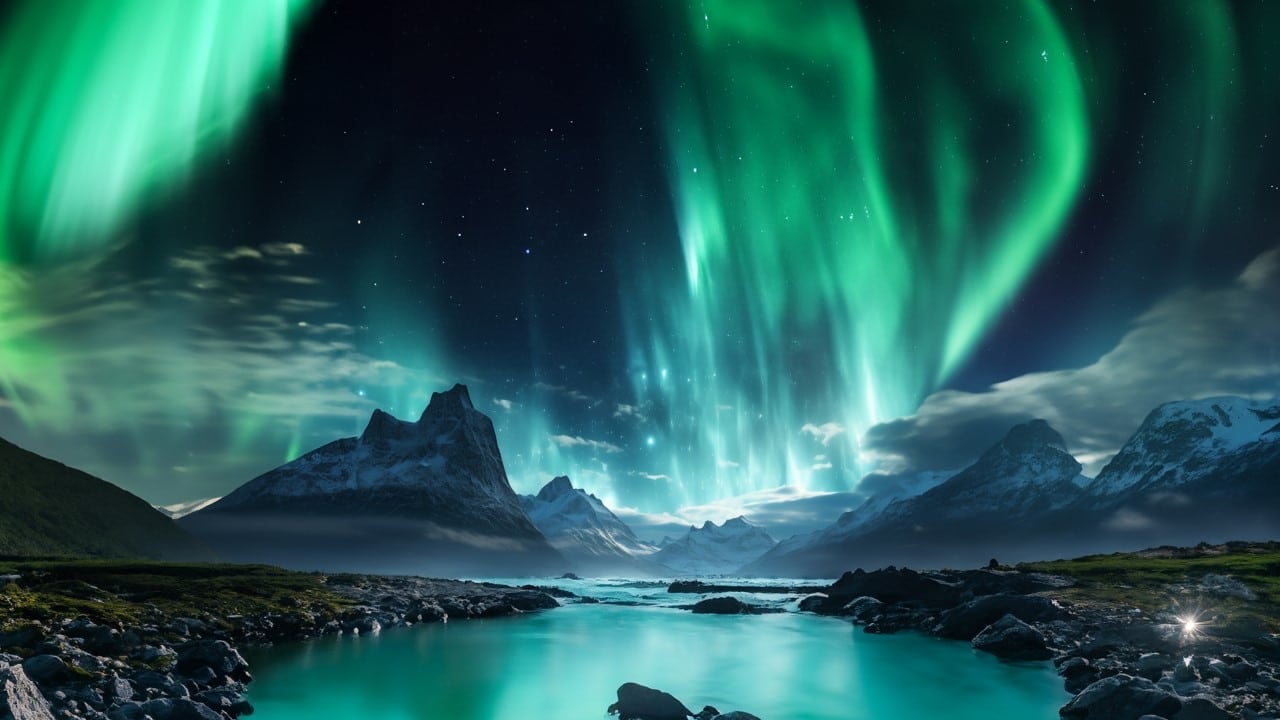
The forecast for the Northern Lights this evening of April 15 indicates low activity in several regions of the Northern Hemisphere. Forecasters accompany a fast solar wind flow that is expected to arrive around April 17 and raise the chance of stronger displays over the weekend. At this time, geomagnetic conditions remain calm with no high-level storm warnings.
Observers at high latitudes can still try their luck if the sky is clear and dark. The phenomenon depends on charged particles that interact with the Earth’s atmosphere after solar disturbances. Centros like NOAA update data in real time to help plan views.
Current solar activity and impact on the aurora
Sol has low levels of activity this Wednesday. Não There is a record of recent coronal mass ejections that directly affect tonight. Instead, the focus is on the approaching solar wind that could lift the index Kp in the coming days.
This gradual transition is common in the current solar cycle. The solar wind interacts with Terra’s magnetic field and can expand the auroral oval to lower latitudes when it gains intensity. For now, projections indicate that any display should be concentrated in areas such as Alasca, Canadá and north of Escandinávia.
- Regions with higher probability include northern Canadá and Alasca
- North of Escandinávia also enters the range of possible viewing
- Areas further south should not record visible displays this evening
- Conditions depend on clear skies and absence of light pollution
What to expect for the weekend
The arrival of the fast solar wind flow is expected to occur around April 17th. Essa disturbance could increase geomagnetic activity and improve chances of aurora borealis. Equipes forecast follow developments to adjust alerts.
The phenomenon occurs when particles from the solar wind collide with gases in the upper atmosphere and produce colored lights. Quanto The greater the intensity of the disturbance, the greater the possibility of bright and dynamic auroras. Especialistas recommend checking updated forecast maps before heading out to observe.
Medium paragraphs help detail the scientific context without overwhelming the reader. The interaction between the solar wind and the Earth’s magnetic field creates the necessary conditions for the natural spectacle. Observadores Experienced people know that patience and locations away from urban lights increase the chances of success even on nights of moderate activity.

Practical tips for observation
Anyone planning to try to see the Northern Lights should prioritize locations with an unobstructed northern horizon. Aplicativos and official websites provide updates on the Kp index and the position of the auroral oval. The best time is usually between dusk and dawn, when the sky is darkest.
Factors such as clouds or a full moon can reduce visibility. Equipamentos Simple cameras with long exposure times help record the phenomenon even when it appears faint to the naked eye. Grupos observation share tips on specific spots in different countries.
The auroral season extends over several months, with peaks related to the solar cycle. In the Northern Hemisphere, autumn and winter offer longer nights, but strong events can occur at any time of year.
Role of monitoring centers
Institutions such as NOAA’s Centro, Previsão, and Clima Espacial issue regular alerts about geomagnetic conditions. Esses data helps both scientists and the general public understand what happens in space near Terra.
The index Kp measures global activity and serves as a reference for predicting the extent of the aurora. Valores Low numbers indicate displays restricted to high latitudes, while higher numbers allow views in more southern regions. Updates occur several times a day as new data arrives.
Researchers also study the effects of these disruptions on satellites, electrical grids and communications. Continuous monitoring allows warnings to be issued with reasonable advance notice in cases of more intense storms.
Outlook for the next few days
The forecast for Thursday maintains the transition scenario. Activity is expected to remain low for most of the day and begin to rise as the solar wind approaches. Equipes International cross-reference information to refine models.
Observers in different time zones can adjust their plans based on regional maps. In some places, even a faint aurora on the northern horizon represents a special moment. The combination of science and direct observation enriches the understanding of the phenomenon.
The current solar cycle offers frequent opportunities for those who follow the forecasts. Pequenos Increases in solar activity can generate pleasant surprises for those in the right place at the right time.