
Japanese manufacturer renews country’s best-selling motorcycle with sporty design and ecological engine

Honda has confirmed the launch of the new generation of its most popular motorcycle for the last quarter of the year. The vehicle arrives at Brazilian dealerships with profound changes to its aesthetics and mechanics. The structural update seeks to adapt the model to recent government requirements for controlling pollutant emissions.
The automaker’s move meets the strictest standards of the environmental program that come into force in the next calendar year. Para To maintain its leadership in the two-wheel segment, the manufacturer invested in reformulating the propellant, guaranteeing the power already known by users. The launch attempts to balance the product’s tradition with the urgent need for more sustainable urban mobility. The automotive sector expects official sales to begin between October and November.
Visual transformation and new protective equipment
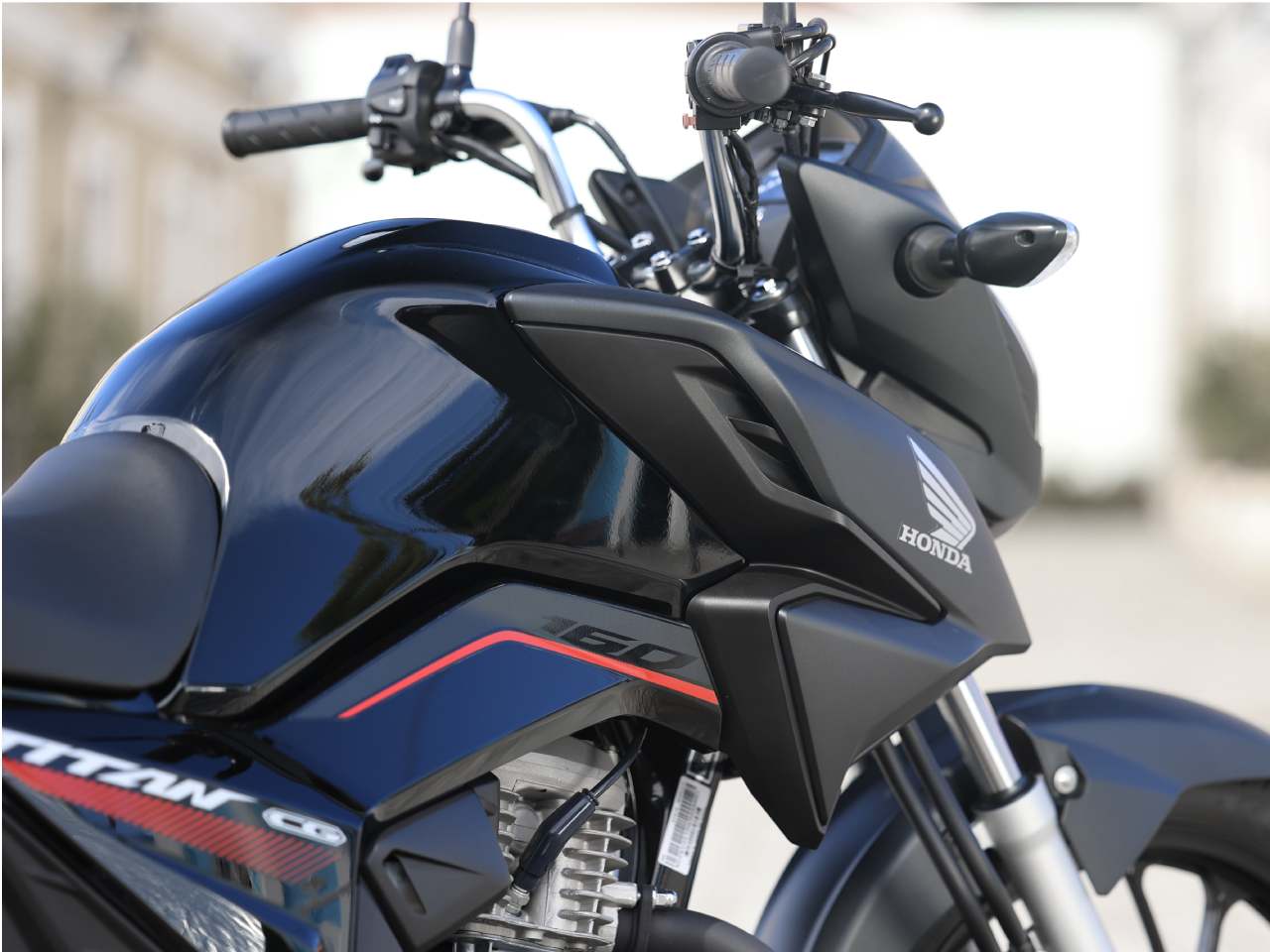
The aesthetic identity of the motorcycle has undergone a complete overhaul, leaving behind the conservative traits that marked previous generations. The designers adopted a considerably more aggressive appearance, seeking direct inspiration from the brand’s own sports lines of larger displacement models. The front fairing has been completely redesigned to optimize aerodynamics and provide a more robust appearance in daily traffic. The optical assembly has also changed, receiving a new headlight with angular cutouts that modernize the front. Além of the visual redesign, the engineering department promoted a significant leap in the safety package offered to the driver. The main technical change in this aspect is the implementation of disc brakes on both wheels, retiring the old drum system at the rear. Essa modification guarantees shorter and more precise braking, a crucial factor in emergency situations on congested urban roads. Improved braking control raises the quality standard within the entry category. The union of a bold design with superior equipment aims to attract a young and highly demanding audience.
The structural changes applied to the chassis also aim to improve ergonomics during daily driving. The fuel tank now has more pronounced creases, which makes it easier to fit the legs and provides greater stability when cornering. Esses Functional details highlight the company’s intention to refine the product’s level of finishing.
Mechanical calibration for energy efficiency
The 162 cubic centimeter engine received unique electronic mapping to reduce the release of harmful gases into the atmosphere. The development team focused on recalibrating the injection system, strictly complying with the environmental targets stipulated by traffic authorities. Apesar restrictions imposed by the new legislation, engineering managed to keep dynamic performance intact. The technical sheet attests to the preservation of 14.3 horsepower and a torque of 1.45 kgfm. Dessa way, the motorcyclist will not feel any loss of strength during accelerations and regaining speed in urban traffic.
Fuel efficiency has become the main pillar of this generation of commercial vehicles. Optimized spending promises to ease the budget of workers who use motorcycles for app deliveries and long daily commutes. Mechanical adaptation proves that it is possible to combine ecological responsibility with practical usability, without increasing maintenance costs.
Improvements applied to load and service models
Technological innovations were not restricted to the main model intended for personal transport and weekend trips. The manufacturer decided to expand structural improvements to the variant specifically focused on transporting small loads and fast delivery services. Essa Marketing decision recognizes the relevance of self-employed professionals, who are responsible for moving a large part of the urban economy every day. The model aimed at heavy work gained reinforced components, designed to withstand the exhausting routine of large cities. The durability of the parts was exhaustively tested in laboratories and on the company’s test tracks. The standardization of several components between versions facilitates general maintenance and reduces the cost of spare parts on the gray market. Mechanics will have simplified processes for carrying out mandatory periodic inspections. Consequentemente, the time the work tool sits idle in the workshop awaiting repairs will be drastically reduced, benefiting the end worker.
Financial strategies to maintain competitiveness
The pricing policy for the new line is still kept confidential by the Japanese automaker’s executives. Contudo, experts in the automotive sector estimate that the value table will only undergo occasional adjustments to absorb the cost of new onboard technologies. Maintaining a competitive value is essential for the vehicle to remain accessible to the large mass of Brazilian consumers. Para To circumvent the macroeconomic scenario of high interest rates and credit restrictions, the company structures aggressive financing packages.
The manufacturer’s commercial planning involves different fronts of action to guarantee the projected sales volume at dealerships. Key financial and market tactics include:
- Offer of subsidized interest rates through the automaker’s own bank.
- Creation of specific promotional campaigns for the factory consortium.
- Focus on retaining customers who plan to change vehicles in the medium term.
- Advance training of the store network to highlight the cost-benefit of the product.
The previous generation was sold with prices starting at R$14,650 and reaching R$17,440, depending on the configuration chosen. The expectation is that this psychological barrier will not suffer abrupt ruptures during the transition period. The historical cost-benefit of the family of motorcycles needs to be preserved to prevent customers from fleeing to competing brands that operate in the same displacement range.
Maintenance of hegemony in the national market
The trajectory of this line of motorcycles is directly linked to the history of popular motorization in Brazilian territory. Desde The first units produced decades ago, the vehicle demonstrated the ability to read social transformations and adapt to the demands of each period. The model has already survived complex transitions, such as the exchange of the carburetor for electronic injection and the adoption of fully digital panels. The current shift to cleaner powertrains is just another step in the ongoing evolution of a design that maintains its utilitarian essence. Consumer loyalty was built on mechanical reliability, a wide technical assistance network and ease of resale on the used market. Sustentar This level requires a careful balance between introducing innovations and preserving operational simplicity. The volume of registrations in the first months will dictate the pace of production at the manufacturing unit located in the free zone.
The brand’s biggest challenge now is to prove that the modernization required by environmental laws has generated a product that is superior to its predecessor. Evaluations by the specialized press and practical tests by the first buyers will be essential to consolidate acceptance of the new format. Caso The promises of fuel economy and durability are confirmed on the streets, the model has the strength to maintain its isolated leadership. Todo The two-wheel segment follows the manufacturer’s steps to guide its own future launches.





