

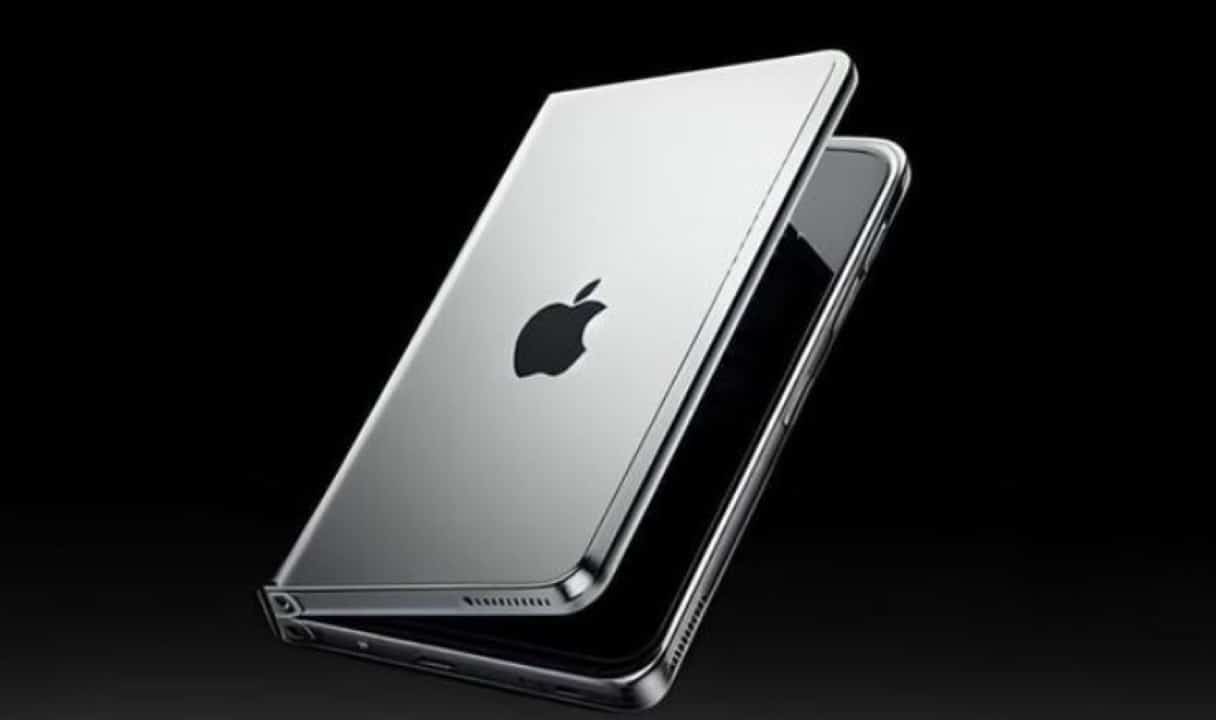
The first smartphone with a flexible screen from Apple had its possible visual and technical details revealed through recent three-dimensional renderings. The device, which has been circulating behind the scenes under the working name model Ultra, features a book-style opening format. The images indicate the manufacturer’s strong commitment to premium materials and energy autonomy.
The leaked documentation points to the use of a titanium alloy in the construction of the chassis, in addition to a power component with a capacity of 5800 mAh. The project suggests that the North American company seeks to solve chronic problems in the category, such as excessive thickness and fragility of the hinge. Especialistas from the technology sector assess that the brand’s late entry into this segment aims to deliver a product without the flaws seen in the first generations of competitors. The current phase is still internal engineering testing.

Ultra-thin structure and use of aerospace materials
The engineering behind the new device demonstrates considerable effort to reduce the physical bulk that tends to alienate consumers from traditional foldable models. Quando the device is completely closed, the thickness reaches the mark of just 9.5 millimeters, a number that challenges the current limits of the mobile device industry. When opened, the panel reveals an extremely thin 4.5 millimeter profile, surpassing even the most optimistic projections for future conventional launches from the brand itself. Essa architectural achievement only became viable thanks to the replacement of aluminum and stainless steel with an aerospace-grade titanium alloy. The chosen material offers a superior relationship between mechanical resistance and weight, ensuring that the cell phone remains light during daily handling. Além To provide a visually sophisticated finish, titanium acts as an efficient thermal shield to dissipate the heat generated by the internal processors. The manufacturer appears to have prioritized long-term durability, considering that the folding mechanism requires a rigid structure to not give way over time. Testes of stress in prototypes indicate that this choice of material drastically reduces chassis torsion in fall situations.
Energy autonomy and divided internal architecture
Power supply represents one of the biggest bottlenecks in the category of phones with expandable screens, but the leak indicates an ingenious solution to this obstacle. The total capacity of 5800 mAh described in the documents far exceeds the average found in the main traditional format devices available on the shelves. Para To accommodate this amount of charge without compromising the millimeter thickness, the engineers opted for a dual battery system. The power cells were distributed symmetrically between the two halves of the chassis, keeping the center of gravity balanced in the user’s hands. Essa configuration also facilitates thermal management during fast charging, avoiding overheating points close to the main board.
In the photographic department, the main module houses a 48 megapixel sensor positioned on the rear of the equipment. The design of the camera block follows the visual identity already consolidated by the brand, with metal rings protecting the lenses against scratches. Integrating advanced optical components into such a thin body required a complete redesign of the image stabilization system.
Advances in flexible panel and articulation mechanism
The visual experience on a foldable device directly depends on the quality of the central articulation and the integrity of the light panel. The project details the use of a waterdrop-shaped hinge, designed to accommodate the screen internally without creating deep creases. The depth of the fold mark has been reduced to an imperceptible 0.15 millimeters, making the surface practically flat to the touch and invisible under normal lighting conditions. Para protect the light-emitting diodes, the internal screen has a double layer of ultra-thin glass combined with high-resistance polymers. Essa composite structure absorbs direct impacts and withstands hundreds of thousands of opening and closing cycles without experiencing material fatigue.
The equipment’s external screen was designed to function as a complete and independent smartphone, eliminating the need to open the device for everyday tasks. The front display occupies almost the entire available area, with symmetrical edges and adaptive refresh rate. Essa approach preserves the life of the internal mechanism and saves battery life by restricting use of the larger panel to media consumption or productivity only.
Operating system and user interface adaptation
Innovative hardware demands a profound redesign in the way the software manages the information displayed to the user. Desenvolvedores internals work on a hybrid version of the operating system, capable of moving fluidly between the traditional cell phone interface and the tablet environment. Quando the user opens the device, apps running on the outer screen instantly expand to fill the inner panel, without interruptions or reloads. The interface takes advantage of the enlarged area to display dual navigation columns, floating toolbars, and improved support for multiple simultaneous windows. Multitasking management lets you drag and drop files between different programs with the same ease found on desktop computers. The company is also studying the implementation of exclusive features when the device is folded at a ninety-degree angle, transforming the lower half into a virtual keyboard or control panel. Essa Perfect integration between the physical part and the programming code has always been the manufacturer’s main differentiator in the technology market. The success of the product will depend heavily on how third-party developers adapt their applications to this new dynamic format.
Global market impact and launch schedule
The strategy of waiting for technologies to mature before launching a commercial product reflects the historical behavior of the Californian company. Enquanto other Asian technology giants are already moving towards the sixth generation of their foldable devices, the apple brand preferred to observe the failures and complaints of pioneering consumers. The clear goal is to deliver a device that doesn’t look like an experimental prototype, but rather a robust and reliable communication tool. The supply chain has already started receiving orders for specific components for large-scale durability testing.
The leaked documents provide a clear picture of what technology enthusiasts can expect from this upcoming release. The technical specifications reveal the focus on surpassing direct competitors in crucial aspects of usability and industrial design.
- Thickness of 9.5 millimeters in closed mode and 4.5 millimeters in open mode.
- Chassis made of titanium alloy for greater lightness and structural strength.
- Dual battery totaling 5800 mAh of energy capacity.
- 48-megapixel main camera with improved stabilization.
- Flexible screen central crease reduced to just 0.15 millimeters deep.
Despite the significant volume of information revealed, the start of mass production still does not have a defined date in the industrial calendar. Analistas financiers point out that the development is in rigorous validation stages, which could push arrival in stores into the next sales cycles. The manufacturer maintains its strict confidentiality policy and does not comment on rumors or speculation about unannounced projects. The telecommunications market remains attentive to any movement on the assembly lines, as this brand’s entry into the flexible screen segment has the potential to redefine global consumption patterns.