
Federação Internacional of Automobilismo announced this Monday a series of changes to the Fórmula 1 regulations for the 2026 season. The changes focus on the energy management of the cars. The main objective is to reduce artificial strategies and improve the consistency of disputes. Quase all the new features are valid at the Miami GP, on May 3rd.
The teams, engine manufacturers and drivers participated in three virtual meetings throughout this month. The conversations took place on the 15th, 16th and this Monday. Reclamações on security and excessive power management marked the debate. Pilotos reported difficulties recovering battery power during laps and races.
Classificação gains lower recharge ceiling
The maximum amount of recharge per lap in rank drops from 8 to 7 megajoules. The measure seeks to allow pilots to accelerate more freely. The limit had already been reduced from 9 to 8 megajoules before the Japão GP.
Power in superclipping increases from 250 to 350 kilowatts. Essa change applies to both classification and tests. With the adjustment, the battery recharges faster. Competitors should need fewer saving techniques during sessions.
Limites power alternatives during races have also been adjusted. The FIA aims to balance performance. Assim maintains the highest number of overtakes seen this season.
- Recarga maximum rating is now 7 megajoules per lap
- Superclipping boosts to 350 kW in launched laps and races
- Boost limited to 150 kW in tests
- MGU-K with restrictions outside main acceleration zones
- Mudanças aim to reduce sudden speed variations
Corridas receives limit on boost and control on MGU-K
In the race, the boost button now has a ceiling of 150 kilowatts. The restriction prevents sudden differences in speed between single-seaters. Esse point gained attention after recent incidents.
The MGU-K, a kinetic energy recovery system, will have more controlled use. Ele is restricted outside the main acceleration zones on the tracks. The rule preserves overtaking opportunities. At the same time, it reduces the risk of imbalances.
The electrical part represents almost 50% of the car’s total power in 2026. Isso forced drivers to manage the battery more frequently. Muitos competitors criticized the artificial nature of the disputes.
https://twitter.com/F1/status/2046264672874099044?ref_src=twsrc%5Etfw
Largadas gains automatic problem detection
A new system identifies cars with abnormally low acceleration shortly after clutch release. The most remembered example was that of Liam Lawson on Austrália. The driver remained stopped on the track and only avoided a collision thanks to the reflexes of another competitor.
Quando problem is detected, the MGU-K activates automatically. The drive guarantees minimum acceleration. The driver does not gain a sporting advantage. Luzes sides and rear lights up to alert others.
Essas changes to the starts are still undergoing testing. Therefore, they do not come into force immediately like the other rules.
Chuva will have adjustments to energy recovery and tires
Nas tests in rain, the use of the energy recovery system is reduced. The rear lights have been simplified. The intermediate tire covers receive a higher temperature. The aim is to improve grip from the start.
Esses points seek greater safety in difficult conditions. The current season has already brought criticism about the new regulations. Excessive energy management appeared as a recurring theme.
Acidente of Bearman in Japão weighed in the decisions
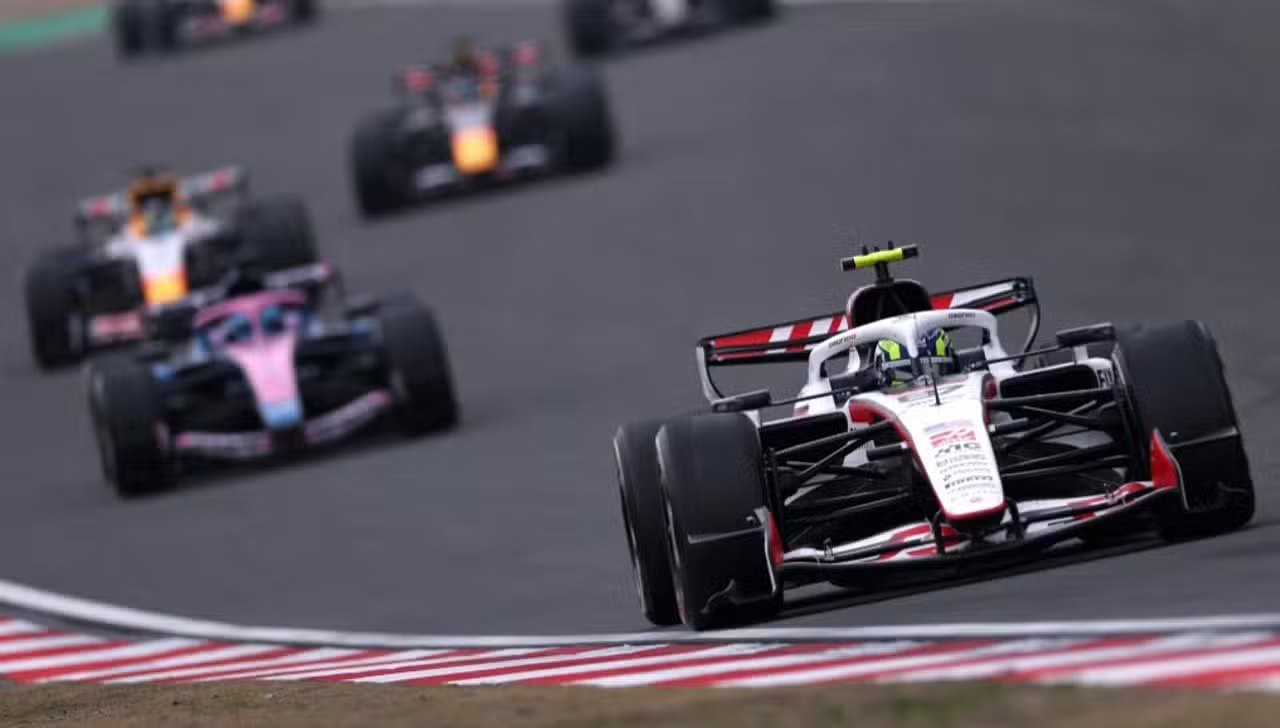
Oliver Bearman’s heavy crash in Japão’s GP accelerated the discussions. The Haas pilot was trying to overtake Franco Colapinto. Após a small movement from the Argentine, Bearman lost control and hit the wall at 262 km/h. The force was 50G.
Bearman and Colapinto linked part of the speed difference to regulations. One was using boost while the other was out of battery. The Englishman limped off and suffered a knee injury. Outros pilots reinforced complaints about safety.
The meetings took place during Fórmula 1’s break in April. Cancelamentos of the GPs of Bahrein and Arábia Saudita created this window. Miami marks the return of the category as the fourth stage of the 22-race calendar.
The changes do not affect the positive points. The increase in overtaking continues. The focus was to correct security and artificiality issues.
What drivers should feel on the tracks
Competitors must manage energy less in qualifying laps. Sessions tend to be closer to the cars’ actual limit. Nas races, speed differences at critical points decrease.
Equipes and engine suppliers followed the debates closely. The consensus was that the adjustments improve the experience without losing advances in the technical regulations. The Miami GP serves as the first real test of the new features.
The FIA continues to monitor the impact. Novas meetings may occur if necessary. The ultimate goal is to keep Fórmula 1 competitive and secure.