
Lyrid 2026 meteor showers peak in the US; see how and when to observe the phenomenon

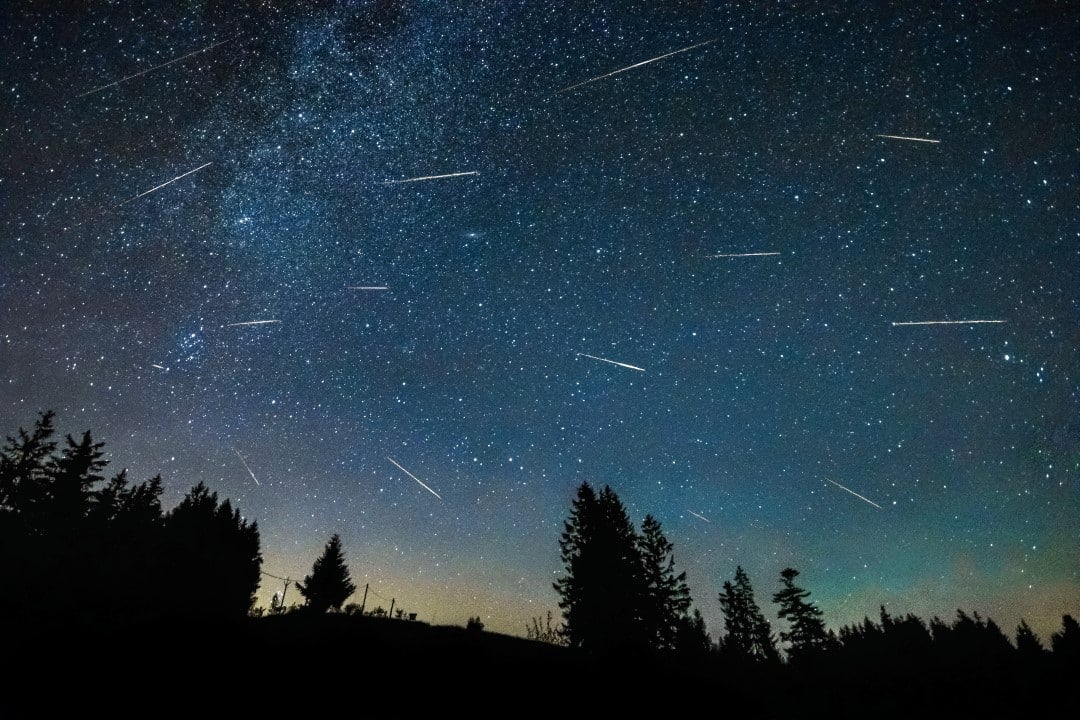
The long-awaited Lírida meteor shower of 2026 is close to its peak activity, promising a celestial spectacle of “shooting stars” in the night sky. Observadores and Estados Unidos will have a privileged window into the phenomenon in the hours before dawn on April 22, when visibility will be highest. Até 18 meteors per hour can be seen, starting from a point that appears to emanate close to the bright star Vega, in the constellation Lira.
Este astronomical event occurs as Terra passes through the trail of debris left by comet C/1861 G1 Thatcher. The expectation is for a true natural light show, with the potential to display “fireballs” — exceptionally bright meteors — especially in regions with minimal light pollution. Condições and Lua, which will be in a crescent and dimly lit phase, also contribute significantly to improving the observation experience of the phenomenon.
Pico of Lírida activity and the best time to watch in the US
The Lírida meteor shower, which annually delights astronomy enthusiasts, is active between April 16 and 25, 2026. The peak moment of its activity is scheduled for 4 pm EDT (5 pm Brasília time) on April 22, according to data from American Meteor Society (AMS). Este time, however, occurs during the day for observers located at Estados Unidos, making direct observation impossible.
Para those looking to capture the spectacle, the most favorable period in the USA will be in the hours before dawn on April 22nd. Neste interval, the number of “shooting stars” can reach approximately 18 per hour, crossing the Earth’s atmosphere. The meteors appear to emerge from a specific point in the sky, known as the radiant, which is located near the star Vega, in the constellation Lira. The radiant reaches its highest point before sunrise, when the greatest number of meteors become visible to observers on the ground.
A bonus factor to watch in 2026 is the phase of Lua. Uma Lua increasing 27% illumination will set below the horizon around 2 a.m. local time. Isso will create a magnificently dark night sky, providing ideal contrast for the natural light show to stand out. Além In addition, the shower will also produce a considerable number of meteors on the three nights surrounding the peak, providing alternative opportunities if the April 22 main event is missed.
Localizando the radiant and the constellation of Lira
The Lírida meteors are seen when Terra crosses the debris stream left by comet C/1861 G1 Thatcher on its orbital journey. The shower’s radiant, which is the point in the sky where the meteors appear to originate, indicates the direction in which these fragments reach the Earth’s atmosphere. It is important to note that when looking directly at the radiant, the observer may miss the longer and more spectacular meteors, which manifest at a certain distance.
Para To find the brightest Lírida with longer tracks, it is essential to locate the Vega star. Este point of blue-white light will be shining high above the eastern horizon after Lua sets in the early hours of April 22. Caso isn’t used to navigating the night sky, astronomy apps for smartphones can be valuable tools. Muitos of these apps use augmented reality technology to identify specific stars and deep-sky objects, simplifying the task of navigating between constellations.
Once the star Vega and the approximate position of the radiant are located, the next step is to search for a bright area of the sky. Essa area should be about 40 degrees away from the radiant for best meteor viewing. Para reference, 40 degrees is approximately equivalent to the width of four clenched fists extended at arm’s length. It is in this sweet spot that the most impressive “shooting stars” and “fireballs” tend to appear most frequently.
Dicas essential to maximize observation of Lírida
Apesar of Lua favorable conditions in 2026, light pollution from cities is the main enemy of any meteor observer. Afastar away from artificial lights is the primary recommendation for anyone wishing to have a full experience of the phenomenon. A dark and clear sky is crucial so that meteors, even the faintest ones, can be noticed without interference.
Além of location, personal preparation is also vital for a successful observation. Permita allows your eyes to adjust to the darkness for 20 to 30 minutes, a process known as visual adaptation. Durante At this time, avoid looking at cell phone screens or intense light sources that could compromise your night vision. Use a red light if necessary to protect this adaptation and switch your astronomy application to “night mode” or equivalent setting if available.
Não might be tempted to use binoculars or telescopes to observe the meteors. Embora useful for other celestial objects, these devices will significantly limit your field of view, causing you to miss most meteors that quickly cross the sky. The ideal is to lie down — preferably on a lounger or blanket on the ground — and absorb as much of the sky as possible.
- Para ensure your safety, especially if you go to a remote location:
- Avise a friend or family member about your location and the estimated time for your observation.
- Leve coats, as the nights can be cold, even in April.
- Considere carry snacks and drinks for a more comfortable experience.
- Não forget a compass or GPS for guidance in unfamiliar locations.
Entenda the origin of the meteors Lírida and the comet Thatcher
The Lírida meteor shower is an annual spectacle that has its origins in a very common astronomical event. Ela happens when the planet Terra, in its orbit around Sol, crosses the debris trail left by a long-period comet. In the case of Lírida, the comet responsible is C/1861 G1 Thatcher, discovered in 1861 and which has an orbital period of approximately 415 years.
Esses debris is small particles of dust and rock that break off from the comet as it travels through the solar system, especially as it approaches Sol and its ice sublimates. Quando to Terra encounter this “cloud” of particles, they enter our atmosphere at high speed. Friction with the air causes these small rocks to heat up and vaporize, creating the luminous trails that we know as meteors, or popularly, “shooting stars”.
Embora While most Lírida meteors are small and produce only a quick flash in the sky, the shower is known to generate occasional “fireballs.” Essas are larger, brighter meteors that can leave visible trails for several seconds. The name “Lyrid” derives from the fact that the shower’s radiant, the point from which it appears to emerge in the sky, is located in the constellation Lira, which is home to the bright star Vega.
Lua’s growing role in the phenomenon’s visibility
The presence and phase of Lua are crucial factors that can determine the success or failure of an astronomical observation. Full Uma Lua, for example, brightly illuminates the night sky, obscuring most meteors and making them difficult to see. Felizmente, for the 2026 Lírida meteor shower, lunar conditions will be quite favorable, providing an ideal setting for observers.
Lua will be in a growing phase, with only 27% of its surface illuminated, which means that its light will be minimal. Mais Importantly, the nighttime star will set below the horizon at around 2am local time on the night of peak rain on April 22nd. Esse alignment is almost perfect, as it guarantees that, in the critical hours before dawn — when the rain’s radiant will be highest and the meteors most numerous — the sky will be completely dark.
A sky without the glare of Lua allows even the faintest meteors to be perceived, considerably increasing the chances of a rich and rewarding observation. Comparativamente, in years with Lua in fuller phases or remaining in the sky throughout the night, the Lírida experience is generally compromised. Essa particular condition of 2026 reinforces the opportunity for an unforgettable spectacle for all those interested in astronomy.





