Samsung Galaxy users enhance devices with open-source apps for greater control and privacy
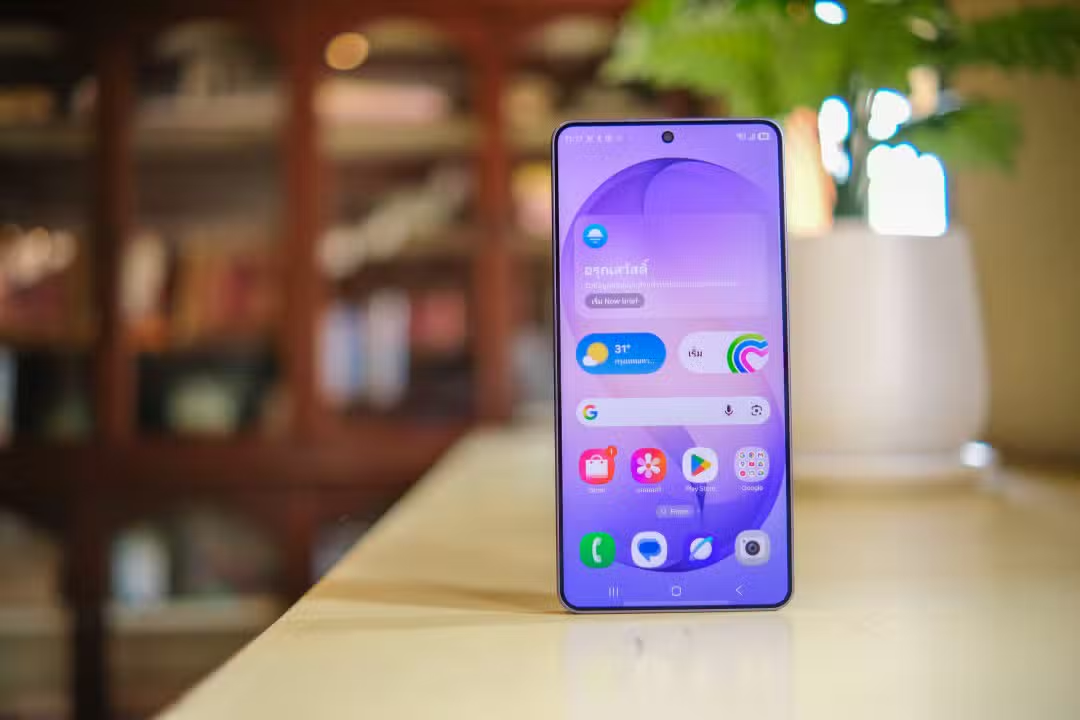
The search for greater control over the digital experience and data security has led many smartphone users, especially owners of Samsung Galaxy devices, to explore the world of open source applications. Essa trend, driven by growing concerns about privacy and personalization, redefines the way consumers interact with their devices.
Open source, or *open-source*, software offers a robust alternative to proprietary applications, allowing the community to examine, modify and distribute source code. Essa intrinsic transparency is one of the pillars that attract users who value security and the absence of hidden agendas in their digital tools.
Para the Android ecosystem, where Samsung Galaxy cell phones occupy a significant share of the market, the adoption of *open-source* solutions represents an opportunity to strengthen user autonomy. Freedom of choice and the ability to adapt tools to individual needs are crucial factors for this paradigm shift.
The growing demand for digital autonomy
Today’s digital era is marked by increasing awareness of the importance of data sovereignty and software freedom. Usuários, once passive consumers of technology, are now actively seeking tools that give them greater control over their devices and personal information. Essa change in mindset is particularly visible among Samsung Galaxy smartphone owners, who represent a vast segment of consumers.
The preference for open source applications is not just an ideological issue; it translates into tangible benefits. The absence of intrusive ads, less data collection for marketing purposes and the ability to personalize are just some of the advantages that drive this migration, strengthening the relationship between the user and their device.
Enhanced Segurança and unparalleled transparency
One of the strongest arguments for adopting *open-source* applications lies in security. Unlike proprietary software, whose code is closed and inaccessible to the public, open source programs allow security experts and the community at large to inspect every line of code. Essa transparency is key to quickly identifying and patching vulnerabilities.
Peer review from thousands of developers and enthusiasts around the world creates an environment of continuous auditing. Qualquer failure or security breach tends to be discovered and corrected much more quickly than in closed systems, where detection and repair depend exclusively on a single company. Para Samsung Galaxy users concerned about protecting their data, this is a valuable guarantee.
Personalização and freedom of choice
The ability to customize the user experience is another big draw of open source applications. Enquanto proprietary software generally imposes a predefined interface and set of features, *open-source* alternatives often offer much greater flexibility. Isso allows users to adapt tools to their aesthetic and functional preferences, creating a truly unique digital environment.
Desde From alternative launchers that completely change the appearance of the system to browsers that allow granular control over extensions and privacy, the options are vast. Essa freedom of adaptation not only improves usability, but also empowers the user, transforming the smartphone into a more faithful extension of their needs and tastes. The active development community ensures that there will always be new options and improvements.
Essa’s drive for customization reflects a deeper desire among users not to be limited by design or functionality choices imposed by large corporations. Eles want their devices to serve their purposes, not the other way around.
Privacidade data and open-source choice
Data privacy has become one of the biggest concerns in the digital age, and open source applications offer a robust response to this challenge. Muitos proprietary software is criticized for its data collection policies, which often involve tracking user behavior for the purposes of targeted advertising or other analytics. In contrast, the *open-source* philosophy often prioritizes minimizing data collection and protecting privacy.



Code transparency allows users to verify exactly what data is collected and how it is used, eliminating the “black box” of complex terms of service. Além Furthermore, many *open-source* applications are developed with an explicit focus on privacy features, such as end-to-end encryption and the absence of trackers, providing an extra layer of security for sensitive information. Este is a crucial differentiator for anyone looking to protect their digital life.
Desenvolvimento collaborative and continuous innovation
The collaborative nature of open source software development is a powerful engine for innovation. Projetos *open-source* are often driven by global communities of developers who voluntarily contribute their time and expertise. Essa decentralized approach allows new ideas to be implemented quickly and software to evolve organically, responding directly to users’ needs.
Rather than relying on a product roadmap dictated by a single company, *open-source* applications can benefit from a wide range of perspectives and talent. Isso results in software that is not only technologically advanced, but also extremely resilient and adaptable to different contexts and requirements. The agility in fixing bugs and adding new features are hallmarks of this development model.
Desafios and considerations when adopting free apps
Embora benefits are numerous, the transition to a predominantly *open-source* ecosystem can present challenges. The learning curve for some users may be a little steeper, and the interface of certain applications may not be as polished as their proprietary counterparts, which have large design budgets. However, the quality and usability of many *open-source* software have improved dramatically in recent years, making them viable and, in many cases, superior alternatives.
Integração with Samsung’s Android ecosystem
Samsung Galaxy devices, as they run the Android operating system, which itself has open source roots, are ideal platforms for integrating *open-source* applications. The flexibility of Android allows users to install applications from sources external to Google Play Store, such as dedicated free software repositories, without major difficulties. Isso opens up a range of possibilities for brand users who want to explore beyond the standard options.
The compatibility and performance of these applications on Samsung Galaxy cell phones are, for the most part, excellent, given the processing power and hardware optimization present in these devices. The community of *open-source* users and developers often works to ensure that applications run smoothly on a wide range of Android devices, including the most popular Galaxy models.
The future of open software on mobile devices
The trend of adopting open source software on mobile devices, such as Samsung Galaxy, is on the rise and is expected to continue to grow. As awareness about privacy and security deepens, and *open-source* tools become more accessible and easier to use, more consumers will seek out these alternatives. The constant evolution of mobile technology and the demand for more ethical and user-controllable solutions are factors driving this movement.
The future promises a scenario where the choice between proprietary and *open-source* software will be an increasingly informed and strategic decision for the common user. The *open-source* community continues to innovate, developing applications that not only compete, but often surpass commercial offerings in terms of functionality, security and respect for user privacy.
The democratization of technology, driven by open source, offers a path to a more transparent and controlled digital experience. Para owners of Samsung Galaxy, this is an opportunity to transform your smartphones into more powerful tools aligned with your values.
See Also em Latest News (EN)

Estudiantes x Flamengo in the Libertadores: where to watch live and likely lineups
29/04/2026
Pokémon GO Fest 2026 brings Mewtwo Mega Evolution and system changes
29/04/2026
Meta’s messaging app gains floating windows on Android in new testing phase
29/04/2026
New F1 2026 rules receive positive approval from Bortoleto, but start worries Audi driver
29/04/2026
Pagonejo: Péricles and Ana Castela release single “Simplesmente Happen” which mixes pagode and country music
29/04/2026
Espanyol faces crisis after 16 games without a win; crowd boos cast
29/04/2026
Edér Militão undergoes surgery and misses Brazil in the 2026 World Cup
29/04/2026
Samsung launches One UI 8.5 with interface redesign and advanced artificial intelligence
29/04/2026
SpaceX could attract Tesla investors with $1.75 trillion IPO
29/04/2026
NASA robot discovers organic molecules on Mars that indicate possible habitability
29/04/2026
Telescope reveals galaxies of the early universe in unprecedented observation
29/04/2026