

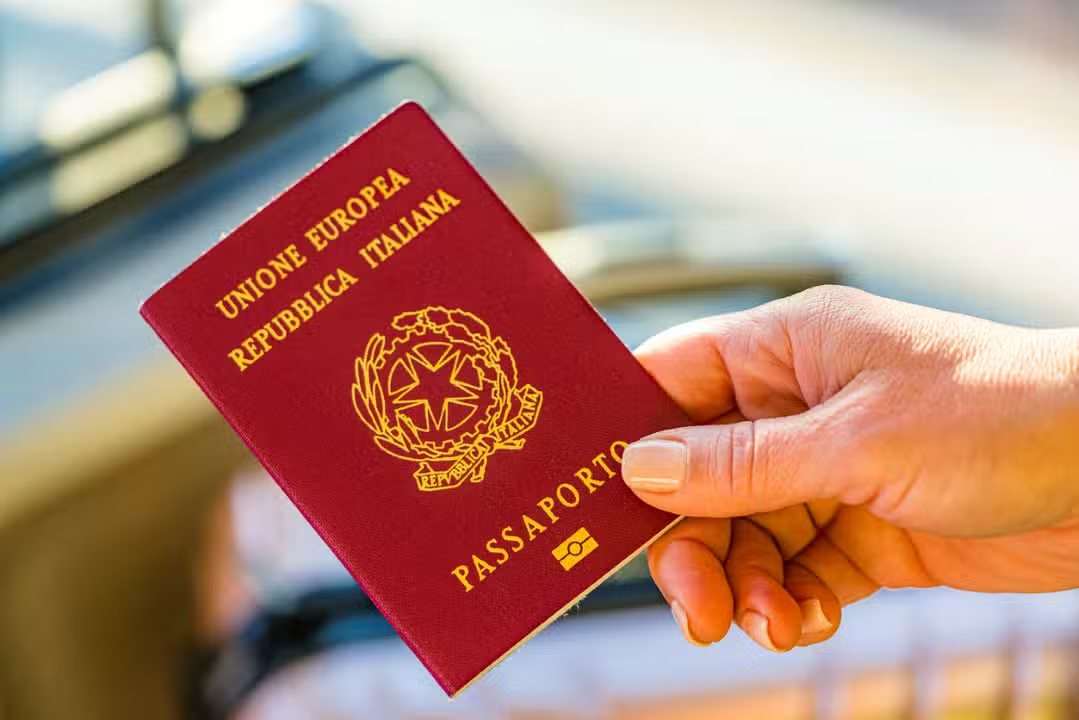
Governos from six nations belonging to Espaço Schengen outlined a coordinated package of immigration policy changes. The new guidelines directly affect Brasil citizens. The measures come into force in a staggered manner throughout 2026. The focus is on the strict control of extended stays.
The decision reflects an attempt by the bloc to organize the growing flow of foreigners. Autoridades seek to combat irregular stay on the continent. The impact affects students, workers and people in the process of family reunification. Quick holiday tourism suffers fewer direct impacts. Especialistas recommend paying extra attention to consular deadlines to avoid frustration.

Portugal and Espanha focus on income and digital control
The Portuguese government has established a strict financial floor for those planning stays longer than 90 days. From July onwards, the applicant needs to prove a minimum monthly income of €1,500. The amount is equivalent to the minimum wage in the European country. The measure aims to guarantee the immigrant’s subsistence during the adaptation period. Pedidos of residence now require the presentation of bank statements for the last semester. The formal employment relationship also undergoes more detailed analysis.
The high demand led to tightening of Portuguese demands. The Portuguese territory received more than 680 thousand visitors to Brasil last year. Consulates already operate with evident overload in serving the public. The waiting time for processing long visas varies between 45 and 60 days. Advance planning has become fundamental to the success of the change.
In the neighboring nation, the approach involves preventive technology. Espanha launches a digital pre-screening system for stays over 21 days. The platform also goes live in July. The traveler pays a fee of €15 for the verification service. The system’s response comes within 72 hours after sending the data.
The online form does not replace the traditional long-stay visa. Ele works as an initial security barrier. Peregrinos from the path of Santiago or long-term tourists on Mediterrâneo need to fill out the document. The lack of registration blocks boarding at the airport of origin. The annual quota of Spanish authorizations remains active for specific profiles.
França and Alemanha expand health and interview requirements
The French authorities decided to raise the bar on health protection. The country starts charging travel insurance with a minimum coverage of €50,000 from August. The rule applies to all citizens outside União Europeia. The policy needs to cover complex medical expenses. Hospitalização and health repatriation must be clearly stated in the contract.
The document will be collected by border agents upon disembarkation. The absence of adequate protection results in immediate deportation. The French government wants to avoid public spending on injured or sick tourists. The official recommendation recommends printing the policy in English or French to make it easier to read at immigration.
The German scenario focuses on in-person checking of candidates. The consular interview gains status as a mandatory step for any long-term visa. Estudantes and qualified professionals need to schedule an in-person meeting. The rigor also affects family reunification processes throughout the Germanic territory.
Diplomatic representations in São Paulo and Rio of Janeiro already foresee bottlenecks in service. The average waiting time for a place on the agenda could reach the 60-day mark from September onwards. The candidate goes through a questioning about the reasons for the trip. Original Documentos undergo thorough examination at the consular officer’s desk.
Itália and Holanda implement quotas and early biometrics
The Italian government adopted a strategy of quantitative limitation to control the flow. The country has applied an annual quota of 45,000 renewable tourist visas to the Brazilian public since January. The ceiling reflects the maximum operational capacity of the consular offices spread across Brasil. Vacancies may run out before the end of the year depending on demand.
Holanda chose the path of immediate border modernization. Amsterdã airport anticipates integration into the new European border control system. The collection of biometric data will become a general rule from June. The passenger provides a fingerprint and undergoes facial recognition in the automated cabins.
The procedure adds approximately two minutes to immigration time. Electronic registration does not generate additional costs for the traveler. The impact falls on the size of queues at arrival terminals at peak times. Travel organization requires attention to the following fundamental points:
- Passaporte valid for more than six months after the return date.
- Comprovante accommodation covering all nights of the trip.
- Demonstrativo financial with an average of €100 per day of stay.
- Seguro healthcare with expanded ceiling for specific destinations like França.
- Passagem back purchased and confirmed by airline.
Documentary preparation avoids unpleasant surprises at the immigration booth. Tourists must carry the papers in an easily accessible folder in their hand luggage.
Viagens shorts maintain exemption under new electronic system
Conventional tourists are less impacted by the package of European measures. Visa exemption for stays of up to 90 days remains valid. The deadline considers any 180-day window. The traditional vacation of two or three weeks follows the usual embarkation rite. Nenhuma of the six nations revoked this basic right of temporary free movement.
The big change for the short-term traveler involves tracking technology. The ink stamp in the passport is heading towards definitive extinction. The biometric entry and exit system reaches full functionality in April in most countries. The computer records the exact time spent on the continent with absolute precision.
Digital control prevents the famous tactic of illegally extending the trip. The system issues automatic alerts when the tourist exceeds the limit of 90 days allowed. The infraction generates heavy fines and banishment from European territory for years. Mathematical precision replaces manual checks by border agents.
Embassies reinforce the need for methodical planning for any itinerary. Travelers should consult the official pages of consulates before issuing air tickets or booking hotels. The rules undergo frequent updates in this period of diplomatic transition. Purchasing tourist packages requires extra caution. The success of the journey depends on careful reading of the new international requirements established for this year.