

Chinese manufacturer Xiaomi has officially unveiled new entry-level devices for the Indian market. The newly presented models arrive to update the company’s portfolio. The brand bets on robust specifications to attract consumers focused on value for money. The launch highlights unusual components for the cheapest category. The two variants share a similar visual identity and several internal parts.
The main distinction between the devices lies in the dimensions of the front panel and the size of the energy tank. The technology sector sees a strong movement of Asian companies in 2026. Elas seek to deliver visual fluidity without making the final product more expensive. The strategy aims to dominate emerging markets with high sales volume. The end consumer gains access to resources previously restricted to intermediate devices.
https://twitter.com/RedmiIndia/status/2047288209558900773?ref_src=twsrc%5Etfw
Telas immersive and design focused on everyday durability
The conventional model in the line features a generous 6.88-inch display. The most advanced edition subtly expands this measurement to 6.9 inches. Ambas screens use IPS LCD technology with HD+ resolution. The big difference is the update rate. Panels reach up to 120 Hz when browsing. Essa feature ensures smooth transitions in applications and system menus. The touch sampling rate reaches 240 Hz. Isso provides quick responses to user commands.
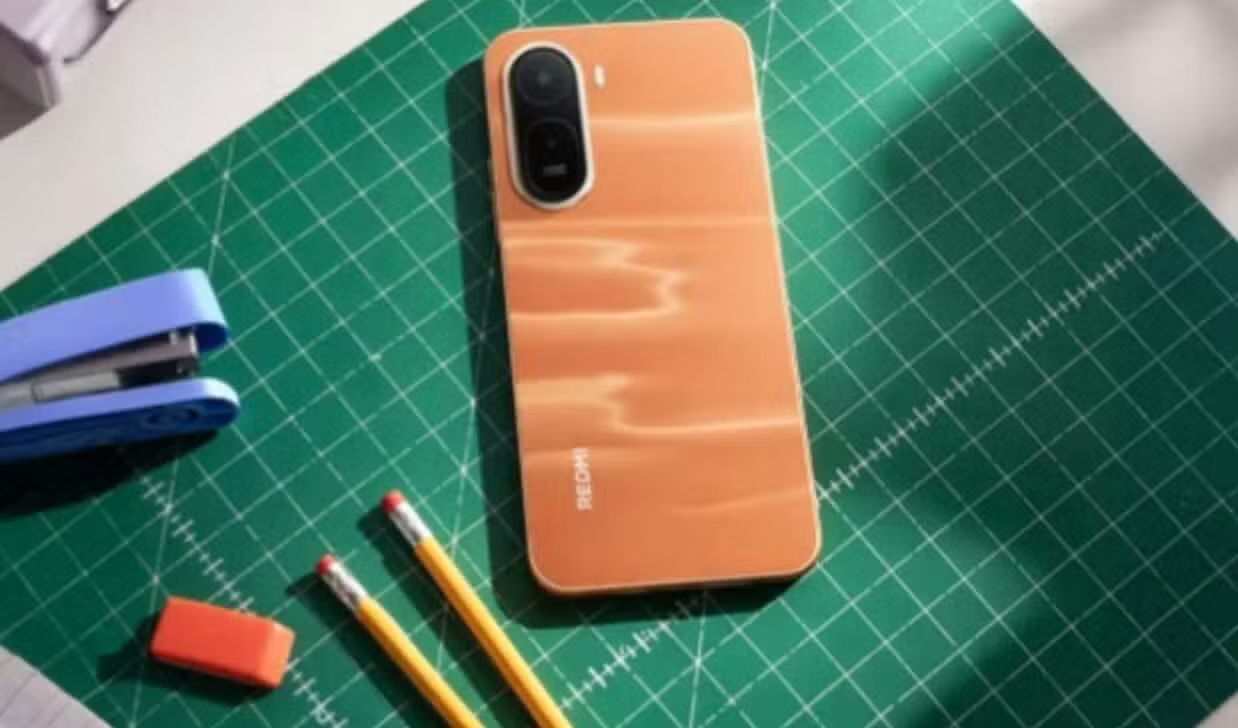
The external structure of cell phones maintains a practical and functional format. The rear camera module adopts a pill-shaped contour. The front features a discreet teardrop-shaped notch to house the selfie lens. The construction is IP52 certified. Essa protection guarantees resistance against dust and light splashes of water. The textured plastic finish helps prevent fingerprints and improves grip in your hands.
The brand’s engineers decided to keep the traditional P2 port. The wired headphone jack has become a rarity in today’s industry. Muitos consumers still prefer wired accessories for reasons of economy and practicality. Color options vary depending on the version chosen by the customer. The catalog includes classic shades such as black and vibrant alternatives in blue or orange.
- Front Painel with high refresh rate for greater visual fluidity.
- Estrutura resistant to water splashes and fine dust accumulation.
- Preserved analogue Conexão for traditional headphones.
- Bandeja dedicated for memory expansion with MicroSD card.
Desempenho balanced with Unisoc processor and connectivity
Data processing is the responsibility of the Unisoc T7250 chipset. The component equips both versions of the Asian smartphone. Random access memory defines the multitasking level of each edition. The base device delivers 3GB of RAM for daily operations. The top variant increases this capacity to 4GB. Internal storage space totals 64 GB in both cases. The user can easily expand this capacity via a MicroSD card.
Connectivity focuses on consolidated and accessible technologies. The devices support fourth generation mobile networks. The absence of 5G helps keep the final price competitive at retail. The communication package includes dual-band Wi-Fi and Bluetooth 5.2. Esses features perfectly suit audiences looking for stable navigation and quick pairing with wireless accessories. The satellite location system is also present for use in maps and transport applications.
The photographic set focuses on simplicity for everyday recordings. The rear houses a 13 megapixel main sensor. The front camera offers 8 megapixels for self-portraits and video calls. The manufacturer’s focus is not on professional photography. The goal is to deliver sharp images for quick sharing on social networks and messaging apps. The camera software includes basic artificial intelligence modes to automatically optimize captures.
Extended Autonomia and crucial operating system differences
Energy capacity represents the biggest technical divergence between launches. The standard handset carries a 5,200 mAh battery module. The most expensive model impresses by integrating a massive 6,300 mAh component. Ambas batteries support recharging with a maximum power of 15W. The charger comes with the product in the box. The manufacturer guarantees thermal safety during power supply cycles.
Essa milliampere difference directly affects usage time away from sockets. The higher capacity version can handle full days of moderate use. Consuming videos and continuous browsing requires a lot of energy. The enlarged tank solves this problem for heavy users. The 15W recharge requires patience to fully fill the giant power cell. The complete process may take a few hours to reach maximum charge.
The software department reveals a curious strategy from the manufacturer. The cheapest device leaves the factory running Android 15. The HyperOS 2 custom interface covers the Google system. The company guarantees two major platform updates and four years of security packages. Essa policy offers peace of mind for those who intend to keep the phone for a long period.
The top edition gets a much more durable software treatment. The device arrives on the market already equipped with Android 16. The graphical interface advances to the HyperOS 3 version. The support commitment jumps to four main operating system updates. Security packages are guaranteed for a long six years. Essa software longevity is very rare in the entry segment in 2026.
Estratégia pricing and impact on entry-level devices segment
The commercial debut of the products takes place first in Indian territory. The Asian market acts as a thermometer for the brand’s global acceptance. The entry-level model initially costs Rs 10,499. Esse value corresponds to approximately R$560 in direct conversion. The most robust version has a suggested price of 11,499 rupees. The amount is equivalent to around R$614 without the addition of Brazilian taxes.
Official sales begin in the next few days through the company’s digital channels. Grandes e-retailers and partner physical stores also distribute initial batches. The manufacturer still maintains secrecy about the international expansion of the line. Não there are confirmed dates for the arrival of the devices at Brasil or Europa. Fans of the brand await official announcements about global availability.
The aggressive values highlight the commercial tactics of the technology giant. The company seeks to dominate the competition by offering superior category specifications at minimum prices. The inclusion of a fast screen and a gigantic battery creates a strong marketing appeal. Consumidores on a budget get options that don’t get stuck on simple tasks. Cost-benefit remains the central pillar of basic line operations.
The utilitarian design appeals to those who need a reliable phone for everyday work. The presence of legacy connections makes the transition easier for users who have legacy accessories. The ability to add a memory card relieves pressure on limited internal storage. The entry-level smartphone market gains serious competitors with these new Asian additions. The fight for shelf space promises to intensify in the coming months.