
Sun fires two X-class solar flares and causes radio blackout on Earth in just seven hours


Sol recorded a sudden increase in activity with the firing of two massive X-class solar flares less than seven hours apart. The eruptions reached their peak between late Thursday night and early Friday morning (24). The phenomenon resulted in immediate blocking of radio signals in different parts of the globe.
The flares were classified as X2.5, which puts them in the most intense category of solar events. Ambas originated in the sunspot region AR4419, located on the western limb of Sol. Especialistas in solar physics point out that these are the strongest eruptions observed in the last 78 days. The impact was quickly felt as radiation reached Terra’s upper atmosphere, ionizing layers that reflect high-frequency radio waves.
Impactos direct global communications and radio blackouts
The first solar flare reached its peak at 10:07 pm (Brasília time) on Thursday. Este’s initial event dumped a massive load of radiation that traveled at the speed of light, affecting the side of Terra facing Sol at that instant. Como As a result, radio operators and navigation systems faced significant disruptions.
The extreme ultraviolet radiation and X-rays emitted by Sol caused specific effects:
- Apagões shortwave radio on frequencies used by aviation and maritime forces.
- Perda temporary signal in communication equipment in the Oceano Pacífico region.
- Instabilidade on radio systems at Austrália during peak activity.
- Solar Ruído detected at low orbit satellite frequencies.
The second event occurred shortly after, reaching its peak at 05:14 (Brasília time) this Friday. Desta instead, the rotation of Terra positioned Leste Asiático directly under the influence of radiation. Relatos indicate that the radio blackout was felt strongly in countries such as Japão, Coreia of Sul and part of China. The speed between the two phenomena surprised observers, highlighting a phase of high instability in the current solar cycle.
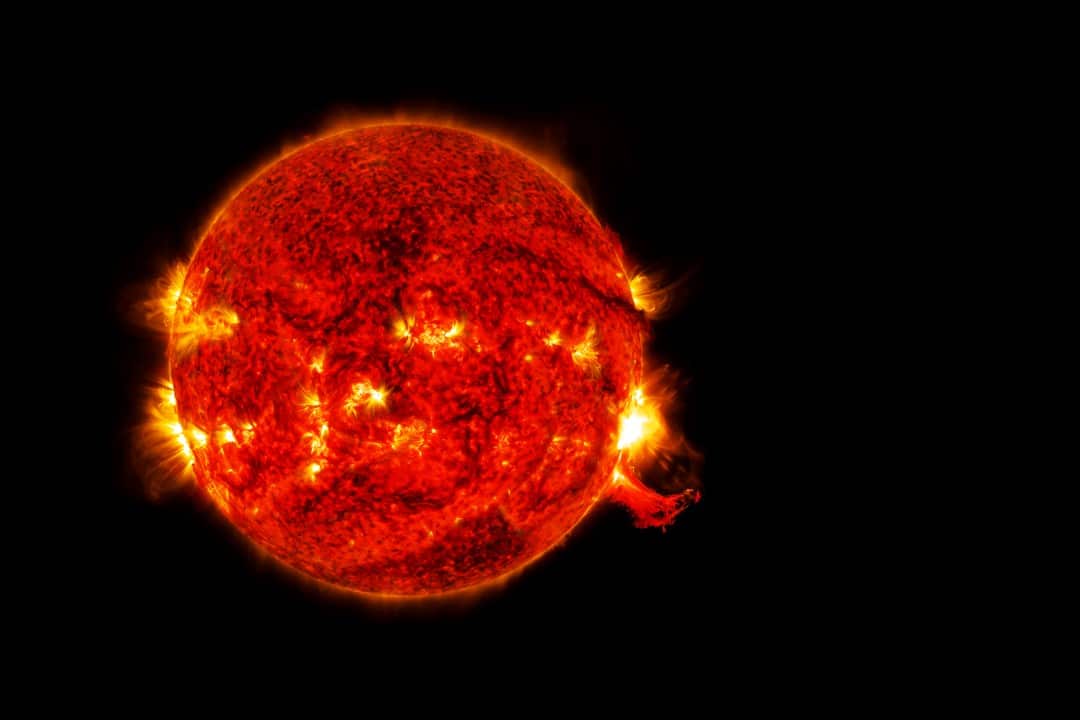
Monitoramento of sunspot AR4419 and risks of new eruptions
The AR4419 active region has been closely monitored by space agencies such as Nasa and Administração Nacional Oceânica and Atmosférica (NOAA). The unstable behavior of this sunspot suggests that the magnetic field in the area is undergoing severe reconnection processes. Quando these field lines break and reconnect, releasing colossal amounts of stored energy.
Continuous monitoring is carried out by satellites such as GOES-19, which captured thermal images of eruptions in real time. The data shows that the position of the sunspot on the western limb can influence the trajectory of possible coronal mass ejections (CME). Embora radio blackouts occur at the speed of light, clouds of plasma and charged particles take days to cross space. If a CME is aimed at Terra, geomagnetic storms could occur over the weekend, affecting power grids and GPS systems.
Ciclo solar 25 demonstrates intensity higher than initial predictions
Sol is currently going through the so-called Ciclo Solar 25, a period of approximately 11 years where magnetic activity increases to a maximum and then declines. Recent Observações indicate that this cycle is proving much more active than mathematical models predicted at the beginning of the decade. The occurrence of two class X explosions in such a short period is a clear indication that the star is heading towards its solar maximum.
The frequency of these eruptions is likely to increase in the coming months. Histórica and statistically, the peak of activity tends to generate more frequent polar aurora phenomena and challenges for terrestrial technological infrastructure. Engenheiros satellites and power grid managers remain on alert to mitigate damage caused by geomagnetically induced currents. Até At the moment, there have been no reports of permanent damage to satellites, but signal degradation has been confirmed by multiple monitoring centers.





