

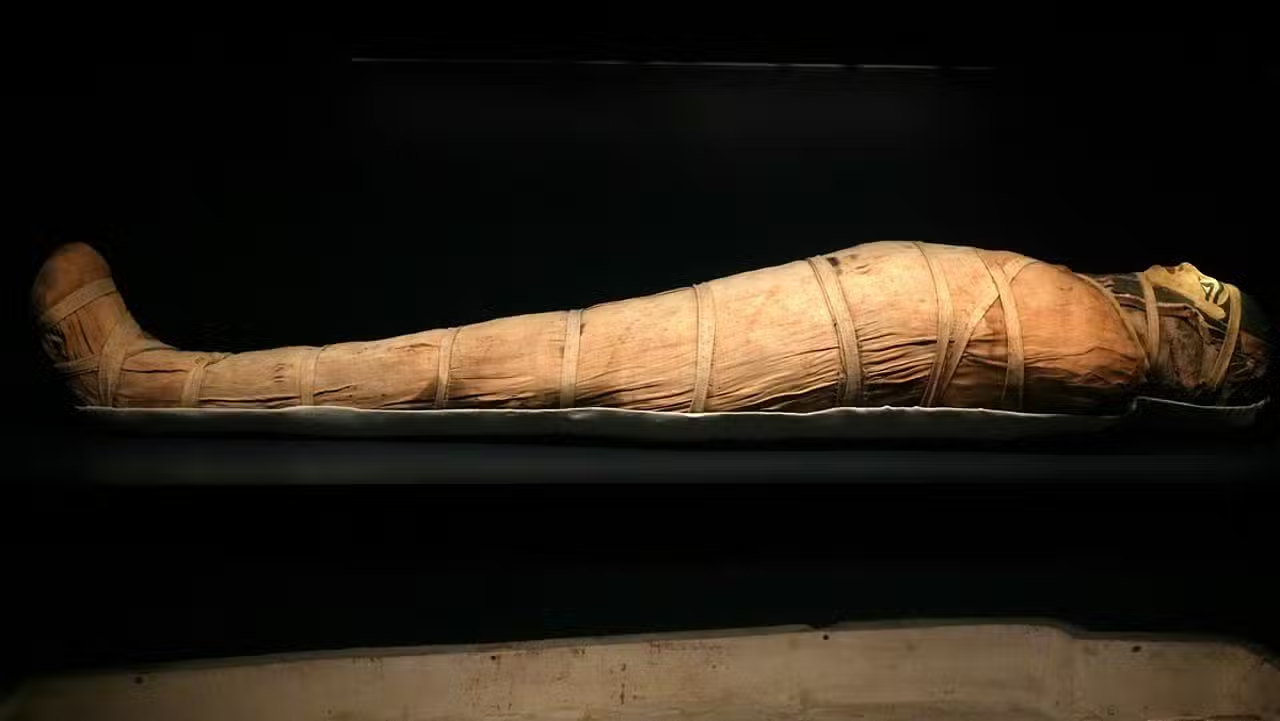
A 700-year-old mummy kept in a funerary tower in Andes and Bolívia held an unexpected secret. Pesquisadores extracted DNA from a young man’s tooth and identified genetic material from the bacteria Streptococcus pyogenes. The finding was published on April 13, 2026 in the magazine Nature Communications. The Instituto Eurac Research team was not looking for this pathogen. The initial focus was on the human genome preserved in mummified remains.
The result changes the understanding of when the bacteria circulated on the continent. Até Now, science considered that diseases like scarlet fever only reached Américas after European contact. The record on Período Intermediário Tardio’s mummy shows that the microorganism already existed centuries before.
Mummy’s Dente delivered preserved bacterial DNA
The researchers worked with remains deposited in chullpas, tower structures typical of the Bolivian Altiplano. The dry and cold climate at altitude helped to preserve the bodies in a natural way. The material came from a young man who lived between 1283 and 1383 AD, according to calibrated dating.
The analysis used ancient DNA sequencing. Degraded Fragmentos allowed us to reconstruct almost the entire genome of the bacterium. Frank Maixner of Instituto Eurac Research highlighted the team’s open approach. Eles examined both human DNA and that of microorganisms present in the remains.
- The mummy belonged to a male individual
- The analyzed tooth provided the main genetic material
- The reconstruction achieved a high degree of completeness
- The ancient genome carries several virulence genes seen in modern strains
- The discovery is the first archaeological record of this pathogen in Américas
The find occurred during Bolivian Mummy Project, which studies mummy collections in Museu Nacional of Arqueologia of La Paz. The cooperation involved Bolivian authorities and international experts.
Condições life in Altiplano favored transmission
Período Intermediário Tardio recorded high population density and migratory movements in the Andean region. Essas conditions create an environment conducive to the circulation of pathogens between communities. The mummified young man showed signs of malnutrition in the analyzed bones. Isso may have reduced immune resistance and facilitated serious infections.
Cientistas still cannot confirm whether the bacteria caused the death. DNA detected in sufficient quantity indicates that the infection was active or recent at the time of death. The presence in a single individual suggests that the pathogen was already circulating among other people at the same time.
Long Parágrafos like this allow you to delve deeper into the historical context. The decline of the Tiwanaku civilization and the later consolidation of the Império Inca mark the interval in which the young man lived. Populações moved around, exchanged goods and maintained close contacts. Tais dynamics increase the risk of bacterially transmitted skin and respiratory diseases. Future Estudos with more mummies from the same region can better map the distribution of the microorganism.
Escarlatina and Streptococcus pyogenes infections gain new timeline
Streptococcus pyogenes causes everything from pharyngitis to serious conditions such as scarlet fever, toxic shock syndrome and invasive infections. Antes of antibiotics, scarlet fever was responsible for high infant mortality in several parts of the world. The classic view placed their arrival at Américas alongside European colonizers.
The reconstructed genome of the Bolivian mummy pushes the confirmed presence of the bacteria on the continent to centuries before 1492. Isso opens up the possibility that the pathogen was already circulating independently in indigenous populations. One hypothesis considers transmission from native Andes animals, although more data are needed to confirm routes.
The reconstruction also allows comparisons with ancient strains found on other continents. The team identified similarities and differences in virulence genes. The work demonstrates that de novo assembly methods, without modern reference, work even with highly fragmented ancient DNA.
Andean Preservação opens window into the health of ancient populations
Múmias’s natural Andes offer rare study material. Diferente Egyptian or elite practices, mummification occurred among people of various social levels in chullpas. The cold and dryness kept tissues and DNA in conditions that allow modern analysis.
Pesquisadores combines genetic data with osteological evidence. In the case of young people, nutrition indicators complement the infectious picture. Estudos thus helps to reconstruct not only pathogens, but also aspects of diet, migrations and living conditions in the past.
The collaboration between Italian and Bolivian institutions reinforces the importance of international partnerships in bioarchaeology. Resultados are shared with local communities and cultural authorities.
Mais mummies need to be analyzed to consolidate the picture
A single record, however significant, does not close the debate on epidemiological history. The authors of the article in Nature Communications highlight the need to examine other remains from the same period and region. Novos findings could reveal whether the bacteria were common or restricted to certain groups.
Questões remain on the exact origin of the pathogen in Andes. Contato with animal reservoirs or circulation via ancient human routes are possibilities under study. Cada additional sample contributes to piecing together the puzzle of pre-Columbian health.
The refined technique of analyzing ancient DNA opens the door to similar investigations into other mummy collections. The field of archaeological microbiology provides a concrete example of how surprises arise even when the initial focus is different.