Apple prepares launch of smartphone with translucent design and long battery life for 2026
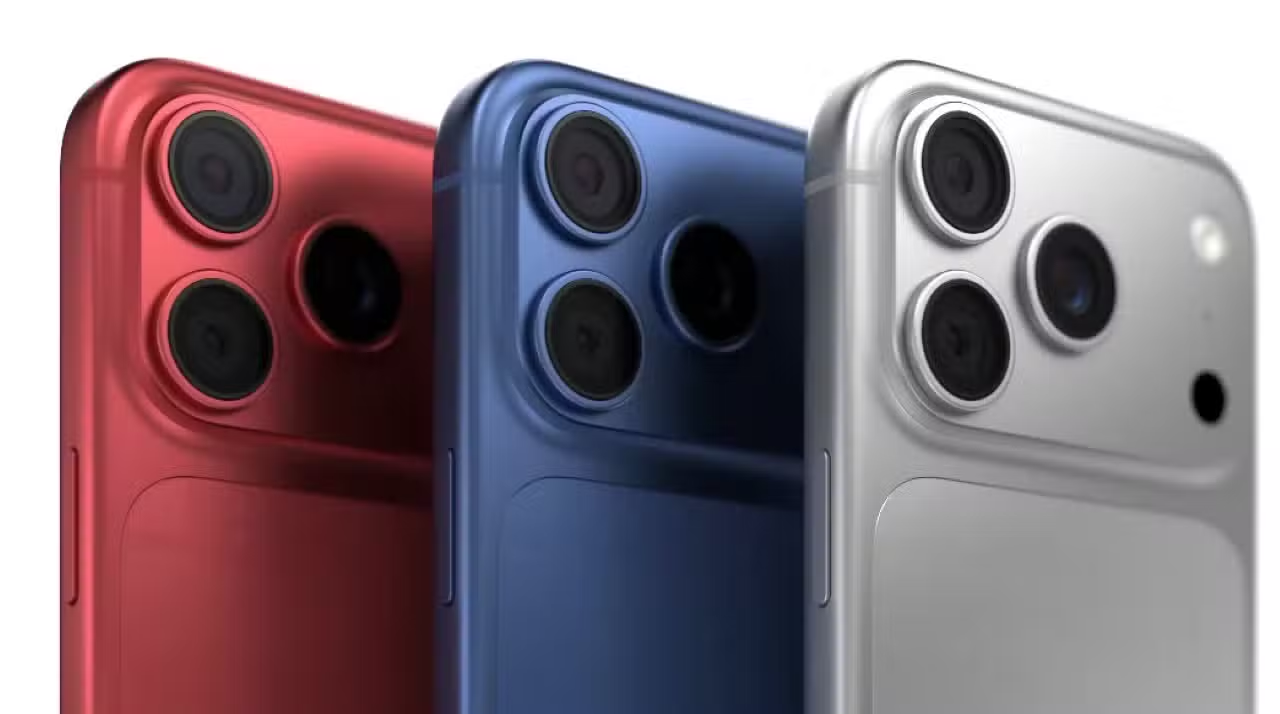
Apple has scheduled the global presentation of its new generation of high-performance smartphones for September 2026. The iPhone 18 Pro model will hit the market with a profound aesthetic redesign. The company has adopted a semi-transparent back panel. The device also incorporates a battery with a capacity of more than 5000 mAh. The structural change required a complete reorganization of the internal parts.
The engineering project seeks to display the motherboard and cooling system as visual elements. The manufacturer developed new reinforced glass compounds to enable aesthetics without loss of durability. The technology sector monitors adaptations in the Asian supply chain. The factories have already started testing machinery to assemble functional prototypes. The change directly affects production lines and product development costs.
Reestruturação visual exposes internal components of the device
The implementation of a translucent back creates a logistical challenge for assembling the equipment. Engineers redesigned the routing of flexible cables and connectors. Internal aesthetics now demand absolute symmetry. The back panel uses a high-strength glass alloy integrated with machined titanium edges. Essa combination offers protection against daily mechanical impacts and accidental drops.
The design team applied a specific chemical treatment to the glass during development. The procedure prevents yellowing caused by continuous exposure to sunlight. The phone’s casing maintains water and dust resistance certifications. Thermal insulation required extra attention from the manufacturer. Transparency exposes circuits to direct light. The technical solution involved the application of invisible heat-absorbing films under the main layer. The final look is reminiscent of precision industrial equipment.
The fixing of microchips on the main board also underwent significant changes. Technicians have swapped traditional industrial adhesives for high-precision, microscopic mechanical locks. The change makes repairs easier. The visual appearance of the plate was cleaner and more standardized for the work of authorized technical assistance.
Fim of the physical chip makes room for an enlarged power module
The energy supply of the new smartphone depends on a cell that surpasses the 5000 mAh mark. The component can reach up to 5200 mAh in specific versions of the product. The increase in battery volume occurred thanks to the miniaturization of the motherboard. The permanent removal of the carrier chip tray in all countries also freed up vital physical space. The full transition to eSIM technology transforms the internal chassis. The operating system will optimize energy consumption management.
The thermal architecture has undergone severe modifications to deal with the heat dissipation generated by the new hardware. The company added high-density graphene plates and pure copper vapor chambers to the structure. The materials quickly conduct temperature away from the user’s hands. The heat travels towards the titanium edges. Passive cooling works continuously. Thermal stability prevents forced processor speed reduction during heavy use. Preliminary Testes shows a significant drop in average chassis temperature compared to the previous generation.
Larger Telas and reduced front cutout optimize navigation
The dimensions of the displays have grown on the new production line. The standard version of the Pro model features a 6.3-inch screen. The Max variant delivers a 6.9-inch panel to consumers. The usable area has increased due to the reduction of black borders around the display. OLED technology has been recalibrated to emit more brightness in direct sunlight without distorting colors.
The front sensor module has shrunk by around 35% in its physical size. The component houses facial recognition and the selfie camera. Reducing the top cutout expands the space for system icons and notifications. Software developers are already working on adapting application interfaces.



The redesign of the front panel introduces technical specifications focused on everyday visual comfort:
- Taxa adaptive refresh rate that drops to 1 Hz to save power when displaying still images.
- Camada improved anti-glare against interference from artificial lights indoors.
- Sensores brightness installed directly under the active pixels of the OLED display.
- Vidro front with crystal clear formulation to prevent deep scratches and cracks.
Two-nanometer Processador boosts artificial intelligence
A chip manufactured using the two-nanometer process powers the smartphone’s processing core. Advanced lithography inserts billions of additional transistors into the same physical space. Calculation capacity rises while energy consumption drops dramatically. The component operates in conjunction with 12 GB of RAM. The technical specification allows complex artificial intelligence models to be run on the device itself. Local processing eliminates constantly sending data to cloud servers. User privacy increases considerably.
The dedicated neural unit accelerates machine learning tasks. Instant editing of high-resolution videos is seamless. Simultaneous translation of audio conversations works in real time. The hardware will support software updates over a long lifetime.
The connectivity infrastructure advances with new satellite communication modules. The internal antenna transmits voice data packets and small media files. The technology uses low-orbit networks to establish connections in remote areas without a cell phone signal. Telecommunications operators prepare data plans to integrate the functionality into regular packages.
Mudanças in the Asian production chain puts pressure on final value
Assembling the equipment requires the readjustment of factories located on the Asian continent. Parts suppliers have started calibrating industrial machinery. The process includes assembling the semi-transparent panel and welding the high-capacity battery. The schedule foresees the start of mass production in the second quarter of the year. Distribution logistics will use exclusive air routes. The objective is to supply the main global markets simultaneously.
The use of new materials increases the project’s research and development costs. The complexity of internal engineering directly reflects on the technology manufacturer’s budget. The financial market projects an adjustment in the final value of the product in stores. The price positioning consolidates the device in the luxury segment. The commercial strategy seeks to attract consumers focused on hardware innovation and exclusive design.
See Also em Latest News (EN)

Potapova wins tie-break and beats Rybakina in 1h53 to reach the quarterfinals in Madrid
27/04/2026
PlayStation 5 users gain free access to two great games on the official Sony store
27/04/2026
The Big Bang Theory returns to HBO Max: original cast reunites in ‘Stuart Fails to Save the Universe’
27/04/2026
Scientific research reinforces the benefits of prayer for health and quality of life
27/04/2026
Brain remains influenced by false information about health, reveals cognitive science
27/04/2026
Baby born on Delta flight minutes before landing in Portland
27/04/2026
Virginia Fonseca announces lawsuit against Luana Piovani after mentioning her children Maria Alice, Maria Flor and José Leonardo with Zé Felipe
27/04/2026
Sony raises PlayStation 5 prices in six Asian countries due to global economic pressure
27/04/2026
The South Korean manufacturer’s future premium smartphone will bring an unprecedented leap in energy capacity
27/04/2026
Microsoft guarantees nine playable demos of independent titles at Summer Game Fest
27/04/2026
Atari launches enhanced version of Adventure of Samsara for Switch with a focus on fluidity in battles
27/04/2026