
Magnetic fields in white dwarfs reveal unprecedented details about the Sun’s final fate

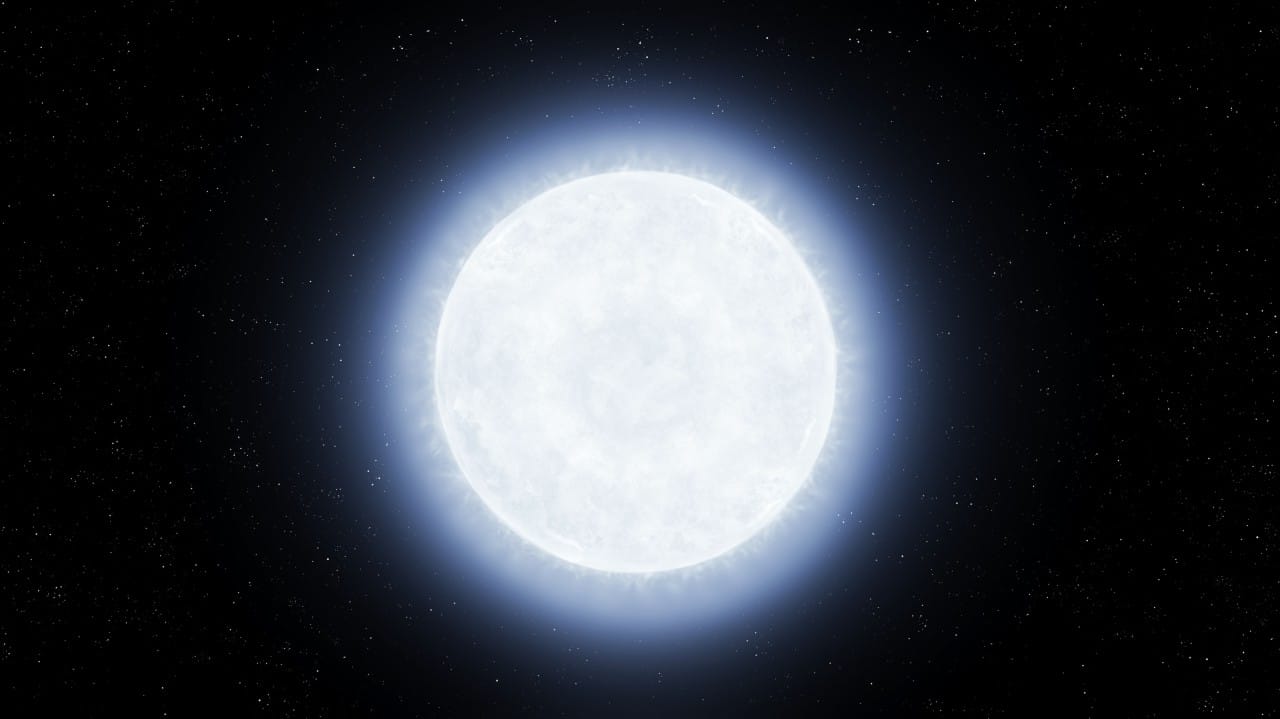
Pesquisadores identified ancient magnetic signatures preserved in the cores of dead stars. The discovery solves an ancient mystery of modern astrophysics. The study details the transition of stars similar to Sol to the white dwarf stage. The phenomenon demonstrates the force of gravity. The energies generated in the youth of a celestial body survive its structural collapse at the end of its life.
The study used advanced observational techniques to track the evolution of these structures over billions of years. The data indicates that our planetary system will undergo an identical process in the distant future. Understanding this mechanism changes the mathematical models used to predict the behavior of matter in the cosmos. Astrônomos can now map the entire life of a star with unprecedented precision.

Ondas sound reveals secrets inside dead stars
The team of scientists applied the principles of asteroseismology to investigate the dense interior of stellar remnants. Essa discipline studies the tremors that occur on the surface of stars. The oscillations work like seismic terrestrial waves. Elas travel through the inner layers of the star and carry information about the density and composition of the nucleus. The equipment captures these vibrations and translates the signals into detailed structural maps.
The method made it possible to connect the magnetic behavior of red giants with the characteristics observed in white dwarfs. Experts noted that magnetic fields do not disappear during the star’s death. Eles are trapped in ultradense matter. Current technology can measure the intensity of these invisible forces with minimal margins of error. Esse level of detail was impossible until the last decade. The ability to observe stellar interiors transforms the way astronomers classify celestial bodies. Cross-referencing seismic data with thermal models creates a complete picture of stellar physics.
Hydrogen Fim Triggers Violent Expansion of Solar System
Sol will reach the limit of its energy capacity in approximately five billion years. The hydrogen present in the nucleus acts as the main fuel for nuclear fusion reactions. The depletion of this element breaks the balance of forces in the celestial body. The external pressure generated by fusion no longer compensates for the crushing weight of the star’s own gravity. The nucleus undergoes an abrupt and irreversible contraction.
The chain reaction causes extreme heating of the outer layers. Sol will begin the phase known as red giant shortly after the core collapse. The diameter of the star will increase uncontrollably during this period. The star will grow up to a hundred times its original size. The expansion will swallow the nearest planets in a matter of a few million years.
- Fim of hydrogen reserves in the star’s core.
- Quebra of the balance between thermal pressure and gravitational force.
- Aumento drastic increase in the volume of the star’s outer layers.
- Destruição imminent from Mercúrio, Vênus and possibly Terra.
- Formação of a cloud of gas and dust surrounding the system.
- Surgimento of the exposed, dense core at the center of the nebula.
The red giant phase represents a small fraction of the star’s total life. The stage lasts about a billion years before the final dispersal of matter. The solar atmosphere moves away from the core and travels through interstellar space at very high speeds. The ejected material will serve as the basis for the formation of new planetary systems in the future. What remains at the center is just the inactive and extremely hot core. Essa glowing sphere is approximately the size of Terra, but contains half the original mass of Sol. Extreme density defies the laws of classical physics.
Campos force survives collapse and resurfaces billions of years later
Research proves that magnetism works as a hidden engine throughout the existence of the celestial body. Magnetic lines of force form in the first stages of condensation of the original gas cloud. Elas follow the star’s growth and influence the star’s rotation speed. The magnetic field directly affects the way the internal material moves and distributes heat.
Scientists have observed a peculiar phenomenon in the oldest white dwarfs. Fossil magnetism emerges at the surface with much greater intensity than in recently dead stars. The magnetic force appears to concentrate as the stellar remnant cools over the millennia. The cooling process crystallizes the interior of the white dwarf and pushes the magnetic field outward.
The discovery resolves long-standing debates in the astronomical community about the origin of magnetism in compact objects. Previous Modelos suggested that white dwarfs generate new magnetic fields through internal dynamos. Current data rule out this hypothesis for the majority of observed cases. The magnetic signature is a direct legacy of the star’s youth. The star’s past dictates his behavior in the final phase. The preservation of this magnetic energy proves the efficiency of conservation of momentum in the vacuum of space. Physicists now have concrete evidence to validate theories proposed in the last century.
Austrian Pesquisa resets universe aging parameters
The study led by Lukas Einramhof on Ciência’s Instituto and Áustria’s Tecnologia sets new standards for astrophysics. The team crossed data from ground-based observatories with supercomputer simulations. The work requires processing terabytes of information about the light emitted by thousands of different stars. Statistical analysis confirmed the correlation between the age of the white dwarf and the strength of its magnetic field.
Technological advances in photon capture allow researchers to identify minute variations in the brightness of stars. Essas luminous fluctuations hide the secrets of the internal structure of degenerate matter. Stellar archeology gains precise tools to reconstruct the history of Via Láctea. Scientists are now seeking to apply the same method to more distant globular clusters. Observing stars located at the edge of our galaxy will provide an even more robust database. The James Webb space telescope and other next-generation instruments accelerate this collection process.
Accurate understanding of stellar evolution affects the calculation of the age of the universe itself. White dwarfs function like cosmic clocks due to their predictable rate of cooling. Magnetism changes this rate of heat loss significantly. The new mathematical models correct distortions in astronomical time estimates. Science takes a fundamental step towards mapping the fate of all visible matter.





