Prehistoric marks 132 million years old fill fossil gap on South African coast

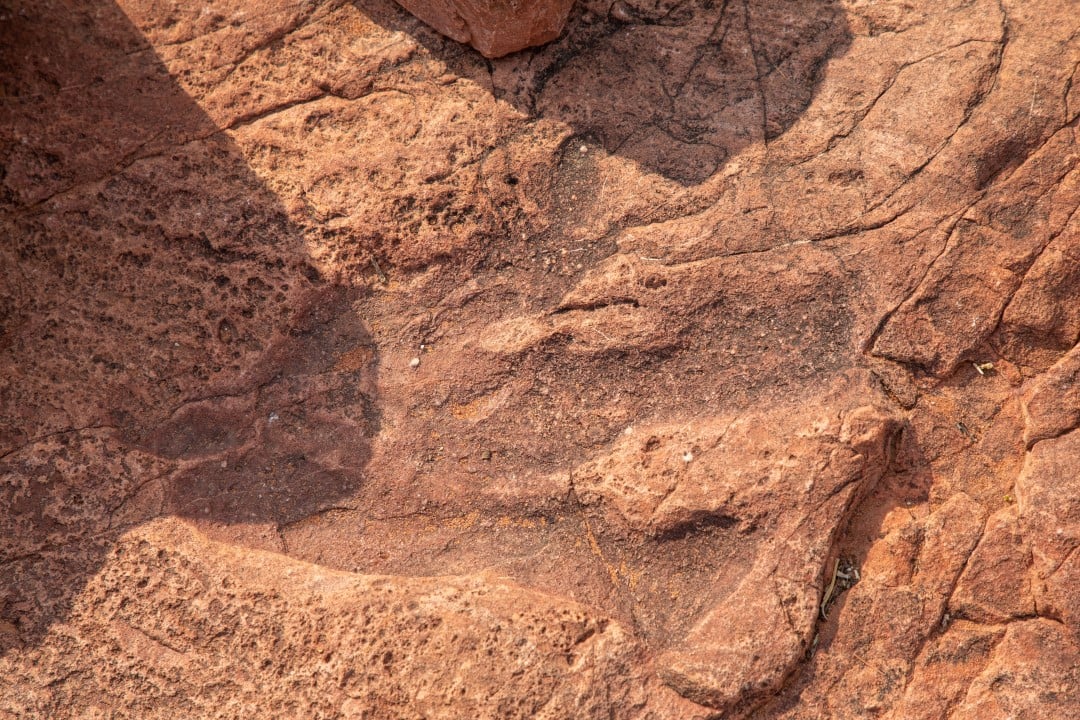
A team of scientists has identified dozens of dinosaur tracks recorded in a rocky section at Cabo Ocidental, África and Sul. The marks are approximately 132 million years old. The find occurred during recent fieldwork on the outskirts of the city of Knysna. Especialistas consider the discovery a milestone for regional paleontological research. The material fills a gap of almost 50 million years in the area’s fossil record.
Esse’s long historical silence began shortly after a series of large volcanic eruptions that devastated Bacia from Karoo. Magmatic activity drastically altered the climate and geography of the Southern Hemisphere. Agora, new evidence proves that large animal life has returned and thrived in the coastal environment. The landscape at the time was home to tidal channels and flora completely different from today’s vegetation.

Expedição in coastal area reveals traces during low tide
The rocky outcrop belongs to the so-called Formação Brenton and is positioned exactly in the intertidal zone. The site has very small dimensions for excavation standards. The area measures a maximum of 40 meters long by five meters wide. Penhascos low rises a few meters above the sandy beach. Parte from this archaeological site disappears underwater twice a day during high tide.
The dynamics of the ocean impose an accelerated pace on researchers’ work. Algumas footprints appear embedded in flat surfaces of sedimentary rock. Outras impressions are shown in cross-section on the vertical walls of the cliffs. The exhibit represents the only sample of Formação Brenton accessible for study in the entire neighborhood. The current environment, marked by human development and a modern estuary, contrasts sharply with the scenario of the Cretáceo period.
The group of ichnologists explored the coastal region with a different initial objective. Scientists were looking for isolated teeth or bone fragments preserved in the sandstone. Researcher Linda Helm was walking along the base of the cliff when she spotted the first anomalous depressions in the stone. Closer inspection of the surface quickly revealed more than two dozen possible footprints. The change in focus of the expedition guaranteed the recovery of unprecedented data on the local fauna.
Erupções volcanics and the reconfiguration of the Gondwana supercontinent
The geological history of the South African region involves catastrophic events of global proportions. Há About 182 million years ago, massive lava flows covered much of Bacia from Karoo. Muitos dinosaurs lived and thrived in this area before the natural disaster. Depois of this extreme event, the fossil record in the region was practically silent during the entire Jurássico period. Pegadas and bones from the Triássica and Jurássica eras tend to appear frequently in Lesoto and in neighboring parts of África from Sul, but there were missing pieces of the coastal puzzle.
- Grupo Drakensberg’s volcanic activity buried layers rich in biological material.
- Alguns groups of dinosaurs managed to survive the initial eruptions.
- The supercontinent Gondwana began its fragmentation process at the same time.
- Smaller sedimentary Bacias emerged in the areas of present-day Ocidental and Oriental cables.
- The new coastal environment offered refuge and food for the remaining species.
Essas newly formed basins hold limited but crucial deposits from the Cretáceo period. Fósseis bodies from this time range include remains of stegosaurs, a coelurosaur, and young iguanodontids. Most of these bones tend to appear in Cabo Oriental. No Cabo Ocidental, physical finds remain extremely rare. The region’s history includes only isolated sauropod teeth, scattered bones and occasional discoveries, such as a theropod tooth found by a local resident in 2017.
Diversidade of species identified by impressions in rocks
Preliminary analysis of the impressions suggests the passage of different groups of animals through the ancient estuary. Theropods left clear marks of their bipedal locomotion. Esses carnivorous predators dominated the top of the food chain in that ecosystem. Possíveis ornithopods also walked the banks of prehistoric rivers. Eles shared the bipedal posture of predators, but had a strictly herbivorous diet.
Além of bipeds, researchers noticed signs of the presence of sauropods in the same rock stratum. Esses giant quadrupeds boasted elongated necks and massive tails. The coexistence of these three large groups indicates an environment rich in natural resources. Abundant vegetation and the availability of fresh water created ideal conditions to support an enormous animal biomass.
Ichnology faces particular technical obstacles during field analysis. Identificar the exact species of a dinosaur just by the shape of its footprint requires extreme caution. Marcas left by theropods and ornithopods often show anatomical similarities that confuse classification. Sauropod footprints draw attention due to their colossal size. However, they rarely preserve the sharp contours of fingers in the muddy sediment. For this reason, the team avoided excessive interpretation and focused on documenting the abundance of brands.
Impacto scientific and perspectives for new explorations in the region
The researchers estimate the age of the rocks at 132 million years based on the stratigraphy of Formação Brenton. Esse temporal data makes the newly discovered footprints the youngest ever recorded across the southern portion of the African continent. The find consolidates the theory that complex animal life maintained a constant presence on the coast. The 2025 discovery opened a new avenue for understanding the coastal ecology of early Cretáceo.
The presence of ancient footprints on both Formação Robberg and Brenton suggests untapped potential. Outros sites with similar geological features may still exist along the coast. Exposições of Cretáceo non-marine rocks occur in fragmentary form on the western and eastern coasts. Mapping these areas requires patience and synchronization with the tide tables.
Pesquisas systematic inspections of these sand strips may reveal additional bones and new fossilized tracks. Ongoing fieldwork reinforces the importance of monitoring the cliffs before natural erosion destroys the evidence. The preservation of these sites guarantees study material for the next generations of scientists. The South African coastline is consolidated as a fundamental geological archive for understanding the evolution of life in Terra.