

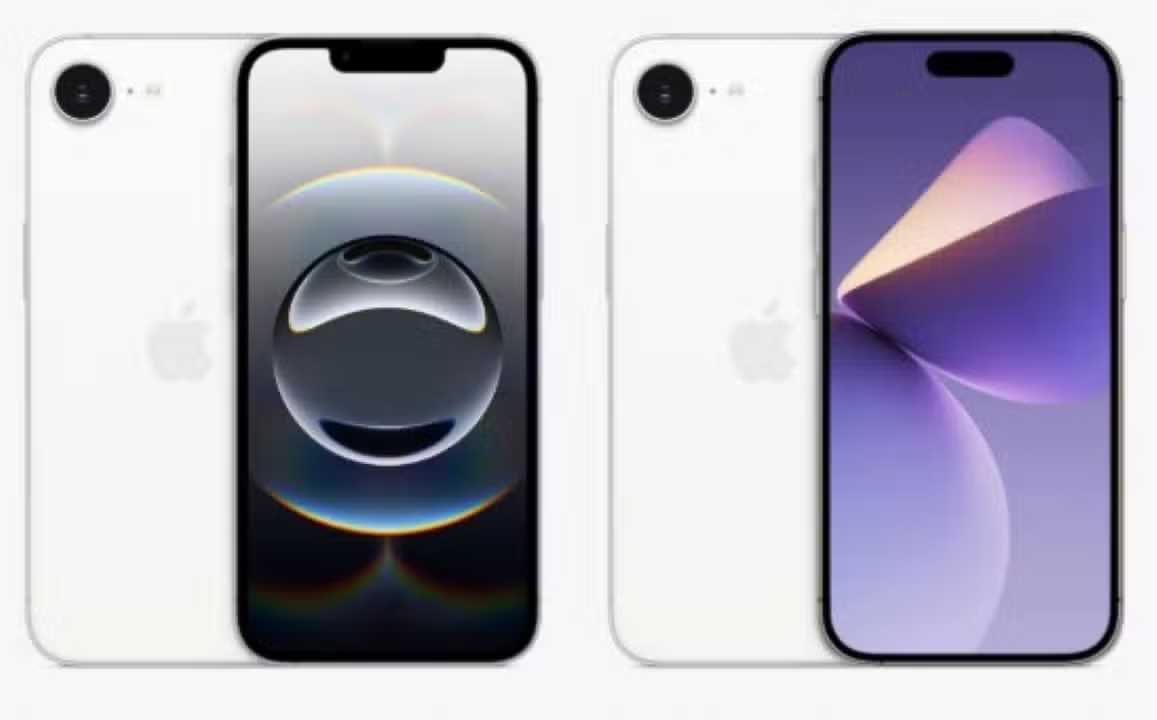
Apple officially announced the launch of the long-awaited iPhone 17 Air, a device that promises to definitively change the standards of the mobile technology industry. The new device stands out in the global market for having an impressive thickness of just 5.5 millimeters. The exact measurement makes the model the thinnest smartphone ever produced by the North American company in its long history of innovations. The ambitious project required a complete redesign of the equipment’s internal architecture. The company’s Engenheiros needed to develop miniaturized components from scratch to achieve the ultra-thin profile without compromising the user’s daily performance. The expectation surrounding the product has moved the electronics sector in recent weeks.
The drastic reduction in physical dimensions did not, in any way, represent a loss in personal data protection resources. Pelo Otherwise, the manufacturer has integrated a military-grade security system directly into the phone’s hardware. The combination of an extremely thin design with advanced encryption protocols has generated strong repercussions in the global consumer electronics market. Analistas from the sector point out that the novelty establishes a new level of demand for competing Asian and European brands. Apple’s strategic move forces an unprecedented technological race for component miniaturization in the coming years. The paradigm shift affects the entire semiconductor production chain.
Engenharia internal adopts titanium alloy and redesigned logic board
Para reached the exact thickness of 5.5 millimeters, the development team had to abandon traditional cell phone manufacturing methods. The main structure of the device uses a new titanium alloy of very high strength and lightness. The premium material guarantees the necessary mechanical rigidity to prevent the device from bending or twisting under pressure in everyday use. The choice of noble metal definitely replaces the aluminum and stainless steel present in previous generations of the line. The reinforced chassis acts as the backbone of the equipment, protecting sensitive parts from accidental impacts. Materials engineering played a crucial role in the success of the project.
The interior of the smartphone houses a completely redesigned logic board to fit into the new chassis. The electronic circuits were compacted using new laser welding techniques and vertical stacking of chips. The OLED screen has also undergone severe structural modifications to reduce its thickness by crucial fractions of a millimeter. Cada display panel layer has been meticulously optimized to take up as little physical space as possible within the housing. The harmonious integration of these elements allowed the final design to achieve the rigorous aesthetic objective outlined by the company’s management. The visual result is impressive due to the almost unreal thickness of the front panel.
Câmera and battery receive adaptations for the compact format
The camera module represented one of the biggest and most complex challenges for the engineering team during the laboratory testing phase. Lentes High-quality photography requires real physical depth to capture light and focus images with millimeter precision. The innovative solution found involved the creation of a horizontal periscope system and the adoption of state-of-the-art image sensors. Advanced technology allows the optical set to maintain excellence in capturing photos and videos, even operating in such a restricted internal space. The camera bump on the back has been drastically minimized to maintain the fluidity and elegance of the overall design.
Daily power autonomy required a completely innovative approach to electrical charge storage. The manufacturer implemented high-density batteries based on newly discovered chemical compounds. The vital component can store much more energy in a considerably smaller physical volume than traditional lithium-ion batteries. The thermal management system has also been deeply updated to dissipate heat generated by the main processor quickly and efficiently. Proper cooling prevents the titanium chassis from dangerously overheating during heavy-duty tasks such as three-dimensional gaming or ultra-high-resolution video recording.
Protocolos protection features include remote blocking and continuous tracking
The security architecture of the new model introduces impenetrable physical and logical barriers against cyber intrusions and physical theft. The central processor has a secure enclave physically isolated from the rest of the main operating system. The sandbox stores sensitive biometric data and complex encryption keys with maximum government-grade protection. Preventive measures aim to prevent unauthorized access to user data, even if the device is completely dismantled by specialized criminals. The digital protection package includes specific and rigorous features for loss or theft scenarios in large cities:
- Rastreamento location tracking active even when the device is turned off or has no battery.
- Bloqueio hardware remote that renders the mainboard unusable in case of confirmed theft.
- Exigência dual biometric authentication for critical account settings changes.
Modern protection tools respond to a growing and urgent demand from global consumers for greater digital privacy. The deep and native integration between software and hardware makes it immensely difficult for gangs specialized in the illegal resale of individual parts. The intelligent operating system constantly monitors the cryptographic integrity of all internal components of the device. Qualquer attempted part replacement outside of the authorized service network triggers immediate security alerts and restricts vital phone functions. The corporate strategy strongly discourages the lucrative parallel market for stolen devices around the world.
Impacto in the global market puts pressure on competing manufacturers
The official launch of the ultra-thin model drastically changes the competitive dynamics in the fierce premium smartphone segment. Marcas’s major rivals have already begun reviewing their internal research and development schedules for the next commercial semesters. The strong trend towards devices with foldable screens, which dominated recent technological discussions, now divides the market’s attention with the incessant search for minimum thickness. The traditional bar format gains a new and unexpected boost in sales with the aesthetic innovation presented by the American giant. The end consumer begins to value extreme portability combined with high processing performance.
Especialistas renowned technology experts assess that the global transition to designs below the six millimeter mark will be the industry’s main battleground in the coming years. The initial production cost of these miniaturized technologies is still quite high, which restricts the novelty to the most expensive and exclusive models on the current market. The complex global supply chain will need to adapt quickly to deliver ultra-thin components at scale to meet demand. The current movement clearly defines the visual and technical standards that will guide the manufacturing of personal electronics throughout the next decade. The revolution in thickness consolidates a new era in the industrial design of high-end mobile devices.