Full Flower Moon lights up the sky this Friday, peaking on May 1st
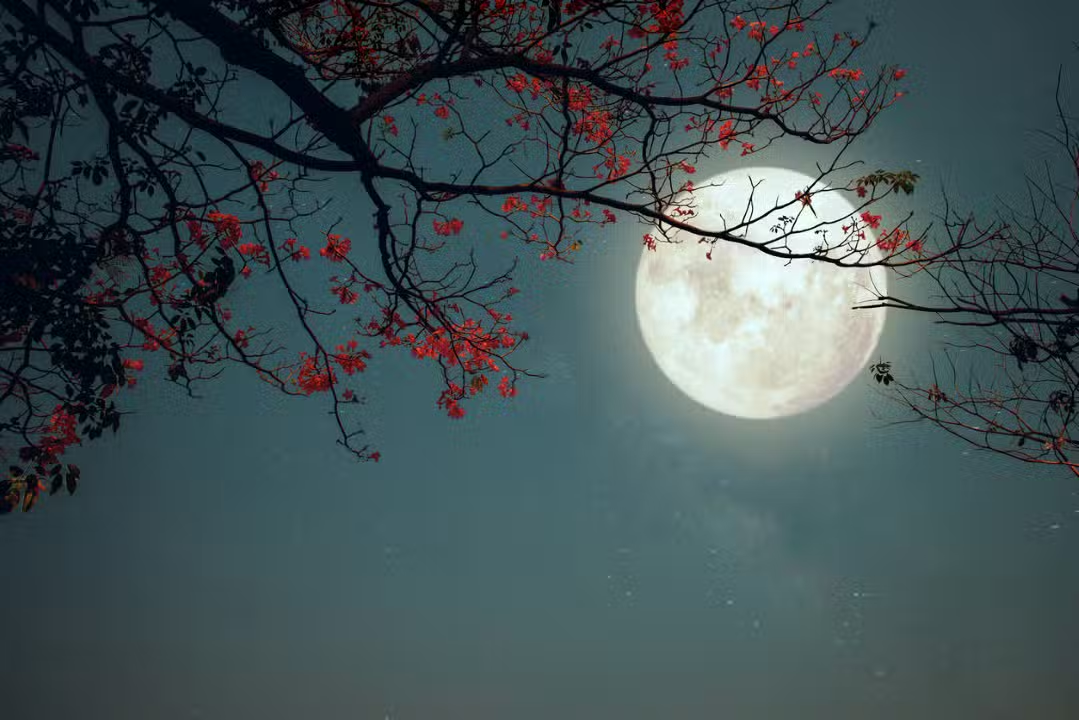
Flores’s Lua Cheia peaks on Friday, May 1st. The natural satellite of Terra completes its full phase at around 17:23 UTC time. Observadores in different regions of Brasil can see it from dusk onwards, when the sky is clear.
The popular name refers to the period of greatest flowering in the spring of Hemisfério Norte. Povos’s indigenous América’s Norte used these terms to track seasonal cycles. The name became popular and today describes May’s Lua Cheia on several calendars.
Tradições indigenous people give different names to the lunar phase
Diferentes communities attributed their own meanings to May’s Lua Cheia. Os Comanche called her Lua of Flores, in reference to the abundance of plants that bloom. Outros groups, such as Creek and Choctaw, used Lua from Amora, because of the ripening of berries.
- Os Anishnaabe speak in Lua of Florescimento.
- Algumas Apache tribes relate the phase to the season of green leaves.
- Outras designations include Lua from Sapo, linked to animal activities in the period.
Esses names were part of traditional calendars. Eles helped organize planting, harvesting and hunting throughout the year. The practice spread beyond the original communities and is now part of the popular culture of astronomical observation.
The phenomenon is not limited to a single name. Cada people observed the sky from their local reality. Isso generated a rich diversity of references that still appear in almanacs and specialized websites.
Condições Observation and Visibility on Brasil
Lua Cheia of Flores can be seen from anywhere in the country, as long as the weather cooperates. The peak occurs during the afternoon at Brasília time, but the satellite appears full on the nights of April 30th, May 1st and 2nd. The best time is just after sunset, when it appears on the eastern horizon.
Não is a supermoon. The distance from the Terra varies, but the full phase guarantees intense brightness even without maximum proximity. In urban areas, light pollution can reduce contrast. Observadores indoors or in places with dark skies have an advantage. Binóculos or simple telescopes magnify surface details.
Especialistas recommend looking east in the early evening. Lua gradually rises and becomes higher over the hours. Nuvens or fog can get in the way, so it’s worth checking the local weather forecast.



Maio from 2026 has two full moons in the same month
The lunar calendar reserves something unusual for 2026. Além of Lua Cheia of Flores on May 1st, another full phase occurs on the 31st. Essa second moon is named Lua Azul, a term used when there are two full moons in a single month.
The sequence reinforces the interest in astronomical events throughout the year. Depois comes to Lua from Morango in June, Lua from Cervos in July and other traditional denominations. Cada a carries associations with seasons or human activities.
Astrônomos tracks these cycles accurately. Aplicativos and updated websites show exact times by time zone. Lua by Flores opens the month and highlights the connection between the sky and the rhythms of nature.
Significado cultural crosses generations
The interest in Lua Cheia of Flores goes beyond science. Ela symbolizes renewal and abundance in various traditions. Povos indigenous people used the period to mark changes in vegetation and animal behavior. Hoje, the phenomenon attracts those looking to connect celestial observation with environmental cycles.
Ancient Calendários guided daily life based on these phases. The knowledge has been preserved and is now mixed with modern explanations of astronomy. May’s Lua Cheia continues to light up the sky and spark curiosity in those who look up.
Quem plans to observe should choose a point with an unobstructed view of the horizon. Patience helps. The satellite gradually gains prominence as the night progresses. The event reminds us that simple phenomena, like a full moon, maintain ancient ties between humanity and the cosmos.
See Also em Latest News (EN)

IPhone 18 Pro should gain thicker camera bump with variable aperture lens
27/04/2026
IPhone 17 Air arrives with a thickness of 5.5 mm and advanced security to revolutionize the market
27/04/2026
American Idol eliminates two contestants on the night dedicated to Taylor Swift
27/04/2026
Super Mario Galaxy: The Movie opens with 1.6 billion yen in Japan and divides opinions
27/04/2026
Luciana Novaes, symbol of overcoming in Rio, is confirmed brain dead
27/04/2026
Rafaella Justus undergoes new rhinoplasty at age 16
27/04/2026
Huawei smartwatches gain prominence with blood pressure monitoring
27/04/2026
Volkswagen finalizes design of ninth generation Golf with electric version
27/04/2026
Collision at LHC reinforces quarks as elementary particles with no internal structure
27/04/2026
Bomb on bus kills 19 people in Colombia and reignites debate on security
27/04/2026
Republican Senate approves resolution to release up to $140 billion in immigration funding
27/04/2026