Interstellar object with deuterium challenges nuclear planetary defense strategies
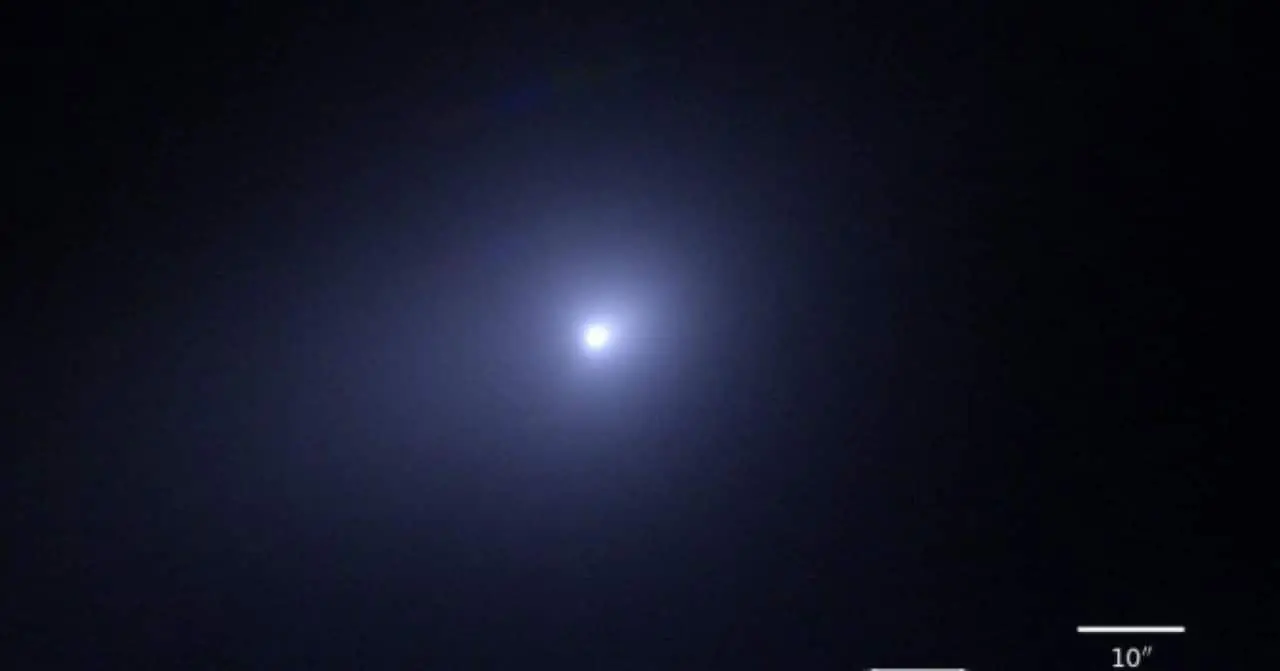
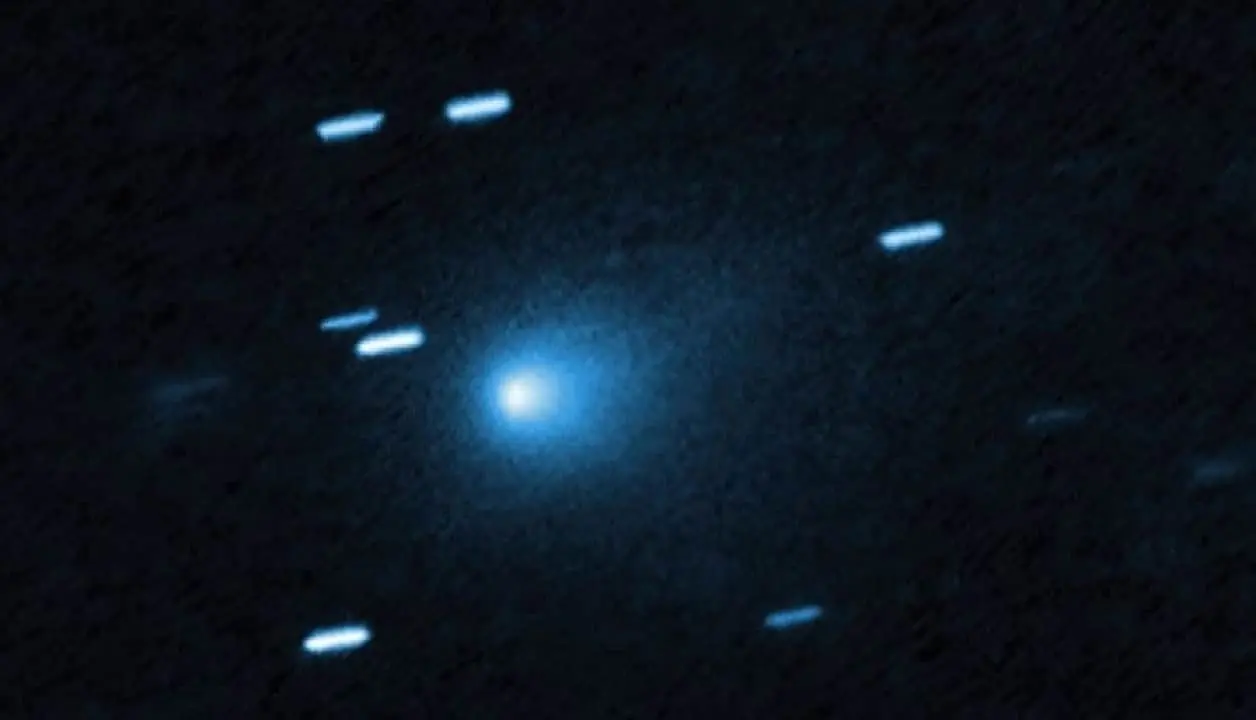
The interstellar object 3I/ATLAS has an unprecedented chemical composition that calls into question Terra’s traditional protection strategies against cosmic impacts. Análises carried out in 2026 by astrophysicist Avi Loeb, of Harvard, revealed extraordinary concentrations of deuterium in the structure of the celestial body. The discovery, made using data from state-of-the-art telescopes, shows a visitor from deep space fundamentally different from any comet or asteroid scientists have ever catalogued.
The massive presence of this heavy isotope of hydrogen creates an unprecedented dilemma for global planetary defense. Tentativas’s deflection of the object using nuclear devices could trigger a catastrophic fusion reaction. The extreme heat of the initial detonation would act as a trigger for the deuterium, multiplying the explosive force uncontrollably and generating a rain of radioactive debris towards the planet.
More on this story: Interstellar object with deuterium challenges planetary defense with nuclear weapons
Concentrações of deuterium tens of times larger than normal
Data collected by the research team reveals an extraordinary statistical anomaly in the formation of 3I/ATLAS. The proportion found indicates one deuterium atom for every hundred water molecules. In methane, the rate is even more impressive, recording one deuterium atom for every thirty molecules. Esses values represent concentrations tens of times greater than any other celestial body ever identified by astronomers.
Joint observations from Telescópio Espacial James Webb and the ALMA observatory confirmed these numbers. The ratio of deuterium to hydrogen in the object’s water reaches about 0.95%. In organic methane, this index jumps to 3.31%. Para comparison, comet 67P, widely studied by the Rosetta probe, has an amount of deuterium fourteen times lower than that recorded in the interstellar visitor. Essa high isotopic density provides key clues about the birthplace of 3I/ATLAS.
The researchers point out that the object formed in an extremely cold and ancient environment of Via Láctea. The low temperature during its genesis, estimated at around 30 Kelvin, allowed deuterium to condense and become trapped in ice and frozen gases more than a hundred million years ago. Essa distant origin explains why its composition differs so much from the celestial bodies of the solar system.
The historical precedent of runaway thermonuclear reactions
The debate about nuclear explosives in space brings back old fears from the Projeto Manhattan era. Durante the development of the first atomic weapons, physicists Edward Teller and Stanislaw Ulam hypothesized that a nuclear explosion could ignite the nitrogen in the Earth’s atmosphere. Hans Bethe performed detailed calculations at the time and proved that the loss of radiation would prevent this process from self-sustaining.
A confidential report signed by Konopinski, Marvin and Teller in 1946 addressed the topic, remaining secret for many years. Décadas later, Konopinski and Teller published specific theoretical studies on the probability of fusion of deuterium nuclei. The theory returned to the scientific community’s spotlight in 1994, shortly after fragments from comet Shoemaker-Levy 9 collided with Júpiter. Esse’s impact motivated Edward Teller to propose an aggressive planetary defense system based on one-gigaton nuclear devices.
See Also


Learn more: American space agency activates protection protocol after capturing radio waves from 3I/ATLAS
Cenário catastrophic colossal explosion in space
The application of traditional nuclear defense to 3I/ATLAS reveals a frightening scenario. The mass of the interstellar body is estimated to be about 1.6 million tons. If a nuclear device were detonated on its surface or interior, the initial energy would melt the materials and release the trapped deuterium. The heat from primary fission would provide the exact conditions for the isotope to enter the process of instantaneous nuclear fusion.
- Calculations indicate that burning a significant fraction of the deuterium would generate energy equivalent to ten teratons of TNT.
- Esse destructive power is two hundred thousand times greater than that of Tsar Bomba, the largest nuclear device tested by União Soviética in 1961.
- The thermonuclear explosion would transform the object into thousands of smaller, highly radioactive pieces.
- A shower of contaminated meteors would hit Terra, causing severe damage to the atmosphere and ecosystems.
The main problem with this chain reaction would be the uncontrolled fragmentation of the celestial body. Instead of deflecting the object cleanly, the explosion would transform it into multiple dangerous fragments. If this operation were carried out to prevent an impact, the planet would end up being hit by radioactive debris. The resulting radiation would make the solution much worse than the original threat.
Novos space security protocols for the future
Diante of the evidence presented in 2026, the astronomical community advocates an immediate review of contingency plans. The discovery proves that not all celestial bodies react in the same way to external stimuli. The use of brute force through nuclear warheads loses ground to more sophisticated and safer approaches. The priority now is to develop technologies that do not rely on extreme thermal explosions to alter the orbit of space threats.
Previous chemical analysis of the object becomes a mandatory step before any interception mission. Impactadores kinetics gain technical preference for deflecting asteroids without generating excessive heat. The use of high-power lasers to melt the surface and create gradual thrust appears as a viable alternative. The presence of heavy isotopes automatically nullifies the authorization for the use of atomic devices. International space Agências must unify their response protocols based on the new findings.
The study of 3I/ATLAS remains in the theoretical field, as the object does not present a risk of collision with Terra and is already leaving the solar system. However, its passage provided a unique opportunity to test mathematical defense models. The realization that the universe is home to bodies rich in fusion fuel changes the way scientists view protecting the planet. Planning future missions will require a deep understanding of space chemistry to prevent a rescue attempt from ending in radioactive disaster.