

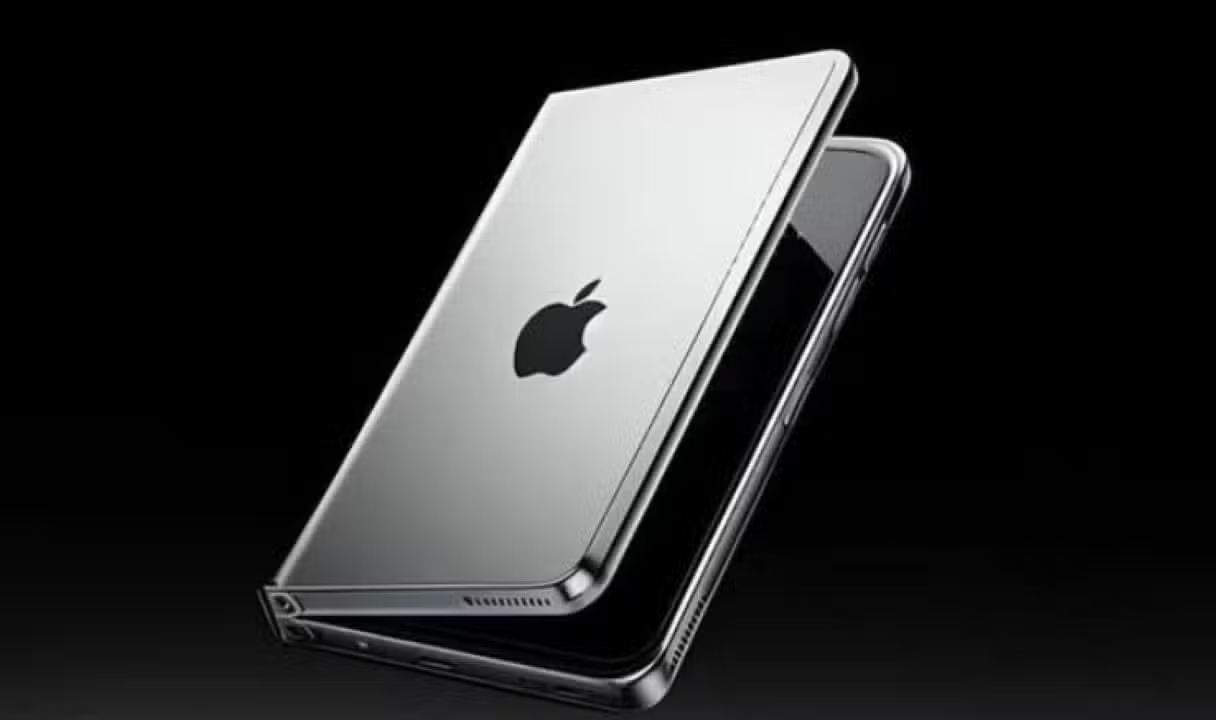
Apple confirmed its entry into the flexible devices segment with the launch of its first foldable smartphone. The device hits the technology market with a thickness of 4.5 millimeters when fully opened. The design incorporates a 5,800 mAh battery. The North American manufacturer sets a new hardware standard for the premium cell phone category in the year 2026. The model circulates behind the scenes in the telecommunications industry under provisional nomenclatures such as iPhone Ultra or iPhone Air. The product reveal ends years of speculation about the technical feasibility of an Apple-branded foldable phone.
The novelty represents a structural change in the company’s product engineering. The development required the creation of exclusive internal components to adapt to the ultra-thin format. The device meets a market demand for significant visual changes after successive generations of cell phones with a traditional design. The manufacturing cost of miniaturized parts increases the final price of the equipment. The product occupies the highest position in the brand’s commercial catalogue.

Redesigned internal Arquitetura for narrow chassis
The physical format of the new cell phone changes the thickness limits known in the telecommunications sector. The device measures 9.5 millimeters when the two parts of the screen are overlapped. Opening the panel completely reveals a 4.5 millimeter profile. The drastic reduction in dimensions forced engineers to modify the positioning of essential parts. The motherboard has undergone a complete redesign to fit into the reduced space. Memory and storage modules received new physical formats.
The central articulation of the smartphone uses a high-precision mechanical system. The hinge combines liquid metal panels with gears manufactured using industrial-grade 3D printing. The choice of these materials provides extreme mechanical resistance against accidental twisting and routine impacts. The mechanism supports hundreds of thousands of continuous opening and closing cycles without premature wear of moving parts. The structure has physical barriers to protect against the entry of dust and microscopic particles. The reinforced sealing of the ends guarantees the system’s functioning over years of daily use.
Capacidade energy and processing in two nanometers
Battery life is one of the main technical bottlenecks in the manufacture of cell phones with foldable screens. The North American manufacturer’s project resolves the limitation by installing a 5,800 mAh component. The capacity surpasses the numbers found in conventional smartphones with a rigid screen. The development team applied new chemical packaging techniques to increase the energy density of the power cell. The gain is significant. The internal volume accommodates the charge necessary to keep the device powered on for a full day of continuous use.
Internal temperature management follows the increase in the device’s electrical capacity. The cell phone works with a processor manufactured in 2 nanometer architecture. Advanced lithography delivers superior processing speed with a significantly lower power requirement. The dissipation of heat generated by the processing cores uses an unprecedented passive cooling system integrated into the chassis. The temperature is distributed evenly throughout the metal casing of the device. The technique prevents isolated areas from overheating when running heavy applications. The chip’s performance remains stable during prolonged gaming sessions with complex graphics or rendering videos in 4K resolution.
Especificações hardware and adapted photography
The device’s set of technological innovations encompasses different areas of electronic engineering. The components work in sync to enable the flexible format:
- Espessura 9.5mm with the panel closed and 4.5mm in the open position.
- High chemical density Bateria with 5,800 mAh total capacity.
- Câmera main equipped with 48 megapixel sensor and flat profile lens.
- 2 nanometer Processador integrated with a uniform thermal dissipation system.
- Tela double-layer OLED with fold mark reduced to 0.15 millimeters.
The camera module required deep structural modifications to fit into the 4.5 millimeter thickness. The 48-megapixel main sensor uses a low-profile lens to avoid excessive protrusions on the back of the phone. Capturing light in dark environments maintains accurate details. The operating system applies image processing algorithms to compensate for the physical constraints of the optical assembly. High resolution video recording preserves the quality characteristic of the brand’s devices.
Flexible display Engenharia and mark reduction
The visual quality of folding screens is hampered by the formation of a crease in the central area of the panel. The new display minimizes physical imperfections by reducing the depth of the mark to 0.15 millimeters. The change makes the center line practically invisible during normal use of the device. The technical result derives from the application of overlapping protective films and the adoption of a teardrop shape inside the hinge. The smooth curvature of the panel prevents pixel breakage. Document reading and movie playback occur without image distortions.
Dual-layer OLED technology makes up the screen’s light-emitting structure. The system increases energy efficiency and extends the useful life of the display’s organic components. The brightness level reaches high peaks to allow content to be viewed in direct sunlight. The screen refresh rate works dynamically. The frame transition speed adapts to the type of application running. Battery consumption decreases when viewing still photographs. Color calibration meets the standards required by the audiovisual industry.
Disputa commercial in the luxury devices sector
The global premium smartphone market sees intense competition in the year 2026. Samsung develops the Galaxy Z Fold 7 with a projected thickness of 4.2 millimeters. The dispute for leadership in the luxury segment moves the research departments of the main technology companies. Chinese manufacturers expand their international presence with cheaper devices and aggressive specifications. The arrival of Apple in the foldable sector comes years after its competitors. The strategy requires the delivery of equipment without construction flaws.
The commercial positioning of the new cell phone focuses exclusively on high-income audiences. Billion-dollar investments in research into new materials and the adaptation of assembly lines pass on direct costs to the final value of the product in stores. The smartphone launches a super luxury category in the North American manufacturer’s ecosystem. The global supply chain operates with a conservative estimate for initial production volume due to the complexity of manufacturing the dual screens. The acceptance of the flexible format by the brand’s traditional consumers defines investments in hardware for the coming years. The definitive consolidation of folding screen technology in the industry depends on the commercial performance of this first model on the shelves.