

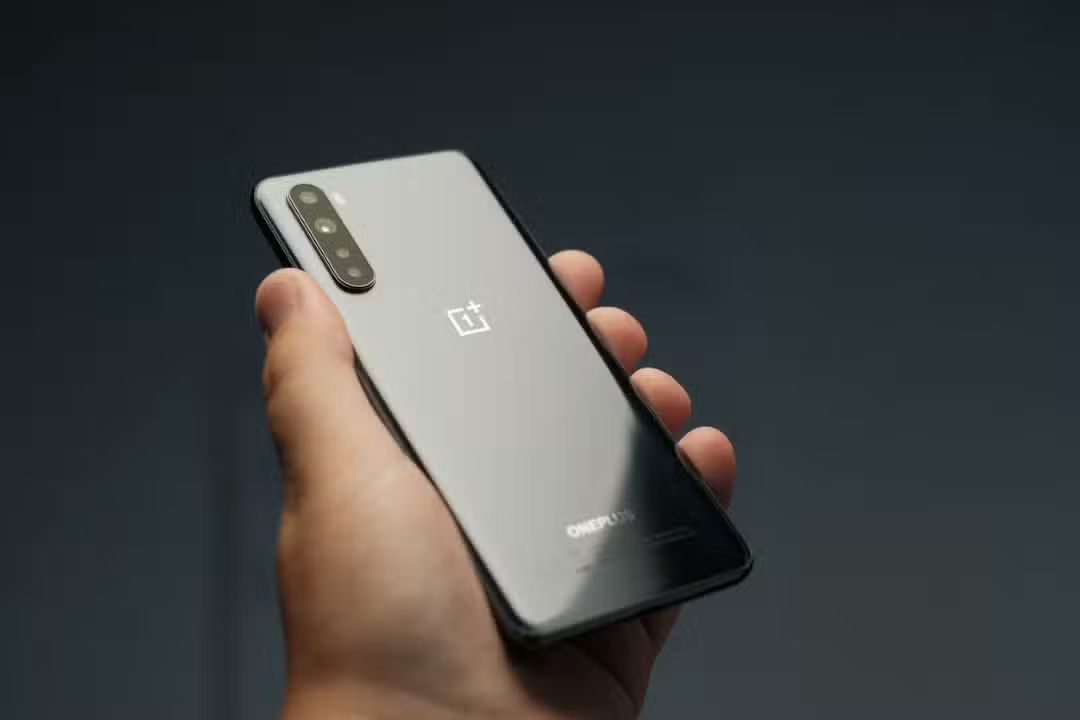
OnePlus confirmed the integration of its operations with Realme, a sister brand from the same corporate group. The move is part of a restructuring strategy that aims to optimize resources and strengthen the presence of both companies in the global smartphone market. The decision comes in a challenging context for both brands, which face increasing competitive pressure in the mid-range and premium phone segment.
The operational merger consolidates development, research and manufacturing teams under a unified structure. Ambas brands will continue to maintain their own identities and distinct product lines, but will share infrastructure, supply chain and innovation centers. Analistas see the measure as an attempt to reduce fixed costs and accelerate device launch cycles.
Detalhes of administrative reorganization
The integration mainly reaches engineering, supply chain management and financial operations sectors. Executivos from both divisions will collaborate in a task force to define work protocols, technology sharing and transition schedule. OnePlus will maintain leadership over design decisions and brand positioning in the premium market, while Realme will focus on the entry and mid-range segment.
Funcionários in R&D centers in major cities — Pequim, Bangalore, São Paulo — will be gradually relocated. Não announced mass layoffs, but the realignment of teams could result in the relocation of professionals. The restructuring is expected to be completed by the end of the fiscal year.
Brands Performance Contexto
Nos Last two years, OnePlus lost market share to competitors like Samsung, Apple and Xiaomi in the premium segment. The brand, once known for offering quality at an aggressive price, has faced criticism over software quality, spotty after-sales support and controversial decisions on bloatware. In some Asian regions, revenue fell by up to 35% compared to the previous two years.
Realme, in turn, grew rapidly in emerging markets, but was unable to consolidate leadership in mature markets like Europa and América’s Norte. Suas strategies of frequent launch of similar models generated confusion among consumers and diluted profit margins. Ambas brands compete directly with Motorola, Nothing and Poco, which come forward with clearer proposals.
Implicações for Consumers and Market
The integration can benefit users with more frequent software updates and improved technical support. Compartilhar technologies also make it possible to reduce final component prices, which can result in more affordable devices. However, consolidation can also lead to less differentiated innovation between the two brands:
- OnePlus should continue to focus on slim design, fluid 120Hz screens and top-of-the-line processors
- Realme will maintain volume strategy, aggressive cameras and high-capacity battery
- Ambas will have access to the same repository of drivers and optimized software
- Custos R&D will be shared, but market decisions remain independent
- Distribuição and commercial partnerships are not subject to immediate changes
Próximos steps and timeline
OnePlus and Realme promise to announce an integrated launch schedule in the next quarter. Estão planned flagship models from both brands for the second half of the year, including versions with dedicated artificial intelligence for image processing. Prices and specifications were not affected by the administrative reorganization.
Internamente, executives from both companies are working to define which brand will lead each geographic segment. Há indicates that OnePlus will focus efforts on Europa, Ásia and América from Norte, while Realme will prioritize Índia, Sudeste Asiático and emerging markets. Esse model would avoid cannibalization of direct sales.
Investidores received the news cautiously. Analistas highlight that the integration reduces operational costs, but questions whether the two brands will be able to regain relevance in a market dominated by Samsung, Apple and Xiaomi. Sucessivamente, companies like HTC and LG exited the smartphone market after failures in similar strategic positioning.