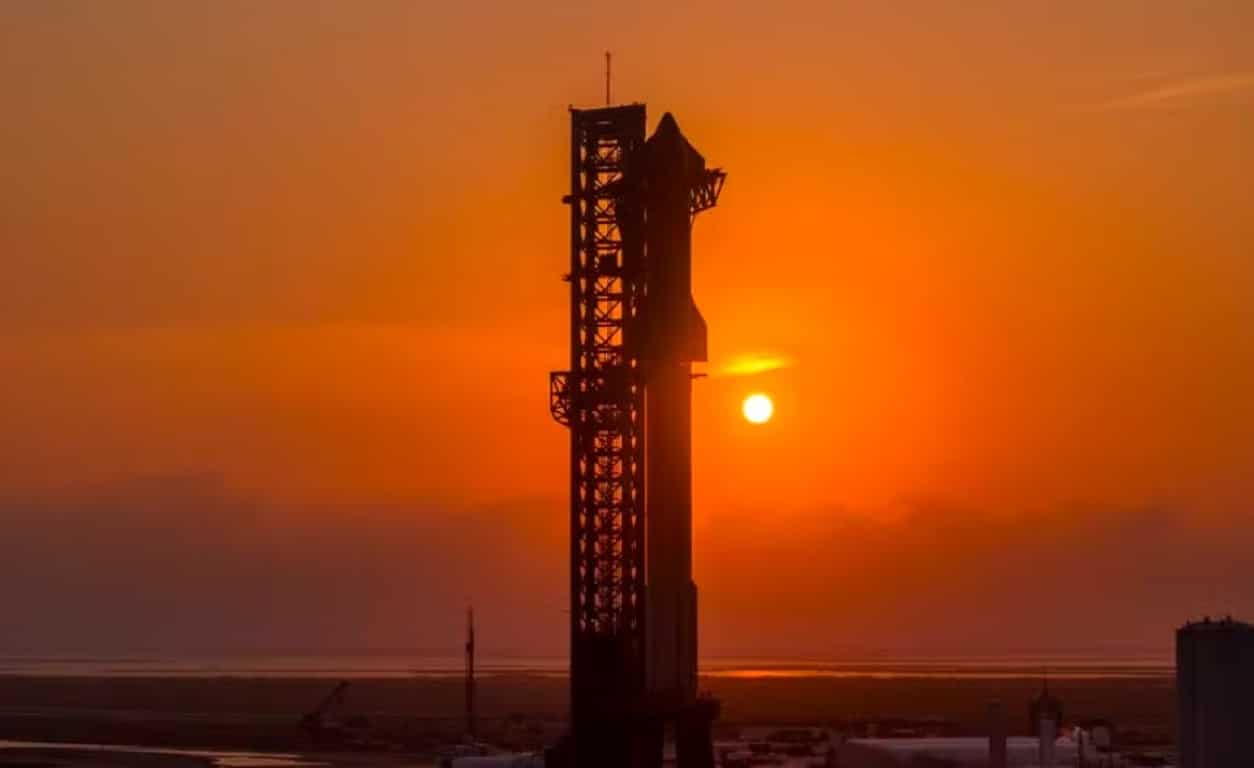
An upper stage of SpaceX’s Falcon 9 rocket is on a collision course with Lua and is expected to impact the lunar surface in early August. The object, identified as 2025-010D, was launched last year and underwent orbital variations that directed it towards the Earth’s natural satellite. The information was confirmed by Bill Gray, astronomer at Projeto Plutão, who monitors asteroids and objects close to Terra.
Gray stated that it has been tracking the stage since its launch and that the change in orbit over the months has altered its trajectory. “We’ve been tracking it since launch. The orbit has changed a little over the last year, and it’s now heading towards a lunar impact,” the expert explained. The impact is expected on August 5th and will occur near the visible edge of Lua when observed from Terra.
Missão successful trade preceded the collision

The upper stage of Falcon 9 was responsible for launching two private spacecraft into space. One of them was the Blue Ghost 1 lunar landing module, from Firefly Aerospace, named Ghost Riders in the Sky. Lançado on January 15, 2025 Blue Ghost performed the first fully successful commercial lunar landing on March 2, at Mare Crisium, marking the longest commercial operation on the lunar surface to date.
The same mission also carried the Japanese HAKUTO-R M2 lunar module, named Resilience. Porém, this probe was lost approximately 90 seconds before landing due to a laser rangefinder failure, colliding with the barren lunar terrain.
- Lançamento: January 15, 2025
- Lunar Pouso (Blue Ghost): March 2, 2025, Mare Crisium
- Expected Internship Impacto: August 5, 2025
- Local from impact: near the illuminated edge of Lua
Visibilidade’s impact remains uncertain
Gray reported that he believes the impact would have a good chance of being visible from Terra. At the moment of collision, Lua will be a little more than half lit. The astronomer plans to observe the event with his small Maine telescope, but expresses skepticism about the intensity of the glow that will be produced.
Gray’s caution is based on historical precedent. NASA performed a similar mission in 2009 with the LCROSS satellite (Satélite of Observação and Sensoriamento of Crateras Lunares). Planned Conforme, LCROSS and its Centauro stage collided with Lua on October 9, 2009, but the impact occurred on the unilluminated side of the satellite, despite initial expectations. “Still, nothing was seen,” recalled Gray.
The difference in the current mission is that the impact will occur in strong sunlight, in the visible part of Lua. Ainda thus, Gray admits to having doubts about the visual magnitude of the event. “It will be above the horizon for me, in Maine, and I plan to go out with my little telescope to take a look. But I can’t imagine why it would be so much brighter than LCROSS. And this object will be in strong sunlight,” he said.
Ferramentas tracking confirms trajectory
Projeto Plutão provides software tools used by professional and amateur astronomers around the world to identify satellites in observational data and monitor asteroids and comets. The organization has published a dedicated page with specific data about the upper stage of Falcon 9 so that the astronomical community can monitor the imminent collision.
Bill Gray is the creator of Guide, an application widely used by the astronomical community for monitoring celestial objects. Sua analysis of orbital data provides one of the most reliable predictions available about the exact time and location of the lunar impact.